
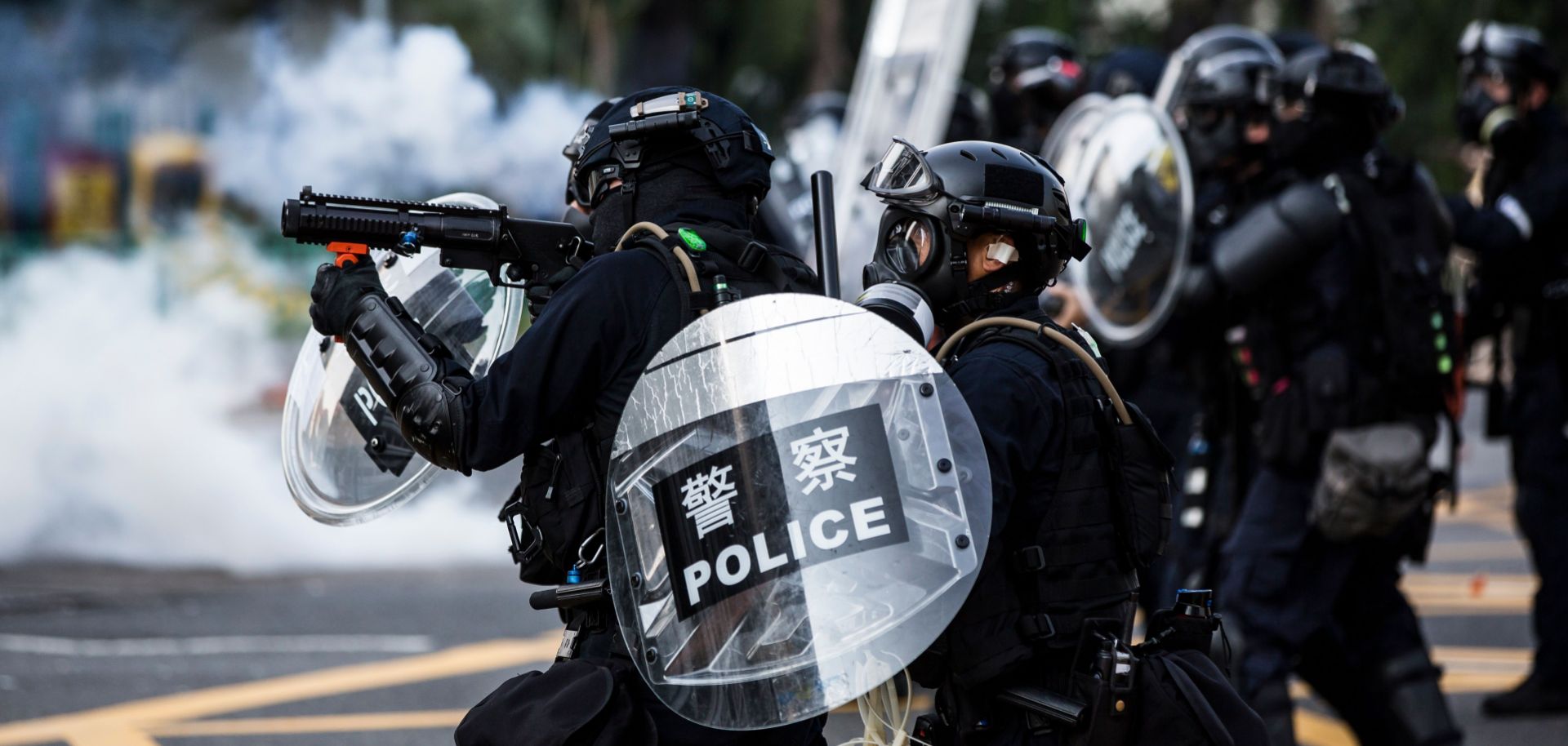
Police fire tear gas to disperse protesters in the Sha Tin district of Hong Kong on Oct. 1, 2019, as the city observes the National Day holiday marking the 70th anniversary of communist China's founding. Unrest has gripped Hong Kong since June.
Editor's Note : As with many protest movements, the trigger was comparatively innocuous: In early June, Hong Kong's government tried to push through the Extradition Law Amendment Bill, which stood to give local authorities the power to extradite city residents suspected of crimes to, among other places, mainland China. The bill prompted fury among a broad cross-section of Hong Kongers, who hit the streets to decry what they viewed as Beijing's erosion of the special territory's autonomy. More than six months on, protests continue apace — in spite of Chief Executive Carrie Lam's eventual revocation of the extradition bill — as the demonstrators' demands have grown to include guarantees that mainland China will respect their city's freedom. Despite the occasionally violent rallies that have pitted protesters against the city's police force, Beijing has denounced the demonstrations but so far chosen not to directly step in.
