
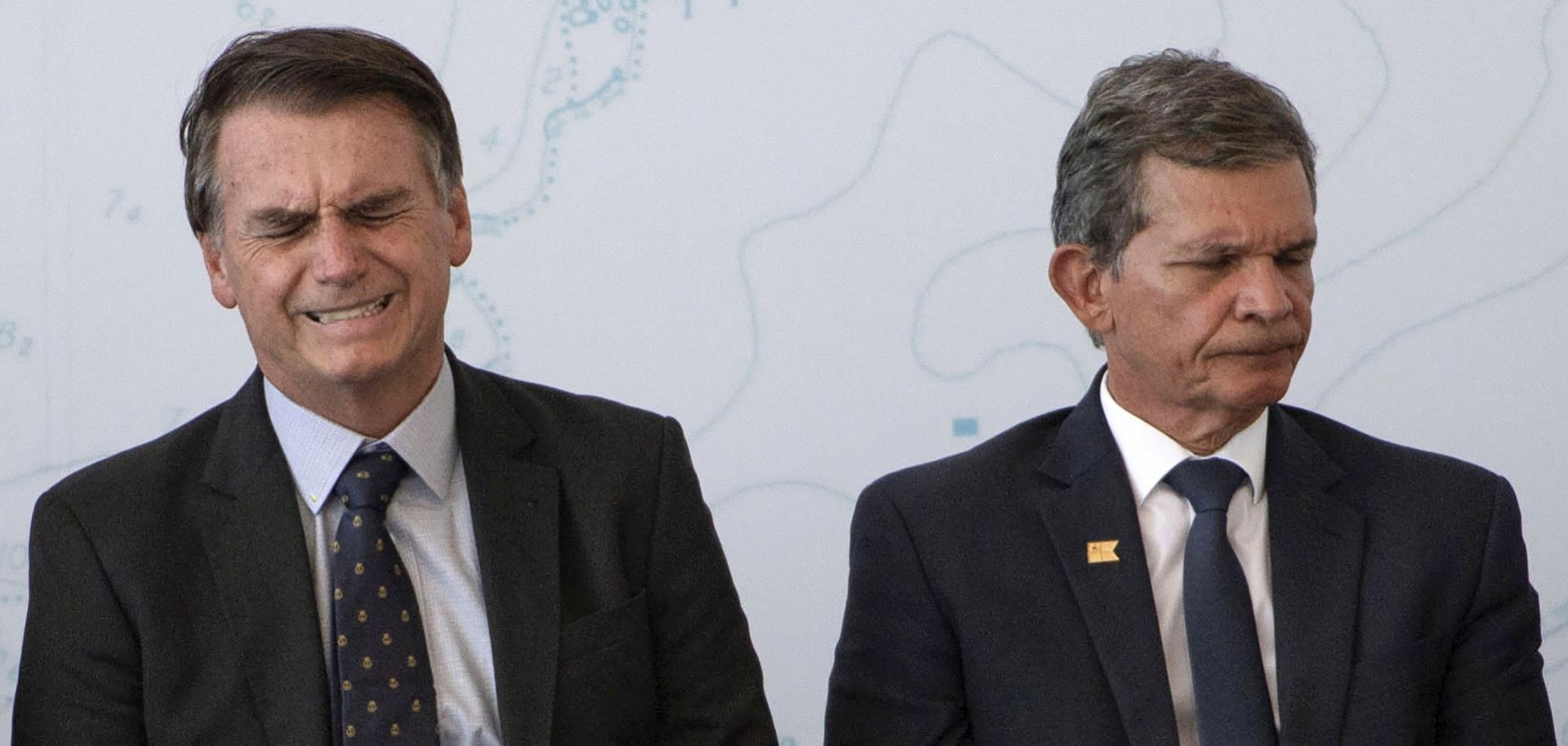
Brazilian President-elect Jair Bolsonaro (L) and Defense Minister General Joaquim Silva e Luna attend the launch ceremony of the Brazilian Riachuelo Class Submarine at a navy base in Itaguai city, Rio de Janeiro state, on Dec. 14, 2018. After defeating all comers, Bolsonaro will take charge of Latin America's largest country on Jan. 1, 2019.
A Path to the Presidency Bolsonaro almost grabbed the presidency in the first round of voting on Oct. 7, but he made sure of his victory in a second round on Oct. 28. With popular former leader Luiz Inacio Lula da Silva — widely known as Lula — barred from running because of a corruption conviction, Bolsonaro coasted to victory on a campaign to get tough on crime. Bolsonaro, who ran on a law-and-order political platform, wooed Brazilian voters weary of years of economic decline, growing crime and corruption scandals reaching the top echelons of government with promises to create stability and economic growth. While his policies to fight corruption are still works in progress, they likely will form a centerpiece of his presidency. Also at the top of his priority list will be satisfying voter demands for greater economic growth.
