
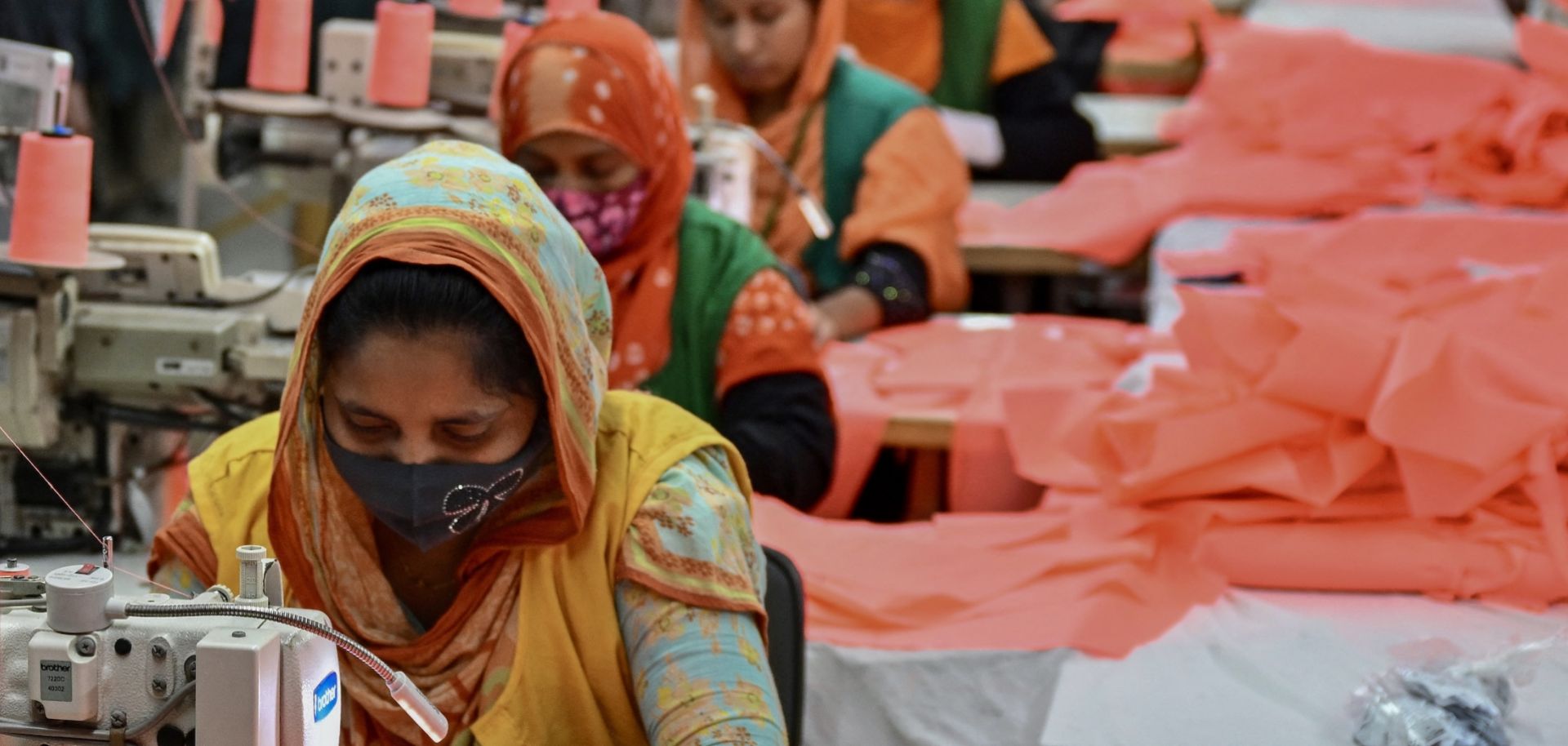
Bangladesh's economically crucial ready-made garment (RMG) sector will likely remain under pressure from existing and possible additional U.S. tariffs , as the potential for limited U.S. relief, government support and external assistance would provide only modest gains unless productivity, energy reliability and product diversification improve. On July 24, the United States implemented a 10% tariff on imports from Bangladesh, one of 60 countries that faced new levies under Section 301 of the U.S. Trade Act of 1974 due to their alleged failure to fully prohibit and enforce restrictions on imports of goods made with forced labor. Previously, under their Agreement on Reciprocal Trade reached in February, the United States and Bangladesh agreed to a 19% tariff on Bangladeshi imports under the International Emergency Economic Powers Act (IEEPA), while selected products, including certain tea, coffee and spices, were exempted.
