
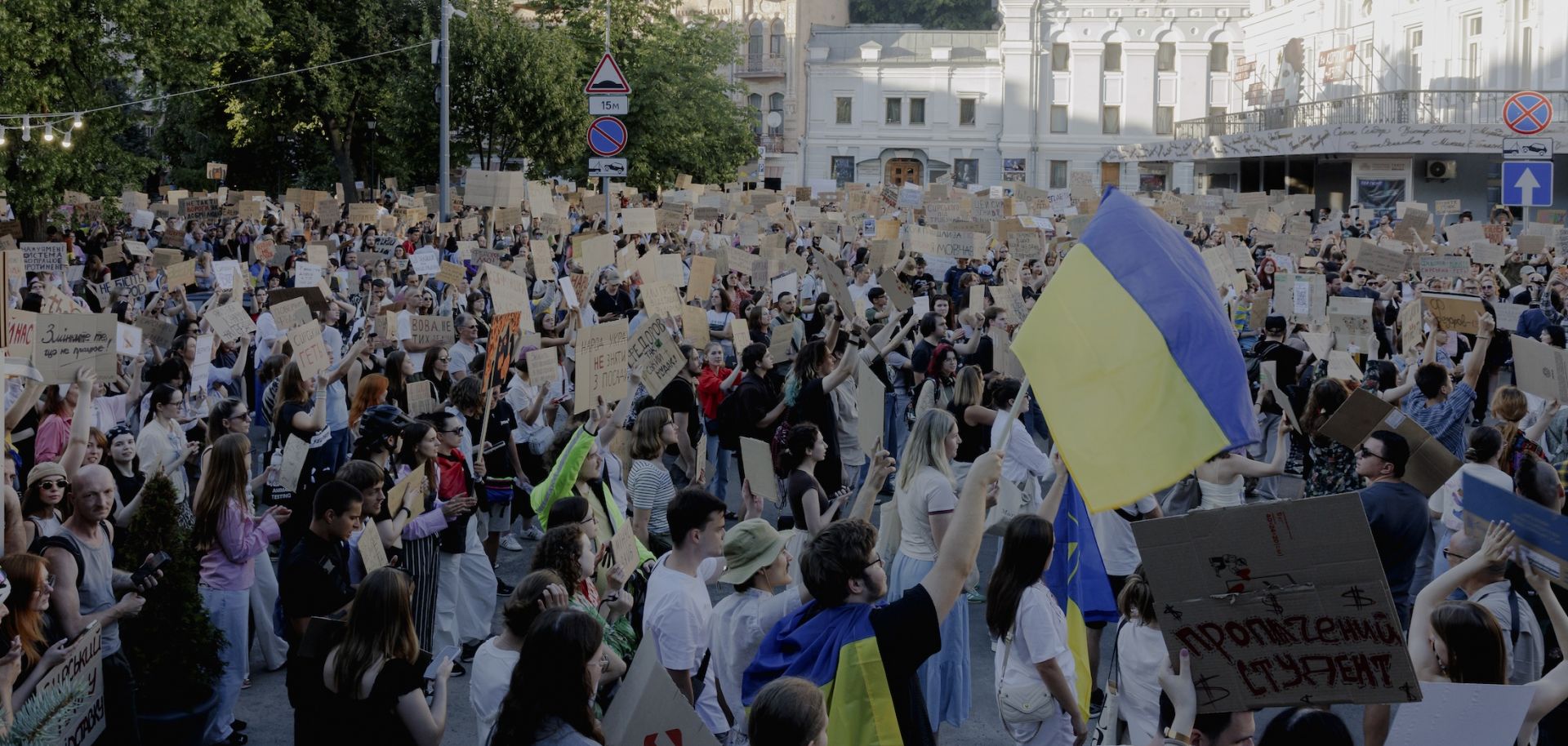
Ukrainian President Volodymyr Zelensky's potentially imminent decision to dismiss the army chief under mounting public pressure would weaken his authority and strengthen his potential political rivals, while prolonged turmoil could begin to weigh on Ukraine's war effort. On July 19-21, Zelensky held meetings with senior commanders amid reports that he was preparing to dismiss Lt. Gen. Oleksandr Syrskyi as commander-in-chief of Ukraine's armed forces. Those consulted included Joint Forces Commander Maj. Gen. Mykhailo Drapatyi and Air Assault Forces Commander Brig. Gen. Oleh Apostol, who are reportedly among the leading candidates to succeed Syrskyi. The meetings followed several consecutive days of protests after Zelensky's July 15 removal of popular Defense Minister Mykhailo Fedorov brought thousands of people into the streets of Kyiv and other cities, marking Ukraine's largest demonstrations since Russia launched its full-scale invasion in February 2022.
