
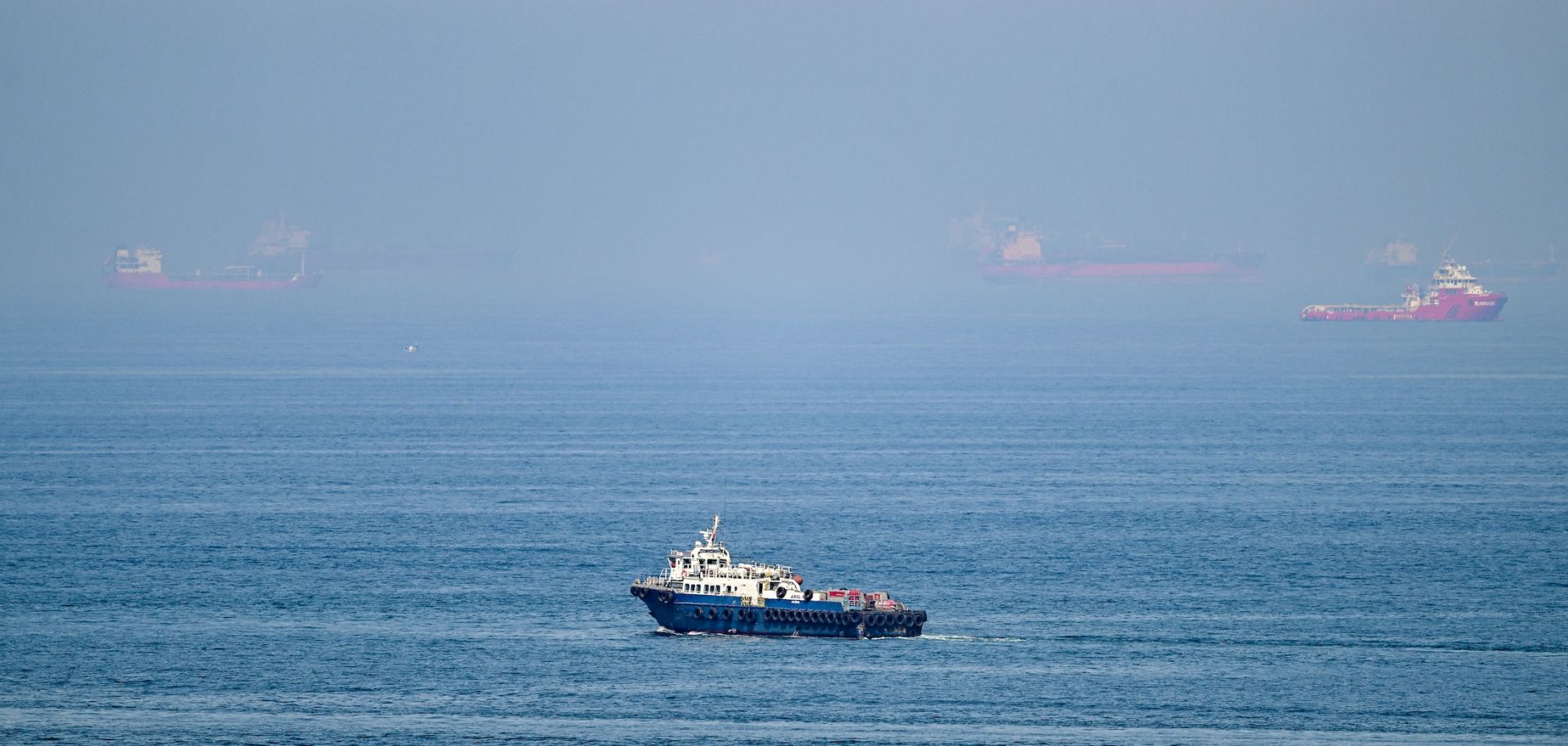
Cargo ships June 19 off the coast of the Khor Fakkan Container Terminal in Sharjah emirate, along the Gulf of Oman. On the heels of growing domestic political pushback in the United States, Washington and Tehran will enter a second week of the 60-day ceasefire.
(AFP via Getty Images)
Cargo ships June 19 off the coast of the Khor Fakkan Container Terminal in Sharjah emirate, along the Gulf of Oman.

What We're Tracking

Japan's Takaichi goes to India. Japanese Prime Minister Sanae Takaichi will meet with Prime Minister Narendra Modi from July 1-3 in New Delhi for the two countries' 16th annual summit. During the meeting, Takaichi will seek to bolster cooperation with India on economic security measures, especially efforts to guarantee energy and critical mineral supplies, such as rare earths, amid growing U.S. trade protectionism and Chinese export restrictions. She will also seek to deepen defense cooperation, with an eye toward deterring Chinese threats to maritime freedom of navigation and disruptions to key shipping straits, like those recently seen in the Strait of Hormuz. Modi, however, has tried to avoid strongly aligning with either U.S. or Japanese defense and economic security efforts aimed directly at China, preferring to bolster its own defense capabilities at large without expressly targeting China. The topic of the U.S. Department of Defense renaming the Indo-Pacific Command the Pacific Command — which threatens to exacerbate U.S.-India tensions amid fraught trade talks — will likely come up, with Takaichi reaffirming Japan's commitment to the Free and Open Indo-Pacific concept and its goal of cooperating with all regional partners on military and defense industrial development.

An unsteady U.S.-Iran ceasefire. On the heels of growing domestic political pushback in the United States, Washington and Tehran will enter a second week of the 60-day ceasefire, with Iran pushing for greater economic concessions, including the ability to toll the Strait of Hormuz and the United States suggesting it might be open to some of these concessions in a bid to ensure the strait reopens. Meanwhile, Iran's intermittent strikes on shipping outside its approved shipping lanes add another layer of uncertainty, with the United States poised to conduct limited counterattacks to deter such strikes while at the same time holding together their memorandum of understanding. Both sides are benefiting from the ceasefire, with Iran exporting oil and the United States seeing gasoline prices decline, suggesting they will stick to the broad outlines of the ceasefire even if they try to use pressure to shape its finer details. This unstable dynamic carries a latent risk of escalation that could rapidly unravel any semblance of normalcy that has resumed in the Gulf and the Strait of Hormuz. 

The presumptive incoming British prime minister outlines his economic priorities. Andy Burnham, the former Greater Manchester mayor and now most likely candidate to succeed Keir Starmer as Labour Party leader and British prime minister, will deliver a speech in London next week aimed at setting out his economic policy priorities and establishing his fiscal credibility ahead of the Labour leadership contest. Burnham is expected to commit to the government's self-imposed fiscal rules in a bid to reassure gilt markets unsettled by the prospect of a left-leaning leader who has previously favored higher spending. The speech will likely center on his signature agenda of devolution, regional growth and infrastructure investment, and reportedly will include plans for a new department for transferring powers from central government to local authorities. Market attention will also focus on his choice of chancellor, with Shabana Mahmood, Ed Miliband and Wes Streeting among the favorites to replace Rachel Reeves. Nominations for the new Labour leader open July 9; Burnham could be sworn in by mid-July if no challengers emerge.

Trilateral talks for the U.S.-Mexico-Canada Agreement review begin. Canada, Mexico and the United States on July 1 will hold their first trilateral meeting about the USMCA review; failure to reach an agreement to extend the pact will trigger annual reviews of it. Negotiators from Mexico and the United States have held two rounds of talks since late May, with a third scheduled for July 20, but no progress has been made in U.S.-Canada talks. The large list of complex issues under discussion means that the three countries will almost certainly not reach an agreement in the short term. The most challenging topics include stricter rules of origin, labor enforcement requirements, energy policy, digital trade and Chinese transshipment. While Mexico City and Ottawa will likely agree to various U.S. demands, they are unlikely to back a deal that undermines their long-term strategic interests, meaning an impasse will persist over the coming years, exposing businesses to uncertainty, especially those operating with integrated supply chains in North America, such as in the automotive, electronics and agricultural sectors.

Recommended Reading


Podcasts

Visit the podcasts page to hear conversations about geopolitical and risk intelligence.

RANE
SUBSCRIBERS ONLY

Expert analysis when it matters most.

Get access to RANE's decision-grade geopolitical intelligence.