
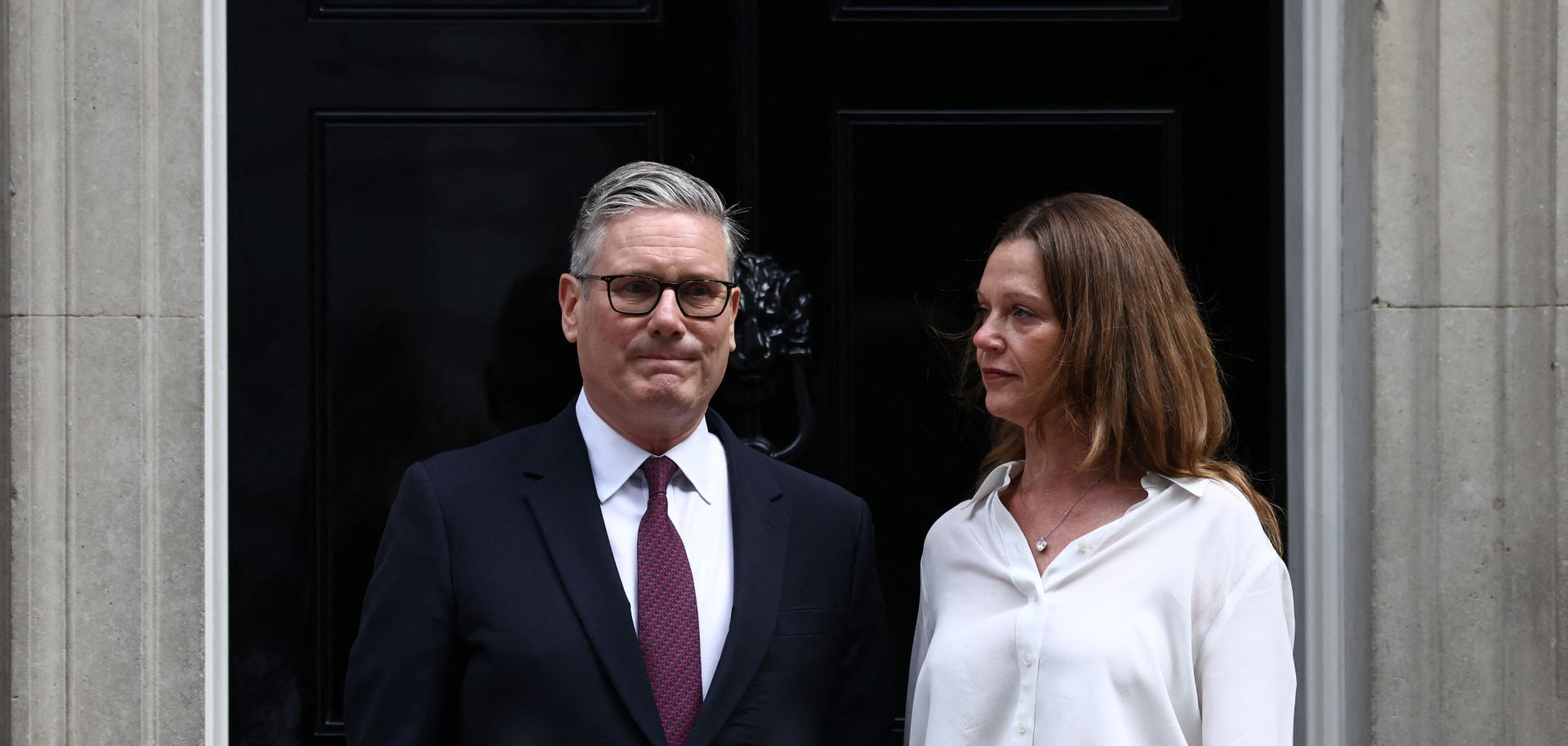
U.K. Prime Minister Keir Starmer's resignation opens a path to near-term political stabilization under front-runner Andy Burnham, but market confidence will depend on whether a fractured Labour party can maintain fiscal discipline while expanding regional investment and state intervention. On June 22, Keir Starmer announced his resignation as prime minister and leader of the Labour party, bringing to an abrupt end a premiership that began with a landslide election victory in 2024 but steadily lost political momentum over the following two years. In a statement outside Downing Street, Starmer said he had "heard the answer" from his party on whether he remained the right person to lead Labour into the next general election, adding that he would step aside in the national interest while ensuring an orderly transition. Starmer also said that he would remain in office in a caretaker capacity until a successor was chosen. His resignation follows months of intense internal pressure after poor local election results in May, which saw Labour suffer heavy losses across England, Wales and Scotland and triggered a wave of criticism from MPs, ministers and party activists. In recent weeks, more than 100 Labour MPs were reported to have called for a change of leadership. Several ministerial resignations and public interventions by senior figures also demonstrated the extent of the discontent within government.

- Starmer's critics argued that he had failed to articulate a compelling political vision after entering office, relying instead on claimed managerial competence and what turned into only incremental reform. Repeated policy reversals, poor polling numbers, sluggish economic growth, persistent concerns about the declining quality of public services and a growing threat from Nigel Farage's Reform U.K. all contributed to a perception that Labour was drifting without a clear sense of direction.
- Greater Manchester Mayor Andy Burnham's election to Parliament in the June 18 Makerfield by-election meant that he was constitutionally capable of serving as prime minister. Many MPs and Labour members saw him as an alternative leader better capable of reconnecting with disillusioned voters. In the hours that followed the by-election, pressure from senior Cabinet colleagues and parliamentary colleagues had become overwhelming, leading Starmer to conclude that his position was no longer tenable. Following Starmer's resignation announcement, Burnham confirmed that he would be a candidate to lead Labour and the United Kingdom, adding that he would give Britain "stability, seriousness and a continued focus on the issues that matter most."
If Burnham is the only candidate in the leadership race, he could be prime minister by mid-July, but additional candidates could extend the process to late August or early September. According to Starmer, nominations for a new Labour leader, and therefore prime minister, will open on July 9. If Burnham is the only candidate, there will not be a vote for Labour leader. The transition would be completed very quickly and Burnham could enter Downing Street by around July 17. Such an outcome would allow Labour to avoid a prolonged period of uncertainty and would give Burnham the summer to establish his government before Parliament returns in September. However, the timetable could lengthen significantly if another major figure were to enter the race. The most frequently mentioned alternative was Wes Streeting, the former health secretary, who had long been regarded as one of Labour's most ambitious and capable younger politicians. However, Streeting confirmed on June 22 that he would not stand in a Labour leadership contest. Though unlikely, other senior ministers could still decide that the party should hold a competitive contest rather than simply crown Burnham. In that scenario, Labour members and affiliated organizations would likely be involved in a fuller leadership election process, pushing the final result into late August or early September. Starmer would remain caretaker prime minister throughout that period. The United Kingdom might not see a new occupant of 10 Downing Street until shortly before Parliament reconvenes after the summer recess.
- While Burnham is currently regarded as the clear front-runner, British political history is full of leadership contests that initially appeared settled before becoming highly competitive. Investors, businesses and international partners will therefore be watching not only who wins but also whether Labour emerges from the process united or divided. A swift Burnham victory would signal stability and continuity, whereas a contested race could create several additional weeks of political uncertainty before a new government is fully established.
The greatest short-term economic consequence of a Burnham premiership would be the reduction of political uncertainty following Starmer's departure, provided the leadership transition is completed smoothly and Labour presents a coherent economic strategy to investors and the wider business community. In the coming days, presuming no challengers emerge to Burnham, financial markets will focus on the composition of his Cabinet, the identity of his chancellor and whether he signals adherence to existing fiscal rules. The United Kingdom's fiscal deficit currently stands at around 4.2% of GDP, and reducing it was one of Starmer's core fiscal goals. If Burnham quickly reassures investors that Labour remains committed to fiscal discipline, the reaction is likely to be relatively calm. The pound would probably remain broadly stable, government bond yields might move only modestly higher and there would be little immediate impact on economic growth. Businesses would welcome the end of the leadership crisis, but would probably wait for policy clarity before making major investment decisions. Economic growth, inflation and unemployment are largely driven by deeper structural and international factors, meaning that no incoming prime minister can transform the economy within a few months. Nevertheless, certain sectors could benefit from expectations of policy change. Burnham has built his political reputation around regional development, transport investment, devolution, housing and public service reform. As a result, construction firms, infrastructure developers, engineering companies, public transport operators and social housing providers could all receive a boost from expectations of higher public investment. Cities outside London may also benefit if a Burnham government were to accelerate devolution and regional funding programs. On the other hand, some sectors could face increased scrutiny. Burnham has previously expressed support for stronger public control over utilities and criticized aspects of privatization of the water and energy sectors. Even if no immediate nationalization program were announced, investors could become more cautious toward heavily regulated utilities until government policy becomes clearer. If markets conclude that he intends to combine infrastructure spending with credible fiscal management, the overall effect could be mildly positive, helping restore confidence after months of political instability.
If, however, investors become concerned that a new government will succumb to pressure from a fractured Labour party, market sentiment could shift rapidly. The sheer scale of Labour's internal revolt suggests that Starmer's successor may inherit a volatile party with competing factions rather than a unified government. If markets conclude that Burnham will seek to secure party unity with higher borrowing to fund uncosted regional projects, greater state intervention or unpredictable regulatory shifts, U.K. government bond yields would likely rise as investors demand a higher risk premium, while heightened political infighting would erode corporate confidence, forcing businesses to delay major investments until a stable fiscal trajectory is established.
Beyond the first few months of his government, Burnham's long-term challenges would center on balancing an interventionist agenda with fiscal credibility. Any sustained push for higher public investment or greater state involvement in utilities would be closely scrutinized by bond markets and could raise borrowing costs if not clearly funded. He would also face major delivery constraints, as large-scale infrastructure, housing and devolution plans depend on a U.K. state that is often slow-moving, capacity-limited and constrained by planning, procurement and skills bottlenecks. Politically, he would need to hold together a broad Labour coalition while managing pressure from both left-wing demands for faster economic intervention and centrist concerns about market stability, all while competing with populist parties that could capitalize on any failure to raise living standards quickly. Burnham should offer significant continuity in U.K. foreign policy. He supports close ties with the United States, pragmatic relations with the European Union and long-term support for Ukraine against Russian aggression.