
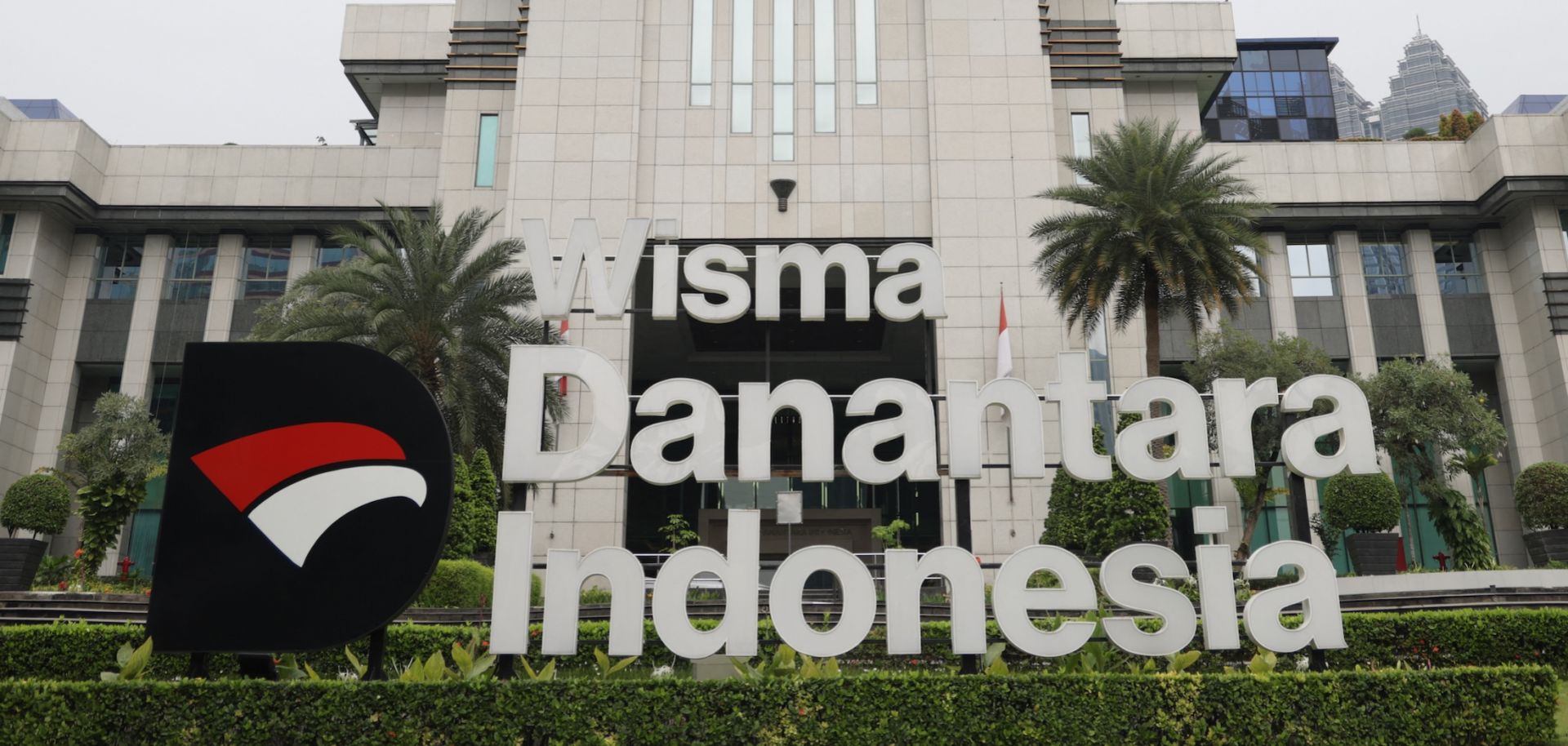
Indonesia's new commodity export oversight regime marks a major expansion of state control over strategic exports, but fiscal pressure, investor unease and street protests will likely push a softer monitoring model short of a full state takeover. Indonesian officials clarified on June 12 that Danantara Sumberdaya Indonesia (DSI), the new state-owned entity created to oversee commodity exports, will review export prices and trade data but will not directly sell commodities, replace private exporters or take over existing contracts. The clarification came after Indonesia began a June 1-Dec. 31 transition period during which exporters of commodities covered under the policy, which include palm oil, coal and ferroalloys, must report export activity to DSI, after technical rules issued earlier in June indicated that only the appointed state firm would be allowed to export covered commodities after Dec. 31. The government also issued technical rules clarifying that the system would cover most major palm oil products, several coal products and ferroalloys containing more than 2% carbon by weight, while leaving some palm oil derivatives, nickel pig iron and many other resource exports outside the initial scope. However, industry groups warned that DSI's broad and vaguely defined mandate could disrupt contracts, payments, export proceeds rules, shipping arrangements and customer relationships, prompting officials to say the entity would act as a price monitoring and data review body rather than a direct seller. The clarification came amid broader pressure on Indonesia's economy and politics, including weak investor sentiment and a depreciating Indonesian rupiah, as well as student protests over living costs, costly state programs and government overreach, including the government's growing reliance on the military and police in civilian administration.

- Indonesian President Prabowo Subianto first announced the plan on May 20 as a way to reduce underinvoicing, increase state revenue, strengthen foreign exchange reserves and keep more export earnings onshore, immediately raising business concerns over contract continuity, payments and the state's role in price setting.
- Business groups have sought clarity on issues beyond the direct sales question, including payment mechanisms, export proceeds rules, the role of international trade agreements and whether DSI's monitoring platform will be transparent and accountable.
The rollout of DSI is controversial because it adds to the financial pressure caused by Subianto's costly economic agenda, and it makes businesses fear state interference in contracts, pricing and private commodity sales. The government's case for DSI rests on a real policy problem. Indonesia exports large volumes of coal, palm oil and ferroalloys, but officials believe underinvoicing and transfer pricing allow exporters and traders to shift profits offshore, reducing tax collection and foreign exchange inflows. This concern has become more urgent in recent months because the rupiah has hit record lows, capital outflows have weakened investor confidence and Subianto's broader spending agenda (most notably, his flagship free school meals program) rapidly increases the need for revenue, with the Iran war and Strait of Hormuz disruptions adding external pressure by spiking fuel subsidy and living costs. DSI therefore fits into a wider pattern of state-led economic management, including tighter controls on export proceeds, the use of the newly launched Danantara sovereign wealth fund (which DSI is under) to centralize state investment, and spending programs that were core to Subianto's campaign promises. However, that same pattern explains why the export plan triggered such a sharp reaction. Businesses fear the state could interfere in contracts and pricing, while investors see the plan as another sign of policy unpredictability. Concurrently, student protests over living costs, corruption, budget priorities and greater military involvement in civilian administration have also added to the broader pressure on Subianto's state-led economic agenda.
- Credit ratings agencies Moody's and Fitch moved Indonesia's sovereign outlook to negative in February and March, respectively, after January's MSCI-triggered market rout exposed deeper investor concerns over market transparency, governance and policy predictability. Downgrade risk has grown more salient as market stress has accumulated into June, with the rupiah hitting record lows, foreign investors pulling about $3.2 billion from Indonesian equities, foreign exchange reserves falling by about $12 billion, and Bank Indonesia raising rates by a cumulative 100 basis points in less than a month to stabilize the currency and contain inflation risks.
- Subianto claims that underinvoicing has cost Indonesia $908 billion over 34 years and that the export overhaul will recover upwards of $150 billion in annual revenue, though the latter figure is best treated as an ambitious target rather than a precise estimate.
- The school meals program has faced scrutiny over its cost (which has so far totaled over $4 billion), safety (after over 33,000 school children reportedly suffered food poisoning) and governance (after the recently dismissed head of the National Nutrition Agency and two deputies were arrested on June 3 on corruption charges).
- Indonesia's 2026 budget raised spending by 9% to about $231.5 billion and included a major expansion of the free meals program plus a roughly one-third increase in defense spending, underscoring that revenue pressure reflects a broader spending agenda, not only one welfare program. While the budget assumes a fiscal deficit of 2.68%, below the 3% legal ceiling, it also assumes a 10% increase in revenue while significantly increasing spending. This leaves the government exposed to a wider deficit if revenue underperforms, if spiking fuel subsidy costs continue to disproportionately burden state expenditure, if flagship programs require more funding or if unforeseen developments (e.g., natural disaster recovery) require urgent state spending.
Indonesia will likely use the June 1-Dec. 31 transition period to keep DSI focused on mandatory reporting, monitoring and price review while leaving the post-transition rules unsettled enough to preserve the option of a larger state role in export pricing and approvals after 2026. Though DSI marks a structural regime shift, in the short term, exporters will likely keep selling through existing private contracts while DSI builds its reporting platform, collects transaction data and reviews prices against international benchmarks. The government is unlikely to widen the commodity list before the official transition period concludes on Dec. 31 because palm oil, coal and ferroalloys already involve complex pricing formulas, logistics chains, buyer relationships and financing arrangements that DSI has limited experience managing. However, the policy could remain disruptive during the transition period through the end of the year, as DSI could still slow shipments, challenge declared prices or apply reporting rules unevenly, even if exporters remain in charge of sales and contracts. The larger risk will come after the transition, when the commodity list could theoretically expand. At that point, still unclear rules will determine whether exporters merely report transactions to DSI or whether DSI can force price revisions, require sign-off before shipments proceed or otherwise insert itself between private exporters and foreign buyers. That means the key risk is less a sudden nationalization of commodity trade than a steady rise in compliance costs, margin pressure and uncertainty over whether private contracts will be respected.
- On June 11, DSI told industry groups that it would not act as a trader or take over existing contracts. But it also issued technical rules earlier in June suggesting that only state entities could export covered commodities after 2026, when the transition period expires. To make that reassurance credible, the government will have to revise or formally clarify these rules.
Political and market pressure will likely soften DSI's implementation, but the government is unlikely to abandon the policy unless it both fails to increase revenue and foreign exchange and recover investor confidence. Market stress, business uncertainty and, to a lesser extent, street protests will likely push the government toward clearer messaging, carveouts and phased implementation. But these factors are unlikely to force Subianto to abandon DSI or his broader interventionist agenda because his coalition remains dominant in parliament and the government still needs revenue, foreign exchange and a visible crackdown on commodity underinvoicing. That gives the government a reason to narrow and clarify the rollout, as officials can preserve the core claim that they are cracking down on underinvoicing and keeping more export earnings onshore within Indonesia while making technical adjustments to reduce market concern. The policy therefore will probably become softer in form but still interventionist in practice. Even if DSI does not sell commodities directly, it will give the government more power to review export prices, buyers and proceeds, creating new compliance burdens that could disadvantage smaller exporters and traders while benefiting larger firms that can absorb the costs and politically connected ones that can secure waivers, favorable treatment or early clarity. As such, the policy will likely only succeed if DSI can detect underinvoicing and keep more export earnings onshore without disrupting contracts, slowing shipments or politicizing price reviews. If the rules are clear and consistently applied, DSI could become a model for more targeted state oversight of strategic sectors. But if the rules are unclear, or if they are used to pressure companies or favor certain exporters, the system will likely damage market confidence without reliably increasing state revenue or foreign exchange inflows.
- Subianto's governing coalition controls roughly 80% of the 580-seat House of Representatives and includes seven of the eight parliamentary parties. This gives his government enough legislative support to absorb protest pressure and make technical adjustments without abandoning the broader policy.
- Conflict of interest and favoritism are additional risks to watch, given that several figures close to Subianto have business backgrounds in commodities or adjacent sectors. For example, Subianto's brother founded Arsari Group, whose interests include agriculture, energy, mining, trading and logistics. Danantara's chief executive officer and chief investment officer also previously held senior roles at coal and energy firms.