
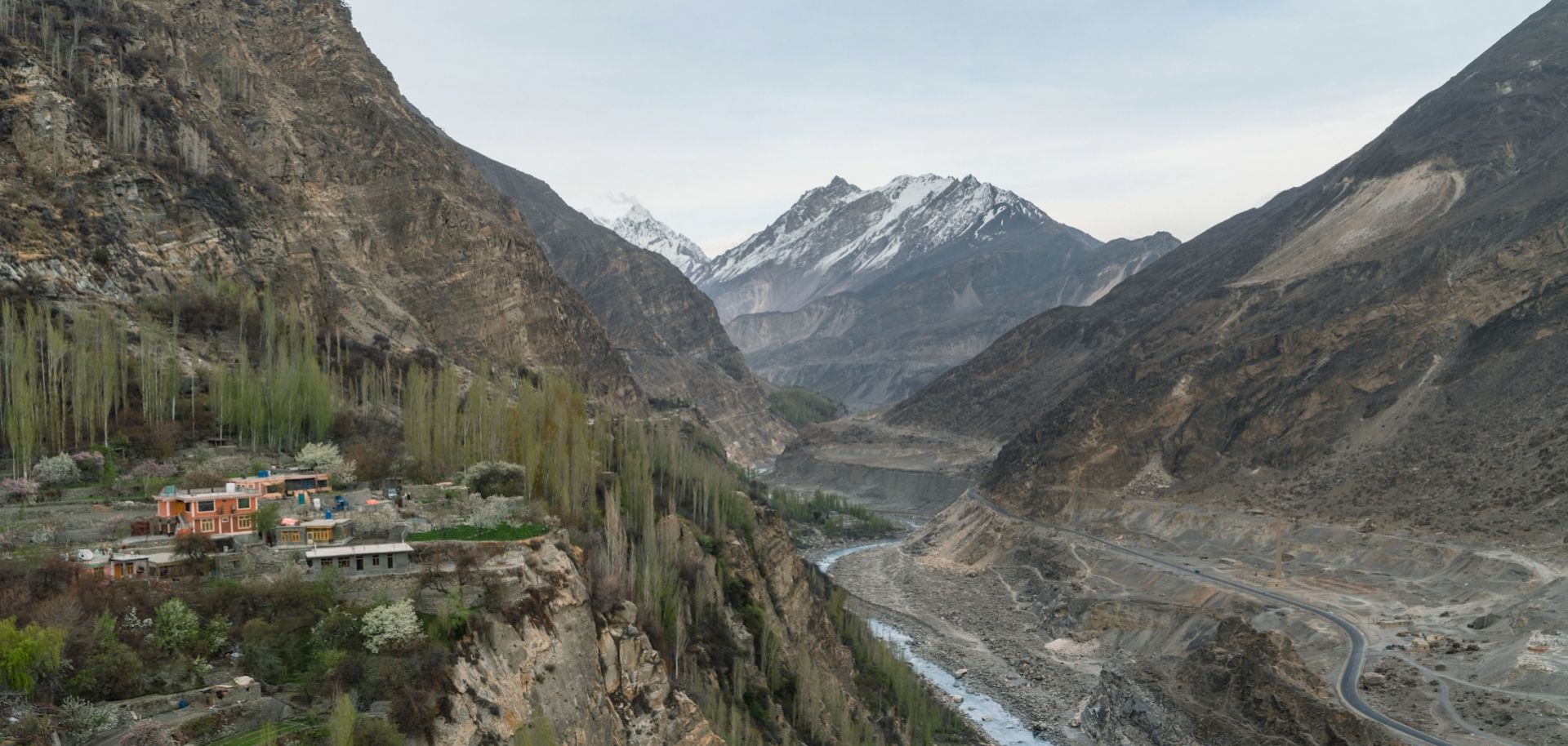
View of the river in the mountains of northern Pakistan.
(Getty Images)
View of the river in the mountains of northern Pakistan.

In the short term, reduced India-Pakistan coordination on river flow data, forecasting and technical communication will likely increase uncertainty and crisis volatility without significantly limiting actual water flows. In the longer term, potential upstream infrastructure expansion and climate stress could increase structural instability and intensify crisis dynamics between the two countries. On June 5, India's Ministry of External Affairs stated that the Indus Waters Treaty, a water-distribution agreement between India and Pakistan, will remain in abeyance until Pakistan fully stops cross-border terrorism, responding to Pakistan's continuous allegations that India is seeking to weaponize water through river infrastructure projects. This follows remarks in April by Pakistan's planning minister, Ahsan Iqbal, that the country had only about 90 days of water storage capacity. This falls well below regional and global benchmarks, with regional economies typically maintaining more than 120 days of storage and the global benchmark standing at roughly 300 days. Iqbal's comments come as Pakistan is facing growing transboundary water security pressures following India's suspension of the treaty in May 2025, after New Delhi blamed Islamabad for a militant attack in Indian-administered Kashmir that killed 26 people, though Pakistan denied responsibility.

  • Pakistan and India signed the Indus Water Treaty in 1960 to govern the distribution of water from the Indus River, which flows through both countries to the Arabian Sea. India was granted unrestricted use of the "eastern rivers" of Sutlej, Beas and Ravi, while Pakistan was granted the use of the "western rivers" of Indus, Jhelum and Chenab. India is also allowed to use the western rivers, but for limited purposes that can not significantly disrupt or alter the water flow to Pakistan.

Pakistan's water security is highly dependent on the Indus basin, with long-standing storage and management weaknesses and climate pressures continuing to heighten risks to agriculture, food supply and hydropower generation. Water scarcity and low storage capacity have been long-standing structural issues in Pakistan, driven by rapid population growth, weak irrigation systems, inadequate water management and insufficient investment in reservoirs. Climate change has exacerbated these pressures by making rainfall patterns less predictable and worsening glacial melt, drought and flood risks. Most of Pakistan's freshwater comes from the Indus River basin, which supports 80%-90% of the country's agriculture, accounts for around 90% of food production and supplies much of the drinking and municipal water, making it integral to Pakistan's economic, food and water security. Meanwhile, around 30% of Pakistan's electricity generation comes from hydropower, which is also dependent on flows from the Indus basin. Apart from the Indus River, Pakistan does have other water sources, including groundwater, monsoon rainfall and other local reservoirs. However, they are not as significant and do not make up for Pakistan's dependence on the Indus. 

  • Pakistan uses groundwater for irrigation and urban supply, but over-extraction has depleted aquifers in many areas faster than they can naturally recharge. Seasonal monsoon rainfall also contributes to water supply, though limited storage infrastructure either inadequately captures the water or causes flooding. Small local rivers and reservoirs, particularly in regions such as Balochistan, provide some supply but are not large enough to offset dependence on the Indus system.

Pakistan will likely continue facing major political and institutional constraints on large-scale water infrastructure development, as interprovincial disputes limit consensus and implementation even for federally approved projects. While Pakistan's federal government has the authority to approve major water infrastructure projects, implementation often faces challenges at the provincial level because water allocation is highly politically sensitive. Downstream regions such as Sindh and Balochistan consistently argue that new dams could reduce their water share, while governments in upstream provinces such as Punjab and Khyber Pakhtunkhwa struggle to build the political consensus needed to advance reservoir projects. Water project disputes are negotiated through the Council of Common Interests, or CCI, a constitutional forum where the prime minister and provincial chief ministers determine how shared resources are managed. If consensus is not reached, provinces can challenge projects in court, delay or deny land acquisition and environmental clearances, and refuse administrative cooperation. This means a dam can remain formally approved on paper while becoming functionally impossible to build. Pakistan's military can influence the pace of these projects through bodies such as the Special Investment Facilitation Council, which brings together military and civilian leadership to accelerate strategic projects, and the Frontier Works Organization, which physically constructs major infrastructure. These mechanisms can help cut through bureaucratic delays, coordinate logistics and frame water projects as national security priorities. However, the military also struggles to secure cooperation from local governments and reassure downstream provinces that upstream regions will not ultimately control water releases. While the military could seek to advance projects through a more assertive approach, it is unlikely to eliminate the need for at least some degree of interprovincial consensus. Such an approach would also risk generating political resistance and regional tensions that could undermine broader objectives of national stability and cohesion. A military intervention would also risk deepening provincial grievances by reinforcing perceptions that federal institutions are overriding smaller provinces' interests, potentially turning technical water disputes into wider conflicts over political representation, regional autonomy and resource control. Climate change and worsening water scarcity will likely create greater incentives for provincial governments to support new storage and water management infrastructure, particularly if projects are accompanied by credible guarantees by the federal government on water allocations, revenue sharing or local development benefits. However, climate stress is also likely to increase competition over scarce resources, further amplifying downstream provinces' concerns. As a result, climate pressures could facilitate progress on major dam projects, but longstanding interprovincial disagreements will likely persist.

  • In April 2025, the Pakistani government proposed a multi-canal project as part of a military-backed Green Pakistan Initiative to expand irrigation in Punjab. However, officials and political groups in Sindh argued that it would violate the 1991 Water Apportionment Accord, which governs the allocation of Indus water among the provinces, by diverting water in a way that could reduce Sindh's share. The project triggered large-scale protests across Sindh, prompting Prime Minister Shahbaz Sharif to convene the CCI. Ultimately, the CCI suspended progress by reversing earlier technical approvals and ruled that the canal construction could not proceed without consensus from all four provinces. This episode showed that, even with backing from federal authorities and alignment with the military, provincial resistance is often enough to stall projects. 

In the coming years, Pakistan will likely prioritize politically feasible small and medium-scale water storage and efficiency projects, but without consensus on large reservoirs, these measures will remain insufficient to close its long-term structural water storage gap. Among proposed future reservoir projects, Akhori Dam, a proposed off-channel storage dam located in northern Punjab, and smaller regional storage schemes in Khyber Pakhtunkhwa and Balochistan are more politically viable than highly contested projects such as Kalabagh Dam, a proposed on-channel dam on the Indus River in Punjab, because they pose fewer direct risks to downstream water allocations and have generated less entrenched interprovincial opposition. However, projects of this kind are unlikely to fully resolve Pakistan's broader water crisis because their storage capacity is limited relative to the country's long-term needs, while Pakistan's deeper challenge is the lack of large-scale reservoir infrastructure capable of capturing substantial seasonal flows from monsoon rains and glacier melt for use during dry periods. Addressing that structural shortfall would likely require larger, more politically contentious mega-dams such as the Kalabagh Dam or similarly scaled national storage projects, but these will remain difficult to advance because of entrenched interprovincial disputes over water allocation and control. Less politically contentious options to address Pakistan's broader water crisis include measures the country has already been pursuing, such as canal lining, small local reservoirs, laser land leveling, wastewater reuse and irrigation-efficiency upgrades. However, these efforts have generally been unevenly implemented and too limited in scale to fully address Pakistan's long-term water storage and security challenges. If they were broadened and implemented more systematically at a national scale, they could help reduce water losses, improve agricultural productivity and ease pressure on existing river and groundwater systems, but in practice, these measures will likely continue to be carried out in a fragmented way across provincial and local levels rather than as a fully coordinated national program. 

  • External financing from partners such as China or Gulf states could partially ease fiscal constraints and improve the technical feasibility of large infrastructure projects, potentially increasing momentum for selected dams or storage schemes. These countries are primarily interested because such projects can support strategic infrastructure investment portfolios and enhance regional connectivity. However, without accompanying interprovincial concessions, such financing is unlikely to alter domestic political dynamics in a meaningful way, meaning interprovincial agreement would still be required for sustained implementation.

Since the suspension of the Indus Waters Treaty, coordination between India and Pakistan has been reduced, heightening uncertainty in water planning and management; however, changes in actual water supply have been minimal, as no major new diversion infrastructure has been implemented. Following the suspension of the Indus Waters Treaty in 2025, there has been no clear, verified evidence of large-scale reductions in water flows from the Indus into Pakistan. Apart from a few minimal disruptions, the river system continues to operate the same as prior to the treaty's suspension, especially given that any changes in downstream water availability would require major new infrastructure, such as large dams or diversion works, which take years to build and have not been implemented thus far. India has made progress on projects such as the Shahpurkandi Dam, but this concerns the Ravi River, one of the eastern rivers that India already controls under the treaty, rather than Pakistan's western river allocations. The more immediate changes include India's suspension of formal coordination mechanisms with Pakistan, particularly the sharing of river flow data, flood forecasting information and technical communication. This has increased uncertainty for Pakistani water managers, especially in planning irrigation schedules and preparing for seasonal variability, meaning the impact so far is primarily operational and informational rather than a confirmed reduction in actual water volumes.

  • A small decline in Chenab flows was recorded at Marala Headworks on May 2-4. However, it has not been confirmed whether this was deliberate upstream operational adjustments by India or normal reservoir-management variability.
  • India has accelerated several dam and hydropower projects on western rivers following the suspension of the treaty, including the Sawalkot Hydroelectric Project and the Pakal Dul Hydroelectric Project, which will modestly expand India's storage and flow-regulation capacity. However, most of these projects remain limited in their ability to significantly alter downstream water flows in the near term, as they are primarily hydropower-focused developments with constrained storage capacity rather than large reservoirs capable of causing sustained large-scale reductions in water reaching Pakistan.
  • India has announced several long-term hydropower and river-management projects on the western rivers of the Indus basin, particularly in the Chenab system. Notably, on May 20, the government announced the Chenab-Beas Link Tunnel, designed to divert a portion of the upper Chenab tributary flows into the eastern river system. While this project is largely at the planning and approval stage, Pakistan's concern is that it could increase India's ability to store, time or reroute water within the Chenab basin, giving India greater operational leverage.

In the near term, apart from domestic infrastructure and efficiency measures, Pakistan's tools to address the India-related dimension of its water security challenge will likely remain limited to diplomatic and strategic responses. India is increasingly treating water management in the Indus basin through a more unilateral and securitized lens, prioritizing sovereign control over river infrastructure development and operational autonomy, which limits the scope for reinstating the previous level of institutionalized coordination. In parallel, Pakistan will likely continue to internationalize the issue by framing the suspension of cooperative arrangements as a breach of established transboundary water governance norms, and seek support or mediation from external actors, such as multilateral institutions or third-party states. However, enforcement capacity in such disputes remains limited because there is no binding global water authority with compulsory jurisdiction over interstate river disputes, particularly in high-stakes geopolitical conflicts like the India-Pakistan rivalry, where strategic and security considerations tend to override external pressure or arbitration rulings.

  • On May 15, the Permanent Court of Arbitration in The Hague issued a supplemental ruling in the Indus Waters Treaty dispute, tightening limits on India's hydropower projects. The ruling stated that India should operate certain projects under stricter constraints on water storage and flow regulation to ensure continued downstream river flows to Pakistan. India rejected the decision as illegitimate and reaffirmed that it does not recognize the tribunal's authority or the ruling's validity, reflecting a decision that is legally significant but politically unenforceable.

In a long-term escalation scenario in which India expands storage and shifts release timing, Pakistan would likely strengthen domestic resilience while adopting a more confrontational posture, increasing the risk of faster, more unstable crises and military flare-ups. Triggers for escalation include India substantially expanding upstream storage capacity on the western rivers beyond current small hydropower projects, particularly infrastructure capable of holding and releasing significant seasonal volumes. Under this scenario, Pakistan would likely place greater emphasis on internationalizing the dispute and increasing the political costs of unilateral Indian actions. Internally, it would seek to reduce its vulnerability to upstream uncertainty through faster implementation of water storage, efficiency and resilience measures, while elevating water security as a higher national policy priority. Pakistan's response would also involve sustained high-level crisis diplomacy, including sharper public messaging from political and military leaders, more frequent crisis consultations between civilian and military authorities and a clearer effort to link water disputes with wider security tensions involving India, using this framing to justify increased pressure on India in other areas of the relationship, such as border tensions and ceasefire arrangements. Coming off confrontations in May 2025 in an already volatile bilateral relationship, these water-related triggers would increase the risk that future crises develop a military dimension by adding another high-sensitivity flashpoint to an environment where mistrust is already elevated and escalation thresholds are lower. Even in cases where water is not the immediate cause of armed confrontation, it would still act as an amplifier of instability, narrowing space for diplomatic containment and making disputes in other areas, particularly along the Line of Control, more likely to escalate quickly and be managed through military signaling rather than political de-escalation. In more severe scenarios, water-related tensions would raise the baseline level of crisis instability between the two countries, contributing to faster escalation cycles during periods of broader bilateral tension. This does not imply automatic full-scale war, but it does increase the likelihood of short-duration exchanges and repeated border flare-ups when multiple points of friction coincide.

  • Other triggers include sustained changes in the timing of water releases, especially during peak irrigation or drought-sensitive agricultural periods, and a continued breakdown of data-sharing and coordination mechanisms coinciding with extreme climate events, such as severe floods or multi-season droughts, leading to agricultural damage or failures in disaster response due to a lack of timely information.

Despite increased instability in an escalation scenario, a full-scale "water war" between India and Pakistan would face structural military, geographic and strategic constraints. Most key water-control systems on both sides are dispersed, heavily integrated into broader river networks and difficult to target or manipulate without causing extensive self-damage downstream or upstream. This creates strong deterrents against large-scale, deliberate disruption, as any sustained interference with river systems would entail high economic and humanitarian costs for both countries, particularly in densely populated agricultural regions. In addition, water issues are embedded within a broader nuclearized deterrence environment, where both states have strong incentives to avoid escalation pathways that could generate uncontrolled retaliation. Even during severe crises, India and Pakistan have typically contained military confrontation to limited areas, suggesting that water-related tensions would more likely intensify crisis negotiations. External actors further reinforce these constraints by raising the diplomatic and economic costs of sustained escalation. The United States has historically played a crisis management role in India-Pakistan tensions, particularly when escalation risks extend beyond terrorism-related incidents into broader interstate conflict. China, as a close strategic partner of Pakistan and a major stakeholder in regional stability, would likely have strong incentives to discourage destabilization that could affect regional infrastructure corridors and broader strategic balances. Similarly, Gulf states such as Saudi Arabia and the United Arab Emirates maintain economic and political relationships with both countries and would likely favor rapid de-escalation to protect trade, energy and labor linkages.

RANE
SUBSCRIBERS ONLY

Expert analysis when it matters most.

Get access to RANE's decision-grade geopolitical intelligence.