
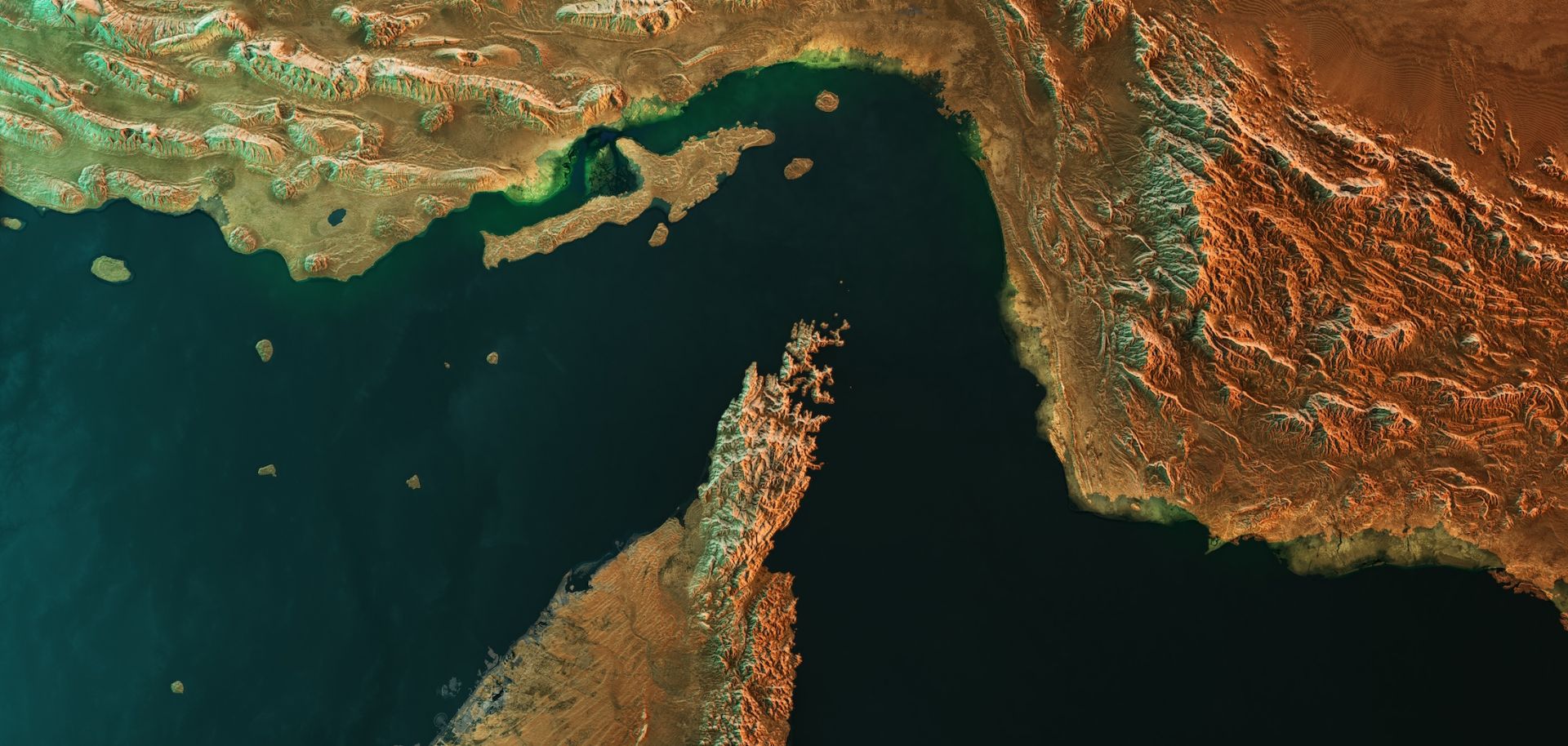
The Strait of Hormuz has been effectively closed since March because of the U.S. and Israeli war with Iran, and the months since then have been plagued by questions about how long transit through the key waterway will remain obstructed. Since the closure began, many analysts have assumed that the resulting economic disruption would be too significant for the political systems of the United States and/or Iran to ignore for the rest of the year. However, some of the key players in the war are starting to suggest there won't be an imminent resolution to the crisis, with U.S. President Donald Trump on June 2 speculating that the strait might remain shut through Labor Day, which falls on Sept. 7. As the war drags on, it is growing increasingly possible that the closure will last even longer, potentially through the U.S. midterm elections in November and into 2027, when a new, Democrat-controlled Congress may take office. If the closure lasts into the new year, the adaptations the world is currently undertaking to cope with the economic fallout would necessarily shift from temporary emergency measures to permanent policies and strategies.

The ongoing closure of the Strait of Hormuz is a waiting game between the United States and Iran, with both countries relying on economic pressure to force the other side's political system to concede. Iran intends to leverage the global economic damage caused by the closure of the strait to prevent renewed large-scale U.S.-Israeli military action, gain economic concessions and carve out a permanent sphere of influence, while the United States seeks to blockade Iranian ports to prevent the export of oil, restore freedom of navigation and compel Tehran to make concessions on its nuclear program without lifting all economic restrictions on Iran. For Iran, the strategy is about preventing the next war and breaking out of economic isolation. For the United States, it is about maintaing enough pressure on Iran to fundamentally alter its foreign policies so it is no longer a threat to the United States, Gulf Arab states or Israel. To break the impasse, one side must change its goals.
The key assumption guiding this standoff is that economic disruption will force one side to make concessions, leading to the implementation of a memorandum of understanding that restores normal traffic through the strait. This strategy could favor the Iranians if economic pressure in the United States creates sufficient domestic political risk for the Trump administration ahead of the November elections. Conversely, it could favor the Americans if Iran's cost-of-living crisis and oil production shut-in compromise the loyalty of its security forces and political establishment in the coming months. Both outcomes, however, depend on key variables: the White House acting conventionally to protect its congressional majority, and the economic pain in Iran causing notable cracks in its political economy.
When Strategy Trumps Economics
First, we should examine the assumption that economic pain can force a political system to change its policies and strategies. Sometimes this is true, as seen in the United States' regular use of sanctions and tariffs to shape other countries' foreign policies. However, strategies, let alone grand strategies, are another thing altogether. A policy is expendable, but a strategic shift under pressure is dangerous for any political system, as it can set a precedent that invites yet more pressure for yet more concessions, or internal backlash that unravels domestic support. Therefore, the risks of holding out must be particularly severe to outweigh the risks of concessions.
Take the Israeli-Egyptian war of attrition, which resulted in the 1976-75 shutdown of the Suez Canal. This was expensive for both sides: Egypt was unable to collect canal fees, sustained a drop in tourism and was forced to increase military spending, while Israel was stuck in a conflict so expensive that its economy actually shrank from 1970-71. Despite these costs, the war lasted eight years because both countries were determined to defend their regional strategies. For Egypt, that strategy was to weaken, if not destroy, Israel, through attrition, while Israel intended to weaken Egypt and deter it from war. In the end, economic attrition alone was not enough to force an outcome. Instead, Egypt's decisive defeat in 1973 demonstrated that Cairo could not muster the military might to achieve its strategic goal of destroying Israel. Meanwhile, the costs of its anti-Israel strategy had grown so high that its own economic and political system risked collapse, positioning Cairo to make the famous concessions of the 1979 Camp David peace accords.
There are certainly differences between the Israel-Egypt war and the current Iran conflict. For one, Egypt and Israel were neighbors, making their competition geographically urgent in a way that the U.S.-Iran conflict is not. Even so, this example demonstrates that some political systems can absorb economic pressure for an extended period, sometimes to the point that only a decisive military outcome will shift the calculus.
How Much Pain Is Enough?
It must be acknowledged that, at least in the United States, the economic disruptions caused by the Strait of Hormuz's closure have not been nearly as intense as previously imagined. Oil prices hover between $90 and $110 a barrel, depending on the day. The stock market has not collapsed. Bond yields remain manageable. Hiring has not fallen, and there is nothing like the rationing seen during the 1970s oil crisis. Much of this is because the United States is now a net energy producer and has unleashed its vast strategic petroleum reserves, while other countries have imposed formal and informal energy rationing to reduce global demand, and Gulf Arab states have found ways to export at least some energy to the global market. Additionally, while political pain certainly exists — Trump's approval ratings are low, particularly regarding his Iran war policies — the only elections that matter are still months away. As a consequence, economic strain has yet to spark congressional defections, let alone mass strikes and protests.
Meanwhile, there are strong signs of an economic crisis in Iran. Its inflation flirts with hyperinflation, up to 77% year on year, the highest since World War II for a country long besieged by U.S. sanctions. The country has also encouraged gasoline conservation, and food prices have shot up by 200%-300% since the war began. These developments present an economic challenge much more acute than that in the United States, where inflation has merely reached 3.8%. However, unlike the United States, the Islamic Republic does not hold free and fair elections, so there is no viable electoral backlash. Additionally, when mass uprisings took place in January, security forces conducted large-scale operations that killed hundreds, if not thousands, of people, and demonstrations have not emerged at scale since. Most importantly, there have been no defections from the regime, no significant resignations and, so far, no evidence that the security forces and the military are missing out on their meals and paychecks. Instead, all evidence suggests that hard-liners have accumulated more power in Iran's unique political system.
Of course, both sides want to end the economic impact of the Strait of Hormuz blockade as soon as possible. But it does not appear, at least for now, that the pain is high enough to force either party to offer concessions to kickstart the process. The all-important question is whether that will remain true throughout the rest of the year.
Six More Months of Stalemate
To maintain the Strait of Hormuz closure through the end of 2026, the United States must make several assumptions. The first is that the disruption will not produce a genuine domestic economic shock. This assumption relies on the belief that a combination of global demand mitigation, strategic petroleum releases, the artificial intelligence-driven stock market boom and the adaptation of Gulf Arab logistics around the Strait of Hormuz will prevent a sharp economic crisis. There will still be economic pain as inflation creeps higher (potentially triggering a Federal Reserve rate hike), while Trump's and the Republicans' approval ratings will sag, but through the rest of the year, there will be no U.S. fuel crisis, stock market collapse or recession.
The second assumption is that Trump will pay little mind to the sagging prospects of Republicans holding Congress as November approaches. This may be true for legacy reasons, with Trump seeing Iran as more important than the midterms, given that this is his final term, and/or because Trump has demonstrated a liking for risky political behavior.
The third assumption is that no U.S. opposition substantial enough to check the president will emerge. This assumption holds that Congress will not vote to overturn Trump's strategy on Capitol Hill, likely, though not exclusively, via a War Powers Act, and that the U.S. public will not conduct strikes and protests disruptive enough to threaten economic performance. Should all three of these assumptions prove true, the drivers for the United States to continue its current strategy will remain in place through 2026.
The fourth and final assumption is that neither outside pressure nor provocation will convince the United States to make concessions that would start the diplomatic resolution. Thus far, the White House has indeed been uninterested in complaints about the stalemate from countries like China and members of the Gulf Cooperation Council, and it has been unmoved by Israel's likely provocations in Lebanon and perhaps against Iran itself that seek to restart conflict.
Meanwhile, Iran must also make several assumptions to maintain the strait's closure. The first is that in the next six months, the economic shock will hurt, but not cripple, the Islamic Republic's security architecture. To this point, history shows that many authoritarian models can withstand intense economic pressure without political change: Cuba, North Korea, Russia and, latently, Venezuela all manage to keep their security forces loyal despite isolation.
The second is that no establishment figures will believe their own interests are served by breaking with the current consensus. The Islamic Republic's establishment undergoes rigorous ideological and political litmus tests and screenings, and those, like former President Mahmoud Ahmadinejad, who stray too far, end up causing others to rally against them.
The third assumption is that no substantial military threat will emerge that might actually take and hold ground inside Iran itself, with an eventual path to the capital. Indeed, there is as yet no viable rebel force, let alone a foreign invasion force, that might be able to do more than carve out enclaves inside Iran on its islands or ethnic periphery, like in Kurdistan.
The fourth is that complaints from Iran's partners in Beijing, outreach from the GCC and provocations from Israel will not force it to change strategy. In other words, Iran must ignore the pleading of those most affected by the Strait of Hormuz closure and the regional disruption, which it has done so far, while also compartmentalizing its conflict with Israel back into the path of measured response and counterattack for direct provocations. This assumption also requires the United States to prevent Israel from crossing an Iranian red line, including in Lebanon, where Iran has threatened a large assault to stop Israel's campaign to dismantle Hezbollah.
This is the recipe for a continued stalemate. It does not preclude the signing of an MoU, but it does preclude either side from actually implementing an agreement to normalize the Strait of Hormuz. This could occur if, for example, the United States demands that Iran lift its blockade first, and Iran counters with the same demand, regardless of what an MoU says. As a result, the functional impasse remains.
Implications of a Longer Shutdown
If this is the case, the emergency measures countries around the world have implemented to cope with the Strait of Hormuz's effective closure will start to become more permanent. Gulf states will see infrastructure that bypasses the strait as critical, thereby increasing the likelihood of such projects being developed. The transition to electric vehicles will accelerate in some markets. The informal rationing in the Global South could become formal, particularly for major energy importers like Egypt, India and Thailand.
Meanwhile, economic pain will grow in both Iran and the United States. In the United States, this will manifest as a more adversarial Congress that might reassert its authority to influence foreign policy through the power of the purse or the War Powers Act, forcing the Trump administration into concessions if a Democratic majority takes control in early 2027. The war could formally end with the United States easing its economic blockade on Iran, which would represent a major victory for Tehran, revitalizing its political economy to a degree not experienced in decades.
Should, however, the Trump administration instead maintain its current trajectory and the global economic fallout fail to undermine its political resolve, Tehran may face economic hardship until 2029, when Trump leaves power. That is not a timeline nearly as favorable to Iran, and it would require Tehran to engage in intense debates about how to survive such a prolonged period of confrontation and economic isolation. Will Iran integrate its economy and military more closely with Russia and China, potentially at the cost of the sovereignty it has long protected? Or will it attempt to become a self-contained security state, becoming the "North Korea of the Gulf?" Alternatively, might it finally offer significant nuclear concessions to the United States in exchange for relief, even at the cost of national dignity? Or will its elite split on these answers, pulling the country toward conflict and disarray?
For now, Iran and the United States can afford to sustain their war of attrition, but as economic pressure mounts, both sides will grow more likely to fundamentally shift their strategies.