
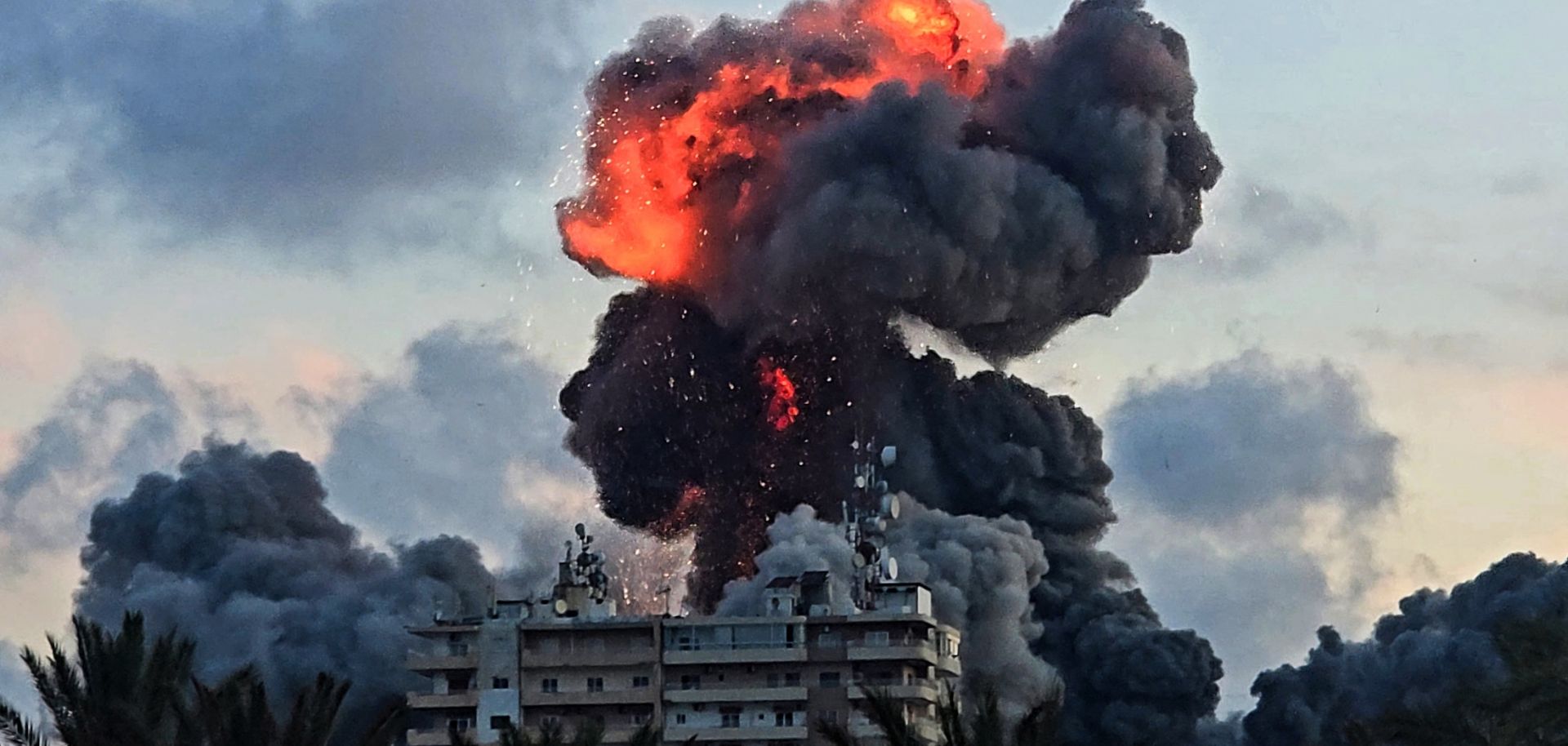
Israel's recent attacks in Lebanon indicate its military will likely intensify operations in southern Lebanon while keeping strikes on Beirut selective, aiming to simultaneously appease U.S. President Donald Trump's administration while increasing pressure on Hezbollah and the Lebanese government but falling short of changing the strategic balance and complicating Lebanon-Israel and Iran-U.S. talks. For the first time in three weeks, on May 28 the Israeli military struck a building just south of the Lebanese capital, Beirut, targeting a senior commander of Iran's Islamic Revolutionary Guard Corps stationed in Lebanon to cooperate with Lebanese Hezbollah. Initial Israeli assessments concluded the attack failed to kill the intended target. A day earlier, the Israeli military declared large areas of southern Lebanon south of the Zahrani River a combat zone as Israeli ground incursions north of the Litani River continued. The Israel Defense Forces also carried out hundreds of airstrikes on major southern cities like Tyre and Nabatieh, as well as the Bekaa Valley in eastern Lebanon. The strike on Beirut was reportedly coordinated with the Trump administration. Israeli media reported that it occurred following days of deliberations between Israel and the United States. The Trump administration has reportedly urged Israel to refrain from airstrikes on Beirut, aside from occasional attacks based on unique opportunities to assassinate senior leadership. Washington reportedly worries that attacks on Beirut would embarrass the fragile Lebanese government and further destabilize it as it continues to directly negotiate with Israel.

- For weeks, Israeli military and political officials have grown increasingly frustrated by U.S. efforts to constrain Israel's operations in Lebanon, particularly as Hezbollah's first-person view (FPV) drone threat against Israeli troops in southern Lebanon and northern Israel has intensified. Since hostilities began on March 2, twenty-four Israeli soldiers have reportedly been killed, including 11 since the April 16 ceasefire.
- On May 28, the Israeli military said it had struck more than 135 alleged Hezbollah targets over the previous 24 hours. Lebanese authorities reported that Israeli strikes that morning killed at least 12 people, including two children. Lebanese fatalities since the March 2 start of hostilities have surpassed 3,000.
- The May 28 Beirut strike also came a day before another round of security talks between Israeli and Lebanese military delegations in Washington.
Israel is escalating in Lebanon now to tackle the Hezbollah drone threat, secure tactical leverage before any U.S.-Iran deal and offset domestic criticism that the government is allowing the United States to restrain Israeli military action. Frustrated by Hezbollah's FPV drone threat and constrained by U.S. pressure to avoid a wider Lebanon escalation, Israel's military and political leadership is seeking new ways to increase pressure on Hezbollah and the Lebanese government without fully alienating the Trump administration, which is trying to broker a broader Lebanon-Israel peace and security agreement. Israeli Prime Minister Benjamin Netanyahu is also facing growing criticism that he is accommodating Trump at the expense of Israeli national security. He has incentives to pursue tactical wins in Lebanon to try to restore deterrence and deflect domestic pressure, especially as Israelis will go to the polls for new elections in September or October. Finally, Israel is likely operating under the assumption that the United States and Iran could soon reach a deal that forces de-escalation across multiple fronts, especially given Iran's push for a broad ceasefire that includes Lebanon. As a result, Israel is trying to establish new facts on the ground and create military leverage over Hezbollah and the Lebanese government before a future agreement limits its freedom of action.
- In the most recent Israeli attacks, Netanyahu reportedly approved a more limited Lebanon operation than the one proposed by the military, likely to avoid triggering a confrontation with Trump while still demonstrating to voters that Israel is escalating pressure on Hezbollah. This suggests Israeli decision-making is still constrained by U.S. tolerance: Netanyahu wants tactical gains against Hezbollah and leverage over Lebanon, but is trying to calibrate the scope of operations to avoid undermining Trump's diplomacy or inviting direct U.S. pressure to halt the campaign.
Israel will likely expand military operations in southern Lebanon and conduct occasional strikes on Beirut, but the campaign is unlikely to fundamentally alter the balance with Hezbollah and will complicate Lebanon-Israel and Iran-U.S. talks. Israel will continue striking Beirut when high-value operational opportunities emerge, particularly the targeting of senior Hezbollah commanders and leadership figures. However, such attacks will very likely remain occasional and limited as long as the Trump administration continues restraining Israel and remains invested in brokering a broader Lebanon-Israel security arrangement. To compensate for this restraint on Beirut, and to serve Netanyahu's political needs without risking the ire of the Trump administration, Israel will likely intensify ground operations in southern Lebanon, including more frequent ground incursions beyond the Yellow Line (Israeli-held areas in southern Lebanon), expanded activity north of the Litani and heavier airstrikes on urban centers in the south. However, Israel's expanded operations are unlikely to change the strategic reality: Hezbollah will retain the ability to impose costs on Israeli forces, including through the continued use of FPV drones, while the Israeli military risks overstretching the deeper it pushes into southern Lebanon. All of these dynamics will further strain the Lebanese government's ability to progress in peace talks with Israel, given that the Lebanese government has been attempting to call for a complete halt to fighting to proceed with talks and the disarmament of Hezbollah. Further Israeli-Hezbollah fighting will also weigh on ongoing talks between Iran and the United States, which have reportedly been discussing a framework to de-escalate their conflict as well as the one in Lebanon. Even if Tehran and Washington reach a deal that includes a clause to wind down fighting in Lebanon, precedent indicates that this is unlikely to hold, meaning further fighting between Israel and Hezbollah will keep a future flare-up in regional tensions on the table.
- Netanyahu will likely use expanded operations in Lebanon to offset domestic criticism and project strength ahead of Israel's election season. He has come under growing pressure from far-right allies, northern communities and security voices over the lack of a clear Lebanon strategy and the perception that he has accepted U.S.-imposed restraint at the expense of Israeli security. Limited escalation in southern Lebanon, occasional Beirut strikes and high-profile assassinations allow him to claim tactical progress against Hezbollah and restore deterrence without immediately committing to a full-scale war and undermining the Trump administration's talks with Iran.
- Media leaks indicate that the draft framework agreement between Iran and the United States to end their war includes a clause for a halt to large-scale fighting in Lebanon, but this alone is unlikely to end Israel-Hezbollah clashes. Iran has pushed for Lebanon to be included in any broader ceasefire arrangement, and the ostensible ceasefire in Lebanon in place since mid-April was explicitly meant to enable the wider U.S.-Iran negotiations. However, the professed ceasefire has only lowered the intensity of fighting, rather than coming close to ending it outright. Israel continues to insist on freedom of action against Hezbollah, while Hezbollah has made clear it will not return to a November 2024-style arrangement in which Israel continues strikes and Hezbollah largely absorbs them without retaliation. Unless Washington actively enforces restraint on Israel over a sustained period, which thus far it has not been willing to do, clashes will likely continue in southern Lebanon, with occasional Israeli strikes beyond the south and Hezbollah attacks in northern Israel.