
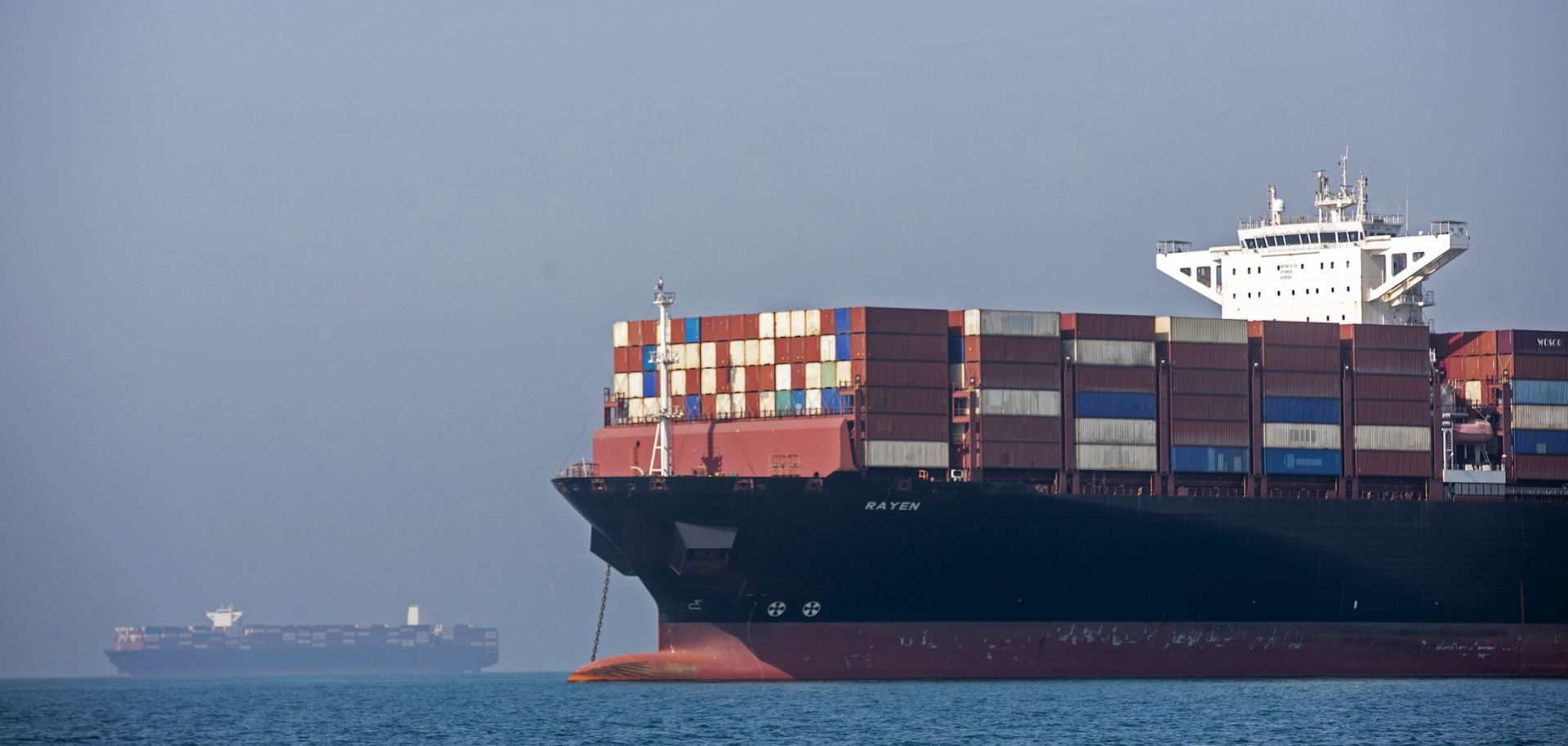
A cargo ship anchored May 16 in the Strait of Hormuz near Larak Island, Iran.
(Majid Saeedi/Getty Images)
A cargo ship anchored May 16 in the Strait of Hormuz near Larak Island, Iran.

What We're Tracking 

Rubio visits India. U.S. Secretary of State Marco Rubio will visit India from May 23-26, culminating in his attendance at the Quad (Australia, India, Japan and the United States) foreign ministers' meeting. The trip comes amid worsened U.S.-India relations in the wake of several developments since 2025, including differences between the United States and India over how the May 2025 India-Pakistan ceasefire played out, U.S. tariffs, visa restrictions, and other policies seen as particularly challenging for India and its nationals. Rubio's visit will thus offer an opportunity to reset their ties and refocus on shared interests, like Indo-Pacific security. Rubio also said it was "[his] understanding" that interim Venezuelan President Delcy Rodriguez will travel to India in the coming week to discuss oil sales. This could help India bolster its energy security amid challenges linked to the Iran conflict. 

A fragile U.S.-Iran ceasefire; the Pentagon hosts Israel-Lebanon talks. Despite Iranian media reports of positive momentum and U.S. Secretary of State Marco Rubio's recent indication of progress toward a U.S.-Iran agreement, major gaps in negotiations over the Strait of Hormuz and Iran's nuclear program persist, and the U.S.-Iran ceasefire will remain fragile over the next week. The conflict's unpopularity in the United States and the depletion of U.S. interceptors, among other factors, represent constraints on resumed fighting. But Trump's frustration over the lack of progress, combined with the continued U.S. military buildup in the region, means that military operations remain on the table despite Gulf pressure for an agreement. Over the next week, Gulf countries will particularly pressure Trump to refrain from renewed military action during the May 24-29 Hajj, given the logistical and humanitarian implications to pilgrims of a resumption in major fighting. Separately, the Pentagon will host Israel-Lebanon security track discussions May 29 amid mounting U.S. pressure for Hezbollah's disarmament and ongoing Israeli attacks on Lebanon.

EAEU leaders meet in Astana. Leaders of the Eurasian Economic Union will meet May 28-29 in Kazakhstan, where talks will likely focus on digital integration, artificial intelligence, industrial cooperation and unresolved barriers inside the bloc. The meeting will coincide with Russian President Vladimir Putin's state visit to Kazakhstan, and as U.S. and EU efforts to secure critical minerals and rare earths pile on top of growing Chinese economic activity in the region. The summit's agenda will likely include integration plans through 2045, as well as external trade ties, including cooperation with Indonesia. Energy pricing, transport infrastructure and customs rules could prove more contentious issues. Armenian Prime Minister Nikol Pashinian's decision not to attend, with Yerevan sending Deputy Prime Minister Mher Grigoryan instead, will further highlight political strains inside the bloc even as members continue practical economic cooperation.

The Philippine president visits Japan. From May 26-29, Philippine President Ferdinand Marcos Jr. will make a state visit to Japan, where he will meet with Prime Minister Sanae Takaichi, with talks likely to focus on a planned intelligence sharing pact, maritime security cooperation, defense equipment transfers and energy security support. Marcos will receive one of Japan's highest honors, meet Emperor Naruhito and become Japan's first state guest since March 2025, suggesting Tokyo's high-level protocol acknowledges the Philippines' growing importance to Japan's regional strategy. Japan will likely support Philippine crude oil procurement, and the two sides will likely launch formal talks on an agreement to share intelligence, creating a framework for exchanging information on Chinese gray-zone operations, vessel movements, and potential contingencies around Taiwan and the South China Sea. The visit also comes after Japan loosened its rules on lethal defense exports in April, creating a more viable pathway for Tokyo to transfer higher-end military equipment such as destroyers to Manila, turning the Philippines into an early test case for Japan's more active regional security role, while both governments — each being U.S. allies — seek more direct defense channels amid uncertainty regarding U.S. commitments to the region.

Recommended Reading

Can the U.S. Reach a Compromise on Greenland That Averts a Transatlantic Crisis?

Ongoing talks with Greenland and Denmark will likely yield a deal that meets most U.S. objectives without requiring formal annexation, though a broader transatlantic crisis remains possible if negotiations collapse.

How Will Rising Interest Rates Impact Japan's Debt Outlook?

Monetary tightening will increase government interest payments and fiscal deficits, but the impact on debt dynamics and defense spending will remain manageable, provided the central bank avoids large-scale government bond sales.

Assessing the Impact of Ukrainian Strikes on Russia's Oil Sector

The intensifying drone strikes are unlikely to trigger an oil sector crisis or alter Moscow's war calculus, but they will financially drain Russian oil companies, even as high prices buoy the Kremlin's revenues.

Podcasts

Visit the podcasts page to hear conversations about geopolitical and risk intelligence.

RANE
SUBSCRIBERS ONLY

Expert analysis when it matters most.

Get access to RANE's decision-grade geopolitical intelligence.
