
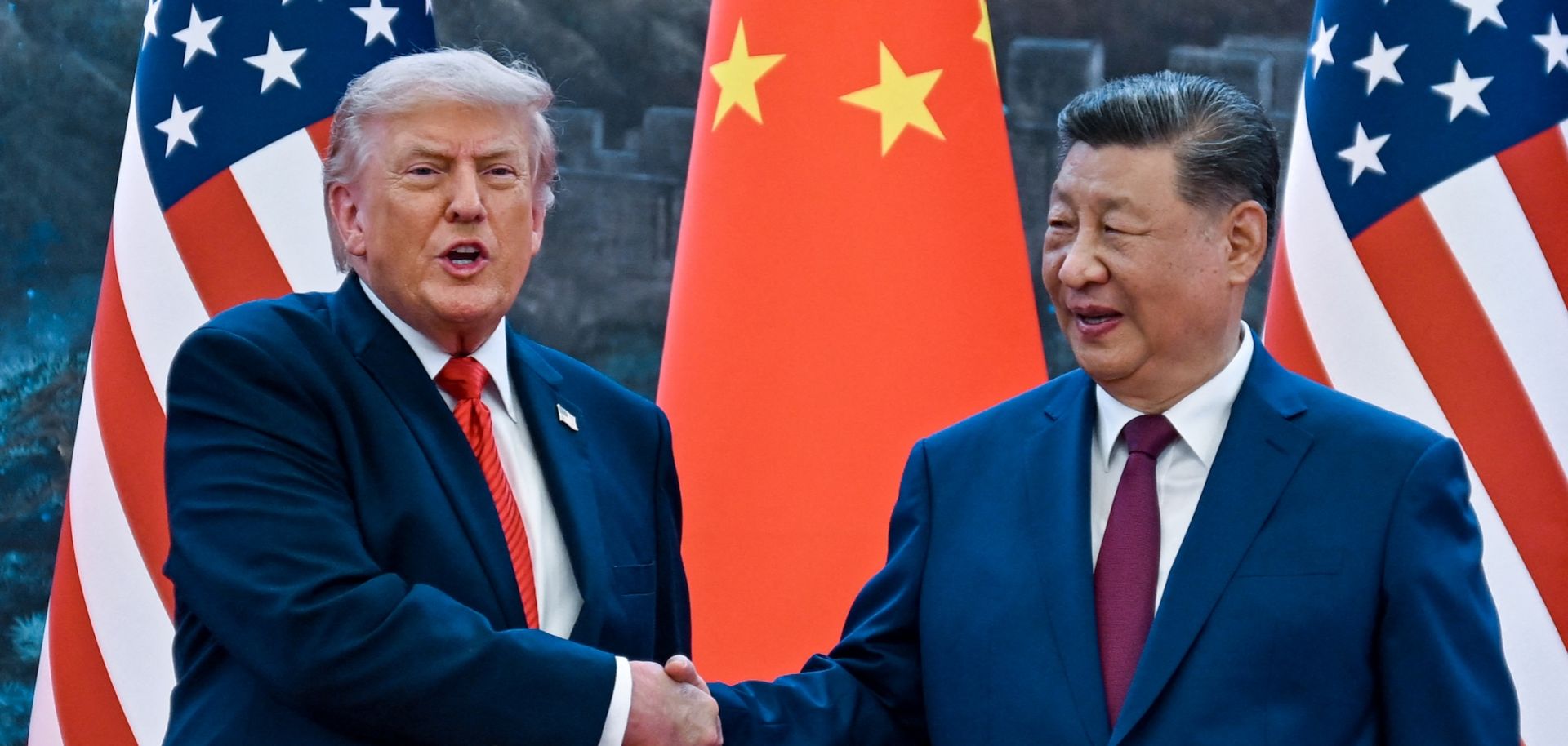
The Trump-Xi summit produced few immediate results and showed that, despite a mutual desire to steady ties, future tariff escalations, export restrictions and other coercive measures remain on the table, while U.S. regional treaty allies will continue to build up their military capabilities and prepare for and occasional related trade spats with China. U.S. President Donald Trump visited Beijing from May 14-15 for a summit with Chinese President Xi Jinping in a long-awaited follow-up to their October 2025 summit in Busan, South Korea. Public events largely focused on ceremony and the personal relationship, but official readouts from both sides provided few details about the two leaders' combined four-and-a-half hours of closed-door meetings over two days. After the summit, Trump claimed on Fox News that China had agreed to purchase 200 Boeing jets, although China's foreign ministry has not yet confirmed this. Trump also claimed China would likely purchase U.S. oil from ports in Louisiana, Texas and Alaska, while U.S. Trade Representative Jamieson Greer said he expected China to purchase an additional $10 billion of U.S. agricultural products, above and beyond China's currently pledged agricultural purchases. Trump said he and Xi did not discuss tariffs, countering speculation leading up to the summit that they would extend the one-year suspensions of high tariffs that they had reached in late October. Likewise, Greer claimed they did not discuss U.S. curbs on chip exports. There has been no reporting on whether China agreed to expand or even extend its one-year suspension of rare earth export curbs, or on whether the United States agreed to alter its Affiliate Rule, which targets affiliates of sanctioned Chinese entities. Trump claimed Xi talked to him about Taiwan "a lot," and Trump told reporters aboard Air Force One that he had discussed arms sales to Taiwan only because Xi asked about it. Lastly, Trump invited Xi and his wife to visit Washington on Sept. 24, an invitation that Chinese state media echoed, making it likely that Xi will make this reciprocal visit in the fall.

- On May 14, China's customs administration quietly announced on its website (without a press conference) that it would again allow imports from U.S. beef plants. Likewise, Reuters sources claimed that day that Washington had agreed to let U.S. chipmaker Nvidia sell its advanced H200 chips to 10 Chinese firms, though Chinese demands on this point are somewhat unclear amid Beijing's efforts to build domestic chip production capacity.
- After Trump rapidly escalated U.S. tariffs on China in April 2025 and China responded in kind as well as with export curbs on rare earths to the United States, the two sides delayed their most extreme restrictions in May 2025, formalized this deescalation at talks in Geneva in June 2025, and further lowered tariffs in October 2025 talks in Busan. At each step, however, both sides eschewed a structural climbdown, with the United States maintaining the threat of future tariffs and tech restrictions and China refusing to dismantle its regime of export restrictions on rare earths.
- Trump told the media first in February and again in May that he had and would in the future discuss U.S. arms exports to Taiwan with Xi, which could mark a shift in longstanding U.S. policy on Taiwan under the Six Assurances. These assurances have guided U.S. policy on Taiwan since 1982, and they include U.S. pledges not to consult with China on U.S. arms sales to Taiwan or to mediate between Taiwan and China.
- On the Iran war, White House readouts claimed both Xi and Trump supported an end to restrictions on shipping traffic through the Strait of Hormuz, and the White House also claimed Beijing opposed a Tehran-led toll system for the strait, but both are reiterations of previous Chinese stances.
The summit was the first of likely multiple Trump-Xi meetings this year, but the lack of tangible agreements on high-profile issues underscores persistent bilateral tensions and both sides' low expectations for a significant de-escalation. For months, high-level Trump administration officials have been signaling that they aimed for the Beijing summit to be the first of up to four bilateral summits in 2026. This schedule always seemed ambitious, but it is even more so now, given Trump's September date for the second summit. Xi and Trump can still claim that simply strengthening their personal relationship will set a firm foundation for future trade breakthroughs, but the paucity of agreements so far belies the complexity and depth of rivalry behind the trade talks, as well as the difficulty for both sides in addressing structural issues. The United States and China have only temporarily paused their more significant sources of trade-related leverage against each other, which, beyond tariffs, primarily consists of U.S. tech export restrictions and Chinese curbs on critical mineral exports. The two countries also remain at loggerheads over Taiwan policy and artificial intelligence, despite rhetoric suggesting the potential for future discussions on both. But because both economies are deeply intertwined, Xi and Trump are inclined to at least extend the trade truce, if not de-escalate trade tensions. This strategy will help provide some stability and predictability in the bilateral relationship, but will not address the large structural divergences between Beijing and Washington, leaving the door open for future flare-ups over trade policy, Taiwan and other thorny issues.
- Though not yet confirmed, senior White House officials have in recent months publicly considered whether Xi could also meet with Trump in December, during the G20 summit in Miami, Florida.
For businesses and U.S. allies in Asia, the summit signaled an uneasy continuity that will keep alive the specter of tariffs and Chinese economic coercion, while also motivating regional defense buildups. For now, Washington and Beijing are neither escalating nor de-escalating. Of particular interest to multinationals, this means a major uptick in tariffs or non-tariff restrictions, including on U.S. chip exports and Chinese rare-earth exports, appears unlikely in the near term, but the threat of future escalation persists. To wit, if the September summit proceeds as planned, it will take place just two months before the U.S. midterm elections, during which Trump's Republican Party is expected to perform poorly. As such, Trump may be motivated to double down on previous trade threats in a bid to extract last-minute concessions from China and defuse criticism of his handling of the U.S. economy and other domestic issues that have largely taken a back seat to Trump's foreign policy priorities in 2026. However, as seen during the escalations in April and October 2025, such actions are unlikely to yield concessions from China but rather heavy export curbs and retaliatory tariffs, which would likely again succeed in compelling Trump to de-escalate within weeks. Meanwhile, for U.S. allies in Asia, though Trump admitted discussing arms sales to Taiwan with Xi, it does not appear he made any clear concessions on Taiwan policy. Trump could still claim (and likely will) that he did not consult with China on arms sales but only discussed the matter, and thus assert that the summit showed Washington is not changing its longstanding policy of a de facto commitment to defend Taiwan, particularly via arms sales. Still, Trump's expressed willingness ahead of this and other bilateral summits to concede on national security issues — like U.S. tech restrictions — in the name of a Chinese trade deal will continue to drive major defense partners like Japan, South Korea, the Philippines and Australia to broaden their network of regional defense partnerships to counter an increasingly aggressive China. Though Beijing will be pragmatic about not diplomatically isolating U.S. defense partners, this will nonetheless lead to occasional spats, such as China's ongoing trade dispute with Japan over Prime Minister Sanae Takaichi's November 2025 comments about defending Taiwan.