
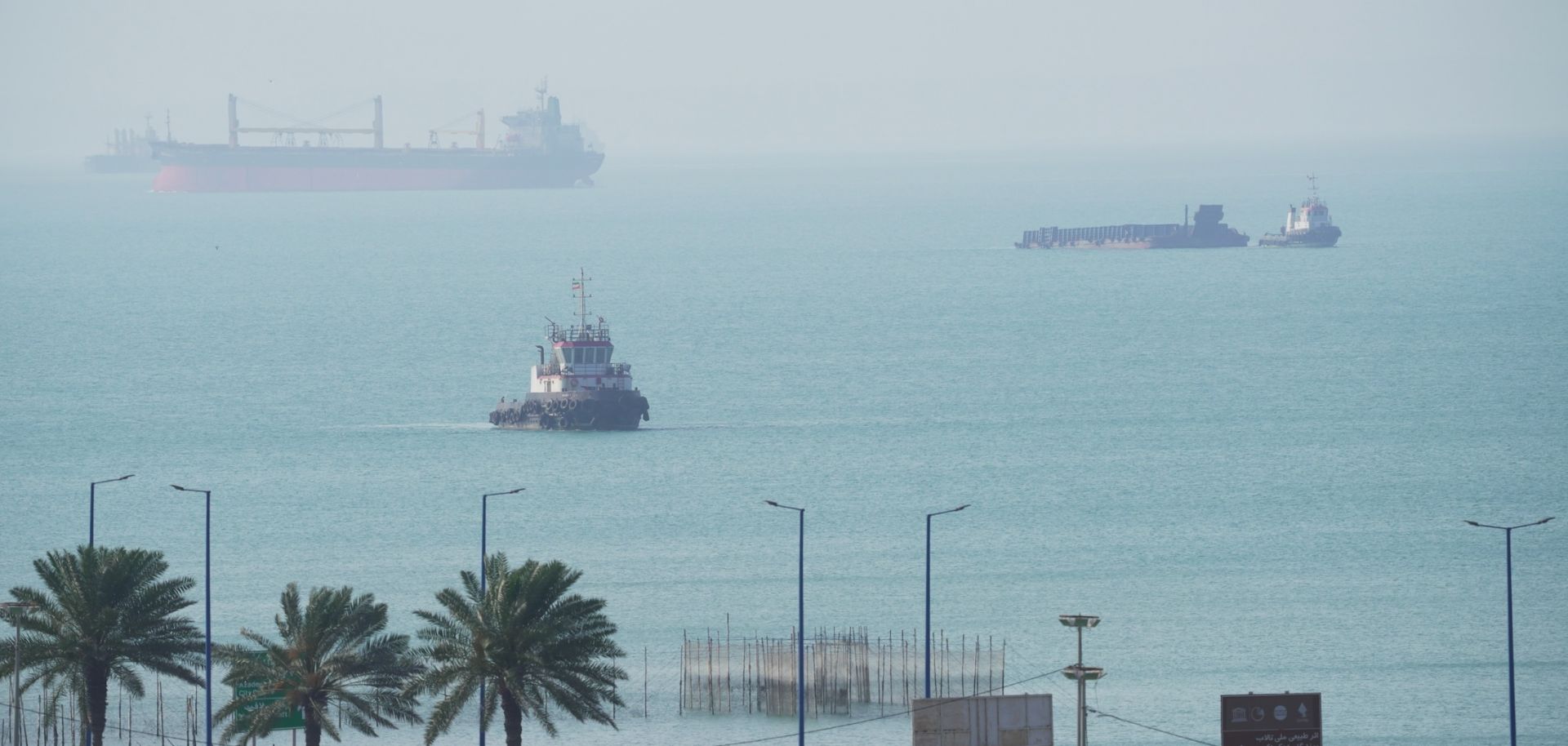
Boats on April 28, 2026 on Qeshm Island, Iran, in the Strait of Hormuz.
(Photo by Asghar Besharati/Getty Images)
Boats on April 28, 2026 on Qeshm Island, Iran, in the Strait of Hormuz.

What We're Tracking

Elevated tensions in the Strait of Hormuz, U.S. hosting Israel-Lebanon Talks. Tensions between the United States and Iran will remain elevated, especially around the Strait of Hormuz, following the May 7 U.S.-Iran exchange of attacks and Iranian attacks against the United Arab Emirates. Although U.S. officials have said the ceasefire remains intact, additional sporadic clashes could complicate U.S.-Iran indirect negotiations and raise the risk that the ceasefire will collapse. Meanwhile, the United States will host a third round of Israel-Lebanon talks May 14-15 in Washington, just days ahead of the May 17 expiration of the ceasefire. Topics under discussion will likely include extending the ceasefire and disarming Hezbollah, although Israeli-Lebanese tensions remain high given Israel's recent attacks on Beirut and Hezbollah attacks near Haifa.

France convenes an Africa summit in Kenya. French President Emmanuel Macron and Kenyan President William Ruto will convene the Africa Forward Summit on May 11-12 in Nairobi, Kenya, during which French and African decision-makers will gather to discuss the future of Franco-African relations. About 20 African heads of state and government, including Nigerian President Bola Tinubu, Ethiopian Prime Minister Abiy Ahmed and Mozambican President Daniel Chapo, are expected to attend. Leading topics on the agenda will include the energy transition, food sovereignty, artificial intelligence and ongoing conflicts in Africa. Macron will look to leverage the summit to highlight France's departure from a neocolonial approach to an emphasis on mutually beneficial trade and security partnerships. This will involve broadening of partnerships with non-Francophone African countries, with France perhaps signing several agreements with Kenya on the sidelines of the summit. At the same time, several heads of state of Francophone countries are due to attend, including Congolese President Felix Tshisekedi, Gabonese President Brice Oligui Nguemma and Ivorian President Alassane Ouattara, highlighting Paris' continued sway over parts of its historic sphere of influence.  

Starmer under pressure after U.K. local election losses. The political fallout from May 7 local and devolved elections will dominate British politics in the week ahead, with full results from England, Scotland and Wales likely to crystallize over the weekend and intensify scrutiny of Prime Minister Keir Starmer's position. Preliminary results already show heavy Labour losses, with the Greens, Liberal Democrats and especially the anti-immigration Reform UK all posting gains. Despite intensifying internal Labour discussions over a possible transition in recent weeks, Starmer has ruled out resigning, and markets appeared to reward that pledge, with gilt yields easing and sterling steadying after earlier pressure tied to leadership-change concerns. Absent Starmer stepping aside voluntarily, a new election becomes harder, requiring nominations from at least 81 Labour members of parliament and probably a catalyst such as Cabinet-level resignations, of which there are no signs yet. Even if no immediate challenge materializes, persistently weak polling could still trigger one before the 2029 deadline for a general election, generating near-term political uncertainty but limited market volatility given expected policy continuity.

Trump meets Xi in China for a high-stakes summit. From May 14-15, U.S. President Donald Trump will meet Chinese President Xi Jinping in Beijing, with talks likely to focus on extending the fragile U.S.-China trade truce, securing Chinese purchases of U.S. agricultural goods and aircraft, managing rare earth and technology export disputes, and Taiwan and Iran. The summit will likely yield limited stabilization measures rather than a broader reset, with possible deliverables including a six- to 12-month extension of the trade truce, renewed Chinese soybean and beef purchase commitments, and a potential framework agreement for Boeing aircraft purchases. Taiwan will be the most sensitive political issue, as Beijing is likely to press Washington for stronger language against Taiwan independence, though U.S. officials insist there will be no change in U.S. Taiwan policy. Meanwhile, Iran and the Strait of Hormuz will also loom over the talks, with Washington likely to push Beijing to use its influence with Tehran to help reopen the strait and restore safe passage for commercial shipping. China also wants this — particularly after one of its tankers was attacked for the first time, on May 4 — though Beijing will avoid moves that make it look aligned with Washington against Tehran, making agreement on the issue difficult.

Recommended Reading

Ukrainian Strikes Put Russia on Edge Ahead of Victory Day Parade

While Ukraine is unlikely to attack Moscow during the May 9 parade, its expanding long-range strike capabilities will steadily increase the war's political, economic and psychological toll on Russia ahead of the September elections.

What To Make of the Albertan Secessionist Movement in Canada

A renewed independence push in Alberta is highly unlikely to succeed, but Ottawa will still likely have to confront stronger secessionist pressures in Quebec after elections later this year. 

The Balance Between Environmental and Extractive Policies in Brazil's Presidential Election, Part 1

If President Lula wins reelection in October, his administration would continue balancing the promotion of green initiatives with the expansion of mining and drilling, while retaining strategic neutrality in the U.S.-China competition.

Podcasts

Visit the podcasts page to hear conversations about geopolitical and risk intelligence.

RANE
SUBSCRIBERS ONLY

Expert analysis when it matters most.

Get access to RANE's decision-grade geopolitical intelligence.