
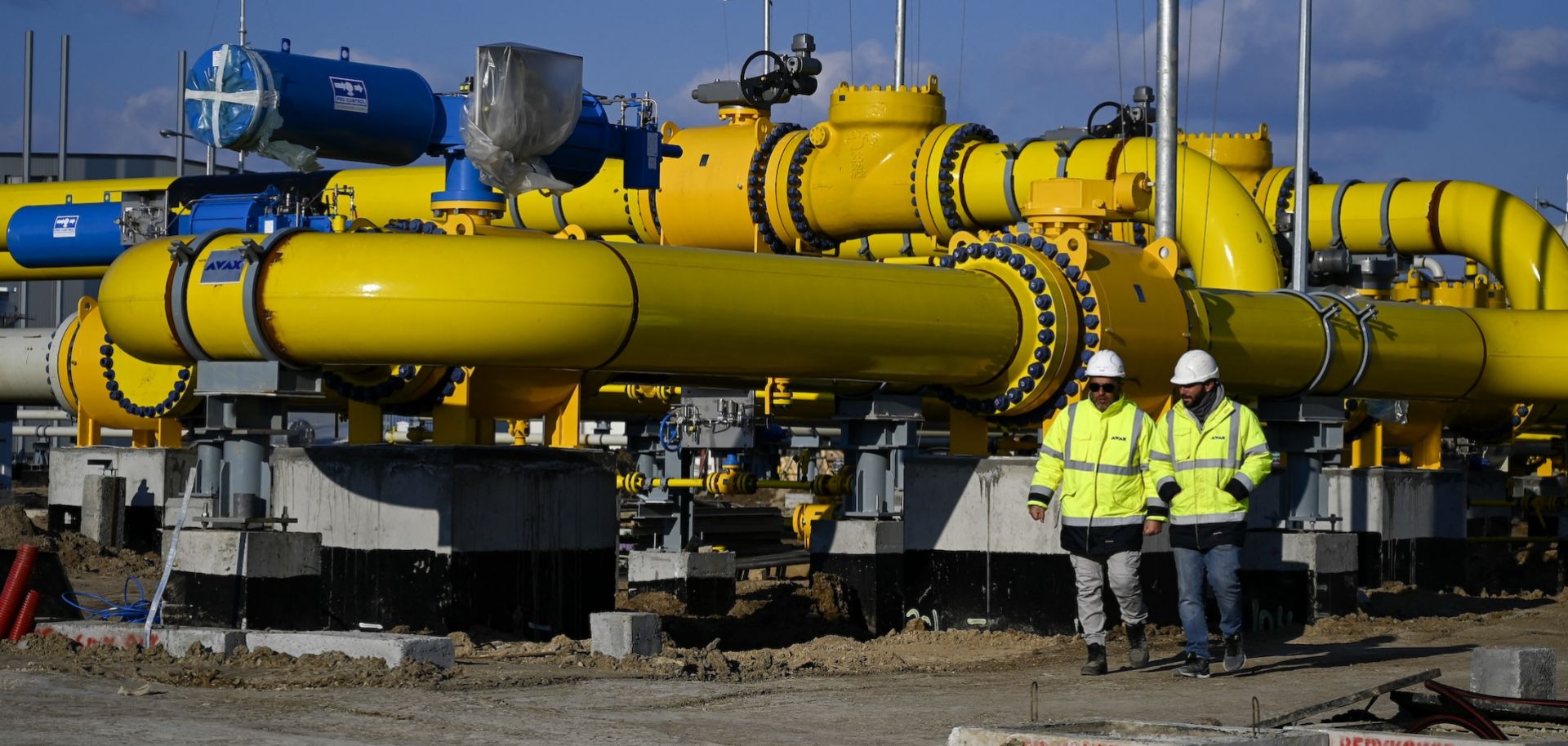
Employees walk at the construction site of a gas metering station, part of the pipeline link between Bulgaria and Greece near the village of Malko Kadievo, on March 18, 2022.
(NIKOLAY DOYCHINOV/AFP via Getty Images)
Employees walk at the construction site of a gas metering station, part of the pipeline link between Bulgaria and Greece near the village of Malko Kadievo, on March 18, 2022.

What We're Tracking

No sign of a U.S.-Iran breakthrough. Iran's Foreign Minister Abbas Araghchi will visit Pakistan, Oman and Russia in the coming days, with a visit to Pakistan starting on April 24. However, there is no sign that he will meet with U.S. officials or restart ceasefire talks, even as the United States brings fresh firepower to the region in the form of the USS George H.W. Bush. With three aircraft carriers in the region and arms resupplied, the United States could quickly restart hostilities, but it remains unclear whether Washington is ready to resume an almost certainly unpopular military campaign, as it has signaled a desire to wait for its blockade to force Iran into concessions. Both sides are now awaiting a break in the other's domestic support, a volatile process that could see the U.S. lose patience in the coming days. 

EU ban on spot market Russian LNG kicks in. Starting April 25, the European Union will implement a ban on purchases of Russian liquefied natural gas under short-term contracts, effectively targeting spot market transactions as part of its broader strategy to phase out Russian energy imports. This measure is significant because the spot market has remained one of the last channels for Russian gas exports to Europe. By closing this avenue, the European Union aims to further reduce Moscow's energy revenues, which have been a key source of funding for its war in Ukraine, while accelerating the bloc's diversification toward alternative suppliers. The timing is particularly sensitive as the ongoing conflict with Iran is tightening global gas supply, with disruptions to LNG flows and infrastructure pushing European prices sharply higher and intensifying competition for cargoes. 

State assembly elections in India's West Bengal. On April 29, West Bengal will hold the second phase of its state elections, following the first phase on April 23. The vote comes after the Election Commission revised the electoral rolls, reportedly removing around 12% of registered voters to address duplicate entries and undocumented migrants. The move has become a major political flashpoint, with opposition parties alleging it could disenfranchise poor and minority voters, particularly Muslims, and questioning its timing ahead of the polls. For the ruling Bharatiya Janata Party, a breakthrough in a state long dominated by a regional rival would mark a major expansion into eastern India and strengthen its push beyond its northern and western base. For West Bengal's incumbent chief minister, a victory would reinforce her standing as a leading opposition figure nationally and consolidate her party's long-held dominance in the state.

Japanese Prime Minister Sanae Takaichi goes to Vietnam. Though no official date has been set, Takaichi is expected to arrive in Hanoi around April 29 before traveling on to Australia. She will use the visit to reinforce Japan's "Free and Open Indo-Pacific" agenda — which could produce a joint statement on maritime security, rule of law and South China Sea stability, and possibly additional coast guard cooperation — thereby deepening Tokyo's security role in the country. For Japan, the most immediate irritant is Hanoi's proposed ban on petrol motorbikes, which has alarmed Honda, and the visit will largely focus on urging Vietnam to maintain clearer rules and smoother project execution as investment shifts into higher-value sectors. The trip follows South Korean President Lee Jae Myung's state visit to Hanoi on April 21-24. For Hanoi, the back-to-back South Korea and Japan visits show Vietnam is using both partners to upgrade its manufacturing base, diversify away from overdependence on China and expand its room to maneuver while maintaining multialignment with Beijing.

Recommended Reading

Ceasefire, Blockades and Bargaining: The Volatile Outlook for U.S.-Iran Relations

The ceasefire extension will likely prolong the U.S. and Iran's focus on economic pressure to gain leverage ahead of new talks, but this phase of unstable diplomacy could easily give way to another round of military escalation.

U.S.-Cuba Talks Progress, but Threat of Military Action Still Looms

A recent unannounced U.S. diplomatic visit to Havana bodes well for a deal that reduces tensions, but Washington's ongoing demands for political and economic reforms will sustain the risk of a U.S. military and/or law enforcement operation.

Romania's Latest Political Crisis Threatens Fiscal Reform and EU Alignment

The crisis could undermine fiscal consolidation and further empower far-right forces, potentially reversing Romania's EU alignment and harming its economic credibility.

Podcasts

Visit the podcasts page to hear conversations about geopolitical and risk intelligence.

RANE
SUBSCRIBERS ONLY

Expert analysis when it matters most.

Get access to RANE's decision-grade geopolitical intelligence.