
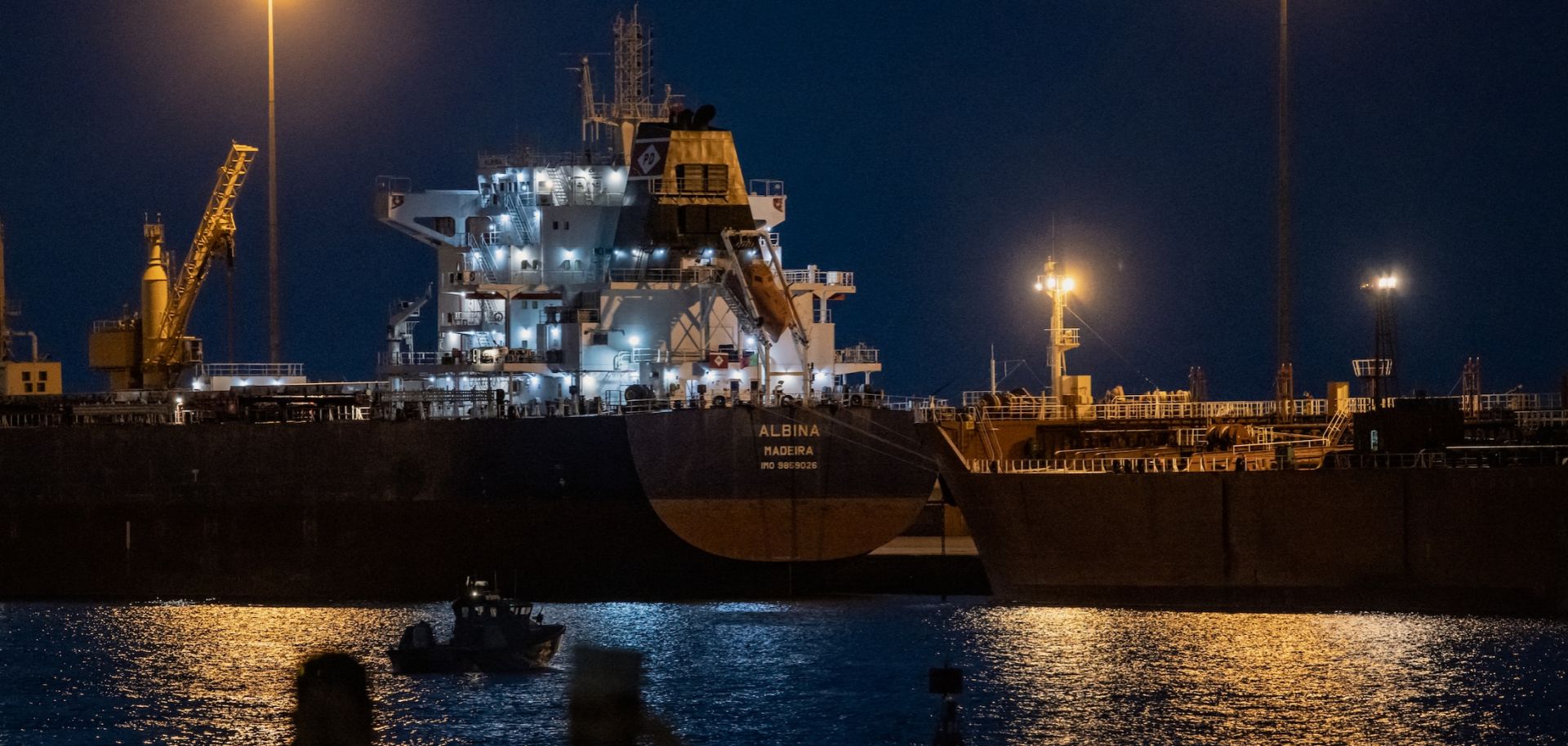
The unilateral U.S. ceasefire extension with Iran will likely prolong both sides' focus on economic pressure to secure concessions ahead of a second round of talks, but this phase of unstable diplomacy and pressure could easily give way to another round of military escalation. On April 21, U.S. President Donald Trump announced that he would indefinitely extend the unilateral U.S. ceasefire with Iran, but noted that the United States would maintain its blockade in the Strait of Hormuz after a planned second round of U.S.-Iran talks in Pakistan failed to take place during the week of April 20. According to Trump, Iran's leadership is too divided to make a deal, and he wanted to give Tehran more time, as the initial two-week ceasefire was due to expire on April 21-22. In the days before Trump's announcement, reports emerged of intense preparations for another round of talks, but it became clear that the gaps between the two sides remained significant. Tensions worsened on April 19, when the United States seized an Iranian-linked ship, the Touska, marking the first operation of its kind since the U.S. military began blocking vessels from transiting Iranian ports and coastal areas on April 13. Iran decried the seizure, which Foreign Minister Abbas Araghchi called an "act of war." On April 22, following the announced ceasefire extension, Iran also fired on three ships, two of which it seized, that attempted to cross its blockade line.

- After the first round of talks with Iran failed to yield a deal, the United States shifted its strategy from military strikes to economic pressure, announcing plans on April 12 to launch its own blockade of the Strait of Hormuz. On April 21, U.S. forces also boarded another tanker linked to Iran, the Tifani, in the Indian Ocean, well beyond the blockade line, as the United States attempts to strangle Iranian exports.
- The fragile U.S.-Iran ceasefire has largely held up since it took effect on April 7, despite a few initial violations, including an attack on Saudi Arabia's East-West pipeline. This has been in part because of the April 16 start of a 10-day ceasefire between Israel and Iran's chief proxy, Hezbollah, in Lebanon — a key condition set by Tehran for upholding its truce with Washington.
Trump's announcement comes as the United States continues to send ships and troops to the region, but also as political, military and economic constraints on a return to high-intensity war have been growing, thus incentivizing an extension of the ceasefire. More U.S. forces, including the aircraft carrier U.S.S. George H.W. Bush, are arriving in the coming days, bringing additional munitions and fresh aircraft amid reports of dwindling air defense supplies. But at the same time, Trump's domestic popularity has reached record lows in recent weeks, largely due to increasing gas prices and skepticism over his goals in the Iran conflict. With the public increasingly frustrated by price spikes stemming from Gulf supply disruptions, polling suggests that domestic support for the war is among the lowest for any U.S. president entering a conflict in modern history. This has also translated into increasingly uncertain support in Congress, which is critical for approving the Pentagon's requested $1.5 trillion budget (which includes war spending) and for addressing the questionable legality of continued military operations after the War Powers Act reaches its 60-day deadline at the end of April. Additionally, scores of recent media articles have indicated that Trump's close advisors are strongly encouraging him to refocus on domestic priorities ahead of U.S. midterm elections in November, in which Democrats are currently projected to retake the House of Representatives and potentially also the Senate. And finally, reports continue to emerge about growing U.S. shortages of key munitions, and it remains unclear what a return to high-intensity war would achieve after nearly six weeks of conflict failed to force Iran to accept major U.S. demands.
- President Trump's approval rating dropped to a record low of 30% in an April 21 AP-NORC poll, largely driven by a split in his base over the Iran war, after Trump campaigned on avoiding a fresh war with Iran in 2024.
- Although Congress has not voted in favor of forcing an end to the war through a War Powers Act resolution, several center-right Republican senators, including Susan Collins of Maine and Rand Paul of Kentucky, have criticized the war and warned against an open-ended commitment. The Republicans can afford to lose only four senators in a war funding vote, given their 53-47 majority and Democrats' current unanimous opposition to funding the conflict.
- The War Powers Act stipulates that the president has 60 days to begin withdrawing troops from a conflict unless he obtains congressional authorization for the use of force. With the Iran war starting on Feb. 28, May 1 would be the deadline for this 60-day period. The act allows for an additional 30 days to withdraw troops. It remains unclear what, if any, action Congress or U.S. courts would take if Trump ignored this legal deadline or tried to reinterpret it based on his self-imposed ceasefires.
- The United States has reportedly used up to half of its THAAD and Patriot missiles in the conflict, according to a study from the Center for Strategic and International Studies. It will take years to replace those stockpiles.
Iran has signaled that it wants the United States to lift its blockade before beginning a second round of talks, but it also does not currently appear interested in a return to high-intensity conflict. While the U.S. blockade threatens Iran's exports, it more broadly signals that the United States is not prepared to move away from its "maximum economic pressure" campaign to try to gain Iranian concessions. Iranian leaders seem to have concluded that without concessions on the blockade, the United States remains poised to resume military operations, especially once its forces are resupplied and repositioned. They thus do not want to take the first step by lifting Iran's own blockade on the strait, particularly amid reports that top Iranian officials remain deeply skeptical of U.S. intentions, especially those of Trump. However, Iran is also unlikely to initiate strikes against new targets beyond ships in the strait — like Gulf states, U.S. military assets or Israel — as this could provoke a strong U.S. military response. Instead, Tehran's strategy appears to be focused on enforcing its blockade of the Strait of Hormuz to inflict global economic damage and further weaken American support for the war, believing it can outlast the United States in a test of political will and economic hardship.
According to the journal Lloyd's List, at least 26 Iranian shadow fleet vessels have successfully bypassed the U.S. blockade. While the Pentagon disputes this claim, if true, it suggests that Iran may not yet feel enough urgency to try to lift the U.S. blockade. However, this may change now that the United States is seizing Iranian ships.
U.S. intelligence reports suggest that Iran retains most of its missile and drone arsenal, and sees the drone arsenal as essentially inexhaustible. Many of Iran's buried missile launchers have been recovered during the ceasefire, while others have been repositioned for future attacks. Iran is also reportedly due to receive a delivery of Chinese-made anti-air MANPADs, according to U.S. intelligence, though the timing of that delivery is unknown.
In the coming days, the United States and Iran will likely sustain their economic conflict as they try to gain leverage for the next round of talks, though any larger deal to wind down the war faces steep hurdles. Both Iran and the United States are incentivized to drag out this economic confrontation for various political and strategic considerations. For the United States, a resumption of war would further erode popular and potentially congressional support for Trump, who has repeatedly claimed victory over the Iranians. For Iran, an immediate resumption of war would lead to significant infrastructure damage and military casualties, while likely also restarting Israeli attacks against its territory and Hezbollah in Lebanon. Without economic relief, Iran has no long-term plan for the reconstruction necessary to offset such damage. In the short term, the United States and Iran will thus likely continue applying economic pressure on each other, aiming to force concessions, particularly concerning their respective blockades in the Strait of Hormuz. Regional actors like Pakistan, Turkey and potentially China will likely serve as mediators during this phase of the conflict. However, a major diplomatic breakthrough is unlikely due to fundamental disagreements on Iran's nuclear program, missiles and regional proxies; at most, these efforts may result in a second round of direct U.S.-Iranian talks.
- Pakistan has so far spearheaded mediation efforts, including by hosting U.S.-Iran talks in Islamabad. China also reportedly played a key role in convincing Iran to attend the first round of talks with the United States, though Beijing was unable to secure significant concessions that would have qualified as a deal for Trump.
- Reports have suggested that the United States and Iran have made some progress on the all-important nuclear file, with both agreeing on Iran suspending uranium enrichment. However, they disagree on the duration of the suspension: Iran has proposed five years, while the United States wants up to 20. Trump has said he wants to ensure Iran has no path to a nuclear weapon, of which enrichment bans are a key part. A related concern is the status of Iran's highly enriched uranium, much of which remains buried following U.S. strikes in June 2025.
Failure to secure a deal or even hold a new round of talks would increase the risk of renewed U.S. military action against Iran, which could range from targeted naval operations to a resumption of full-scale regional conflict. With Iranian negotiators unlikely to accede to key U.S. demands anytime soon, the two sides may fail to achieve a deal, or even agree to hold a new round of talks. This would keep the option of a U.S. military operation to forcibly reopen the Strait of Hormuz on the table — particularly if American voters start blaming Iran for the economic disruptions, or if the White House shifts back to favoring military options to shape Iran's behavior. Washington's options for military action vary in scope, risk of escalation and potential for domestic political blowback in the United States. Potential measures, ranked from least to most risky and impactful, include:
- Implementing a convoy system to try to partially reopen the Strait of Hormuz. Since the start of the war, the Pentagon has been planning an "Operation Epic Escort," potentially with the aid of European states like France and the United Kingdom, to protect commercial vessels from attack as they pass through the strait and clear Iranian mines. But while this convoy system may partially break Iran's blockade, it would be slow and unlikely to restore the strait's pre-war shipping volume of 150 vessels per day. Meanwhile, Iran would be incentivized to attack U.S. warships and strike civilian ships that take part in the escort operation, keeping a return to high-intensity regional conflict on the table. Regardless, some shipping companies want zero risk as they pass the strait and would not join the escort program, meaning maritime traffic and resulting global supply chain disruptions would persist.
- Resuming airstrikes on Iranian military targets associated with the Hormuz blockade. Such attacks could target hidden naval facilities, fast boats, minelayers, naval arsenals, drone and missile bases, and other supporting infrastructure, either in conjunction with the U.S. convoy system or independently of it. The target set would be more limited than the one the United States started the war with. But such attacks would still likely provoke Iran to retaliate against U.S. military forces across the region, risk Israel rejoining the conflict and possibly lead to resumed Iranian attacks on regional oil and gas infrastructure. Though likely unpopular in the United States, the mission would initially cause less domestic blowback than if the United States resumed full-scale war. It might also gain some support in Congress due to the economic effects of the closure of the Strait of Hormuz.
- Full-scale nationwide strikes to try to break Iran's political will. The United States, with its forces reorganized and further built up in the coming days, might resume a February-style shock and awe campaign against Iran, including against civilian infrastructure, in an attempt to break Iran's political will. But such a campaign would resume the regional war and almost certainly bring about more supply destruction at scale across the region, worsening the global energy crisis, crashing stock markets and resulting in popular and congressional blowback in the United States.
- Landing troops on Iranian or Iranian-held islands in the Gulf. Any scenario could result in the United States deploying troops to these islands, such as Kharg, Abu Musa, Larak and/or Kish. But a landing of U.S. forces on Iranian soil would inspire an Iranian nationalist backlash, leave U.S. troops exposed to recurrent attacks and become a new major sticking point in any progress toward a fresh phase of talks. Such landings would also be unpopular in the United States, where the public would worry about a repeat of the mission creep in Vietnam and the long insurgencies in Iraq and Afghanistan.