
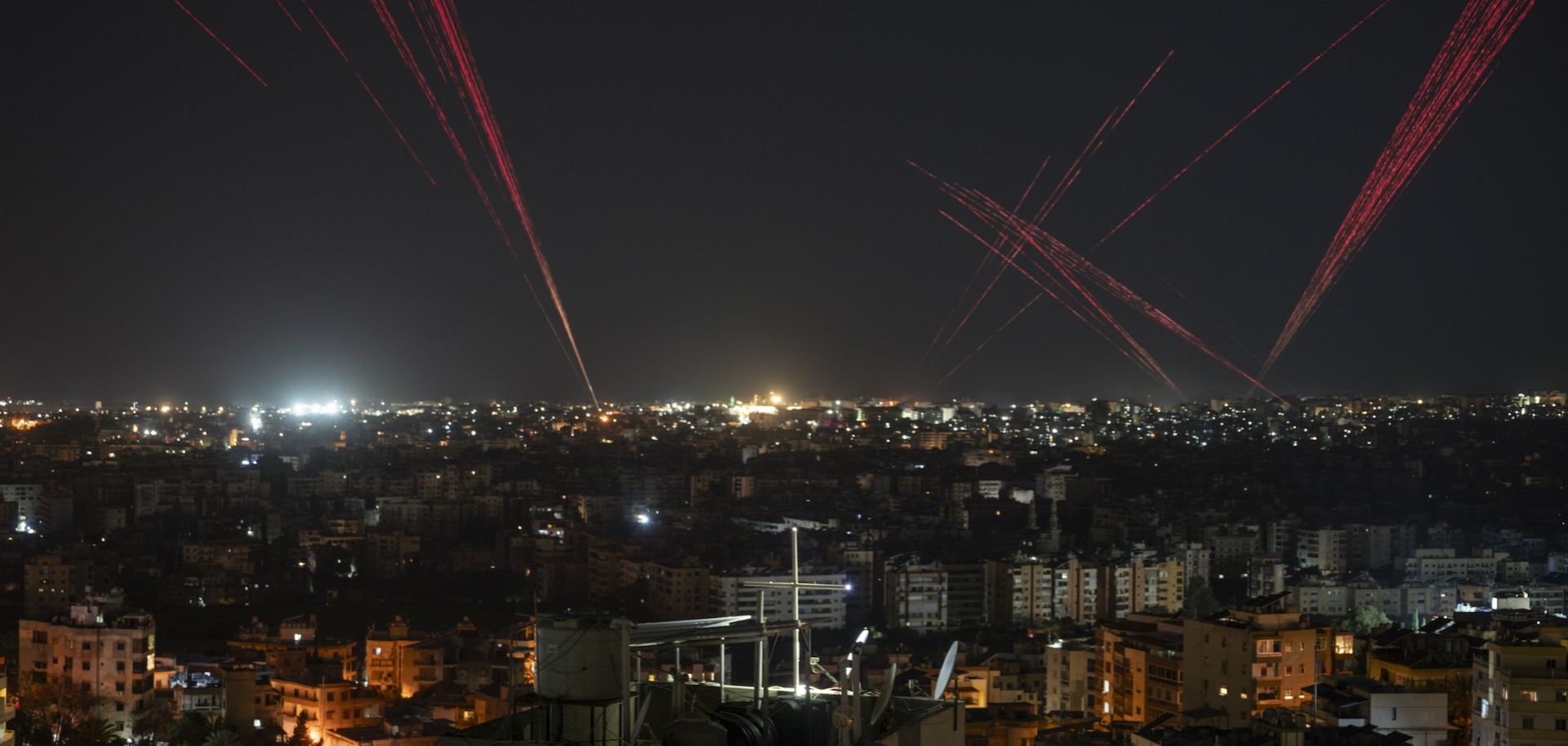
The Israel-Lebanon ceasefire will remain very fragile and prone to collapse, with limited short-term prospects for a larger breakthrough, but any one-sided outcome that favors Israel could destabilize Lebanon via potential new rounds of sectarian fighting, government collapse and/or resumption of cross-border conflict with Israel. On April 16, Israel and Lebanon agreed to a 10-day ceasefire brokered by the United States following direct engagement by US President Donald Trump with Israeli Prime Minister Benjamin Netanyahu and Lebanese President Joseph Aoun. The ceasefire came after over six weeks of conflict between Israel and Hezbollah in which the Israeli military carried out scores of airstrikes across Lebanon and launched a ground offensive in southern Lebanon. The temporary truce is designed to create space for negotiations, including potentially what would be the first direct Israel-Lebanon talks since the early 1980s. The agreement is based on a six-point understanding in which both sides commit to work toward conditions for lasting peace, including respect for sovereignty and territorial integrity, the establishment of security along the shared border and U.S.-facilitated negotiations to resolve outstanding issues. The framework also explicitly preserves Israel's right to self-defense and to counter Hezbollah threats it deems imminent, while Lebanon is expected to engage in efforts to curb Hezbollah activity and participate in talks on border demarcation and security arrangements.

- On April 14, Israeli and Lebanese ambassadors held a rare meeting in Washington, reflecting U.S.-led efforts to open a formal negotiation channel following the ceasefire.
- Trump has stated he will invite Netanyahu and Aoun to the White House in the coming weeks to advance negotiations toward a more durable agreement and broader regional de-escalation.
- While Aoun stated that the ceasefire is a natural gateway for direct negotiations with Israel, he emphasized that holding such talks and his acceptance of a White House visit are contingent on Israeli military withdrawal from southern Lebanon and the deployment of Lebanon's armed forces to the area.
- Saudi Arabia reportedly played a role in convincing the Trump administration of the need to secure a ceasefire in Lebanon to help advance U.S.-Iran negotiations, as Tehran had made such a truce a prerequisite for continuing talks with Washington.
The ceasefire comes amid U.S. pressure on Israel to de-escalate due to concerns that continued fighting in Lebanon would derail ongoing negotiations with Iran. Since the two-week ceasefire between Iran and the United States was announced on April 7, Tehran has conditioned talks with Washington on various demands, including a ceasefire on the Lebanese front. Prior to this, Israeli leadership had rejected multiple Lebanese overtures for talks, opting instead to maintain intense military pressure on Hezbollah after the group entered the Iran conflict on March 2 by launching airstrikes at Israel. The Lebanese government moved quickly to distance itself from the escalation, condemning Hezbollah's attacks and signaling openness to unprecedented direct negotiations with Israel. However, these efforts were not reciprocated, as Israel had for months been looking to expand operations in southern Lebanon and establish a buffer zone after its previous November 2024 ceasefire with Hezbollah (which ended their prior round of fighting) did not adequately address Israeli security concerns. Over the past month and a half, however, Israeli military challenges, including multiple casualties and limited progress on the ground, illustrated the constraints of a purely military approach in southern Lebanon, and underscored that Hezbollah could not be fully disarmed through force alone without a parallel political track. At the same time, U.S. pressure recently intensified, increasing the cost of continued Israeli escalation in Lebanon, particularly as Netanyahu did not want to anger the Trump administration. These dynamics ultimately converged to produce the current ceasefire, which closely mirrors the November 2024 ceasefire: a temporary, externally brokered pause intended to create space for negotiations rather than resolve underlying issues.
- At least 14 Israeli soldiers were killed and hundreds more were wounded during fighting in southern Lebanon in recent weeks. Meanwhile, the Lebanese Ministry of Public Health reports that over 2,196 people have been killed in Lebanon since March 2, while Israel claims to have eliminated over 1,400 Hezbollah militants during the same period.
The temporary ceasefire will likely remain very fragile and prone to collapse, with a significant risk of renewed fighting driven by divergent goals between Israel and Hezbollah, as well as the linkage to U.S.-Iran negotiations. The new ceasefire is structurally weak as it effectively recreates the dynamics of the November 2024 arrangement. Specifically, it again allows Israel to retain freedom of action against perceived Hezbollah threats — a threshold Israel interpreted broadly, as evidenced by its repeated airstrikes on Lebanon, including in and around Beirut, despite an ostensible ceasefire, before the return to full-scale conflict in early March. This creates triggers for renewed fighting, where even limited incidents can justify renewed strikes from both sides. At the same time, the ceasefire in Lebanon is directly tied to progress in the U.S.-Iran negotiations, meaning any setback on that front could quickly spill over into Lebanon. Hezbollah and Iran are also entering this phase with a stronger perception of leverage compared to 2024, when Hezbollah suffered major blows (including the death of its leader, Hassan Nasrallah) and was somewhat compelled to accept an unfavorable ceasefire. This time, Hezbollah likely views its position as stronger after demonstrating greater resilience and resistance in recent weeks than the Israeli military anticipated, thereby reducing the group's willingness to accept previous conditions. Hezbollah is thus less likely to fully adhere to the existing rules of engagement, as it did after the ceasefire in November 2024, when it refrained for over a year from retaliating to Israeli attacks as the group attempted to recover. This is particularly likely because Hezbollah's current war objectives have been to reshape deterrence and redefine the balance of power with Israel, creating a high risk of retaliatory actions by the group if provoked. Compounding these risks is the issue of territorial control, with Israel unlikely to withdraw from the buffer zone in southern Lebanon, which it views as essential for security. This will provide Hezbollah with justification to resist and reject disarmament, reinforcing its narrative of continued occupation.
- Israeli officials have expressed frustration with the ceasefire, particularly over U.S. pressure to accept it. Israel's defense establishment has also signaled readiness to continue operations south of the Litani River and reluctance to withdraw, creating internal pressure on Netanyahu that could incentivize actions that undermine or bypass the ceasefire.
While the ceasefire will open a negotiation track between Israel and Lebanon, prospects for a near-term breakthrough remain low due to fundamental divergences in objectives. Despite its limits, the ceasefire will serve as an entry point for talks in the coming weeks, as both sides face U.S. pressure to de-escalate and attempt to separate the Lebanon track from broader U.S.-Iran dynamics. However, the absence of Hezbollah, whose participation would be a necessary precondition to any serious chance at an agreement, alongside core disagreements between Israel and Lebanon, will limit progress in the short term. Israel will likely seek to retain the buffer zone and push for Hezbollah's complete and quick disarmament before it withdraws any troops from southern Lebanon. It will also likely continue to attack Hezbollah targets in the country, citing the freedom of action clause in the new ceasefire agreement. By contrast, the Lebanese government — faced with internal political pressure and capacity constraints — will likely push for an Israeli military withdrawal, the deployment of the Lebanese state forces to vacated areas and a phased approach to Hezbollah's disarmament. These positions remain difficult to reconcile without persistent external pressure. For any meaningful progress, the United States will likely need to sustain intensive mediation, alongside other key stakeholders, including Iran and Saudi Arabia, to narrow gaps and incentivize concessions on both sides.
Developments in the negotiations by themselves are unlikely to immediately destabilize Lebanon, but a one-sided deal that heavily favors Israel would risk triggering an uptick in sectarian violence, a government collapse and/or renewed conflict with Israel. In the past, direct negotiations with Israel were firmly rejected by most Lebanese political stakeholders. But amid growing war weariness and a perception that Hezbollah unnecessarily dragged Lebanon into the current Iran war, many Lebanese now view talks with Israel as necessary for security arrangements and border demarcation. Hezbollah is unlikely to immediately resort to violence to derail the negotiation process, particularly as the group remains politically represented within the Lebanese system and its allies are engaged in the talks. However, if an agreement is reached that compels the Lebanese government to more forcefully disarm Hezbollah, or is seen as conceding too much without securing key Lebanese demands (particularly, an Israeli withdrawal from occupied areas), it would significantly increase internal tensions. Such a contentious deal would raise the risk of potentially violent, sectarian unrest within Lebanon, particularly if Hezbollah calls on supporters to mobilize. It could also further weaken, and potentially even collapse, the government in Beirut, which Hezbollah and its allies have repeatedly threatened to undermine if Lebanese authorities pursue disarmament. At the same time, Israel could exploit the internal fragmentation and instability to expand or consolidate its presence in southern Lebanon, raising the likelihood of renewed cross-border conflict.
- Parliament Speaker Nabih Berri, an influential Shiite politician with close ties to Hezbollah, has played an increasingly prominent role in conveying Hezbollah's position in political and diplomatic channels following the killing of the group's leader, Hassan Nasrallah, in September 2024. Berri has not rejected the principle of negotiations with Israel, acknowledging their necessity for security and stability. But, with Hezbollah's backing, he has conditioned any talks on core demands, particularly a full Israeli withdrawal from Lebanese territory and guarantees of sovereignty
- The Lebanese government's announcement in early March that it was willing to engage in talks with Israel was met with relatively few protests, further suggesting a growing acceptance of negotiations in Lebanon. Both Hezbollah and its Shiite political ally, the Amal Movement party, also signaled restraint and cautioned against protests. Additionally, Hezbollah- and Amal-affiliated ministers have not resigned from their posts in the government, which suggests at least tacit acceptance of the negotiation track with Israel or a willingness to manage the process politically, despite any potential underlying reservations.