
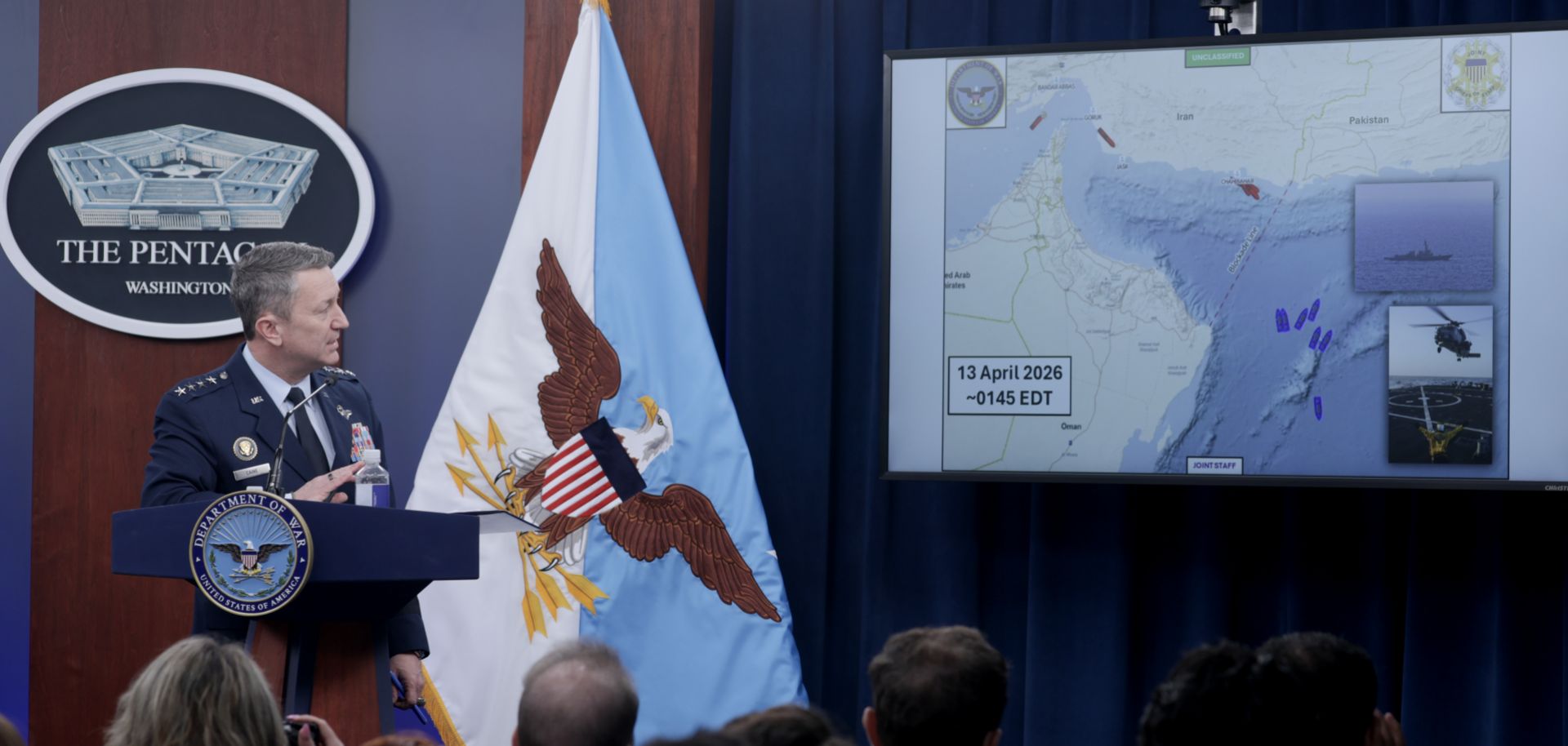
Chairman of the Joint Chiefs of Staff Gen. Dan Caine speaks as he displays a map showing the U.S. Navy's blockade of the Strait of Hormuz during a press briefing at the Pentagon on April 16, 2026, in Arlington, Virginia.
(ALEX WONG/Getty Images)
Chairman of the Joint Chiefs of Staff Gen. Dan Caine speaks as he displays a map showing the U.S. Navy's blockade of the Strait of Hormuz during a press briefing at the Pentagon on April 16, 2026, in Arlington, Virginia.

What We're Tracking

U.S.-Iran diplomacy gains momentum. With the Iranians announcing a nominal reopening of the Strait of Hormuz and U.S. President Donald Trump largely focusing his rhetoric on how pragmatic Iran has become, the risks of an immediate military escalation and a return to war have diminished, while the momentum for another round of talks, potentially as soon as this weekend, has grown. There remain significant gaps between the two, and technical talks alone on complex issues like Iran's nuclear program will take months. Still, it appears neither the United States nor Iran wants a return to formal war, particularly now that the United States has imposed a ceasefire in Lebanon between Israel and Hezbollah that has staved off military pressure on Iran's chief remaining proxy. As a result, the immediate threat of further supply disruptions and an open-ended closure of the strait has diminished. Whether the talks maintain momentum remains to be seen, particularly if Trump insists on maximalist demands regarding Iran's nuclear program and decides to use the United States' still considerable military buildup in the Middle East to strike Iran again. Regardless, it will be months before the full economic impact of the Strait of Hormuz disruption is felt, let alone repaired, while some supply destruction, such as Qatar's LNG exports, will take years to address. 

Political instability in Bulgaria and Romania. Bulgaria will hold snap parliamentary elections on April 19, the country's eighth vote in five years. Former President Rumen Radev and his newly formed Progressive Bulgaria party are leading in polls on an anti-corruption and anti-establishment platform, though they will likely again fall short of a majority and face complex coalition negotiations unlikely to resolve the chronic political instability of recent years. The vote follows the collapse of the previous government amid protests and budgetary tensions, with turnout and fragmentation key variables to watch. Meanwhile, Romania's ruling coalition faces a potentially destabilizing moment on April 20, as the co-ruling Social Democratic Party is set to hold an internal vote on whether to withdraw support for Liberal Prime Minister Ilie Bolojan over fiscal policy disagreements. Such a vote could strip the government of its majority, trigger a no-confidence motion and complicate much-needed fiscal consolidation efforts. Meanwhile, President Nicusor Dan is pushing for a compromise to preserve a pro-European governing arrangement with the current parliamentary majority.

EU to publish energy tool kit ahead of Cyprus summit. European Commission President Ursula von der Leyen will present on April 22 an energy "toolkit" alongside a temporary easing of state aid rules allowing member states to support companies affected by higher energy costs linked to the Iran conflict. The package will set out guidance on gas storage, tax relief and demand-reduction measures, while leaving implementation largely to national governments, reinforcing a fragmented policy response across the bloc. These measures will come ahead of an informal European Council summit in Cyprus on April 23-24, where leaders will meet to discuss the bloc's 2028-34 budget, ongoing energy pressures and the wider geopolitical fallout from the Middle East crisis. The summit was originally designed to advance competitiveness and fiscal planning but will now focus heavily on crisis response, with energy affordability, industrial support and macroeconomic stability set to dominate discussions alongside longer-term budget negotiations.

U.S.-Cuba tensions continue. Though negotiations are ongoing between the governments of the United States and Cuba, there will be an elevated risk of escalation over the coming weeks as tensions in the Middle East decline. With Iran announcing the opening of the Strait of Hormuz on April 17, the Trump administration may view the conflict with Iran as resolved enough to shift focus to Cuba, which U.S. President Donald Trump has said is "next." Meanwhile, Cuban President Miguel Diaz-Canel said on April 16, the anniversary of the United States' failed 1961 Bay of Pigs operation against the country, that his country is "ready" to defend the island in the event of a U.S. military assault. Increased U.S. pressure on Cuba in the near term could come in the form of expanded demands in negotiations, but it could also include operations targeting specific Cuban leaders, such as Diaz-Canel, or a broader military operation against the island. As Cuba is already experiencing critically poor humanitarian conditions amid widespread, sustained power outages, further U.S. pressure on the island and/or military operations that weaken local authorities would likely worsen conditions further and trigger mass migration from the country. 

Recommended Reading

Iran War Price Shocks Will Hit Low-Income Energy Importers Hardest

The sharp increase in global oil and fertilizer costs will force import-reliant, low-income nations in South Asia and sub-Saharan Africa to choose between fiscal discipline and maintaining social stability.

Hungary's Pro-EU Opposition Wins Big, Ending the Orban Era

With a two-thirds supermajority, the new government will be able to dismantle Orban's entrenched institutional and economic influence, as well as reset EU relations. But a swift and drastic reversal in Hungary-Ukraine relations remains unlikely.

In South Asia, Iran War Fallout Risks Worsening Economic and Political Instability

Energy and fertilizer price shocks from the Iran war will increasingly threaten energy supplies, crop yields and economic growth across the region, pressuring governments' foreign exchange reserves and heightening unrest risks. 

Podcasts

Visit the podcasts page to hear conversations about geopolitical and risk intelligence.

RANE
SUBSCRIBERS ONLY

Expert analysis when it matters most.

Get access to RANE's decision-grade geopolitical intelligence.