
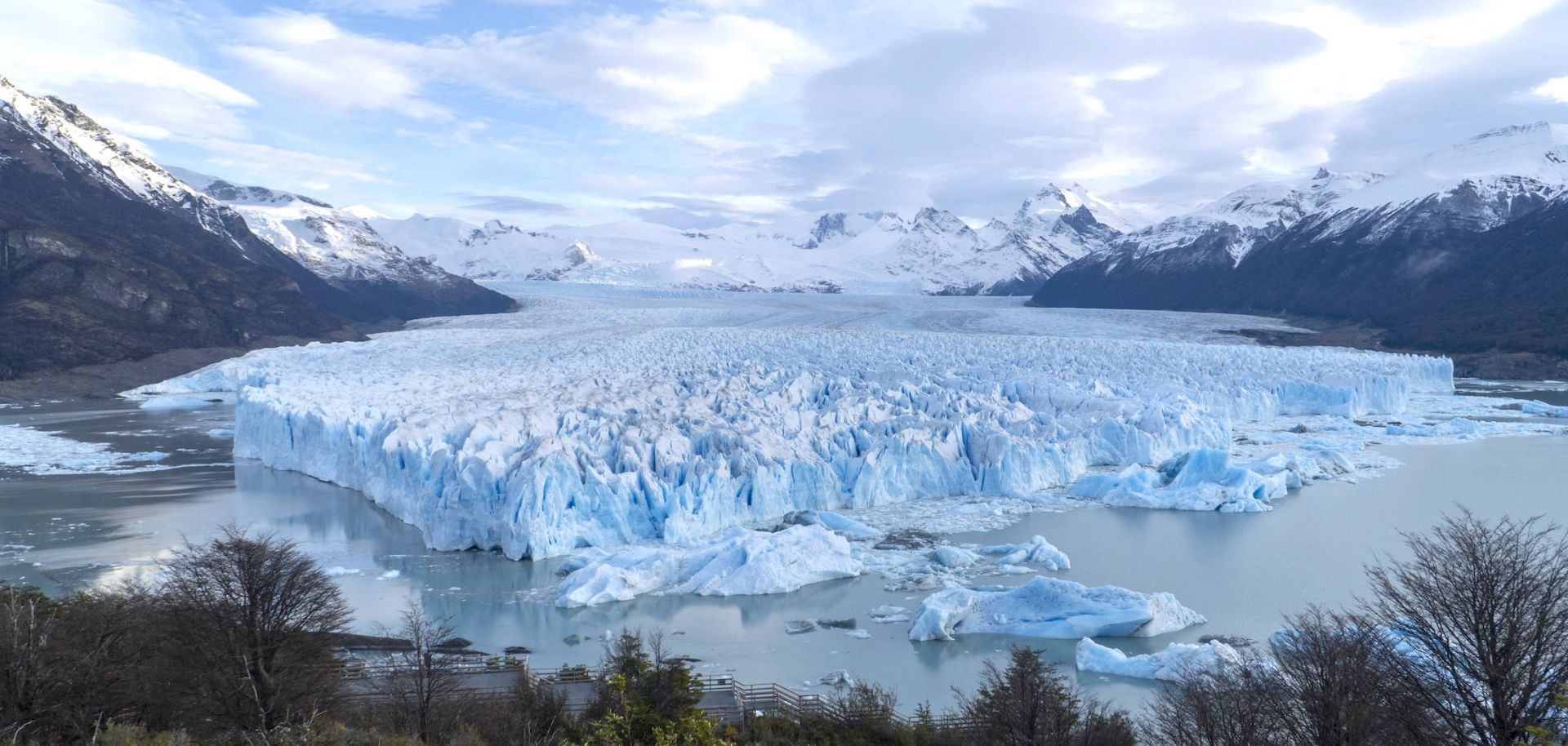
Argentina's new Glaciers Law fundamentally shifts environmental oversight to provinces and loosens protections to unlock major mining investment and export growth, but at the cost of increased water, environmental and regulatory risks. On April 9, Argentina's Chamber of Deputies approved a reform to the country's Glaciers Law with 137 votes in favor, 111 against and three abstentions. The Argentine Senate had already approved the reform on Feb. 26, which means that the legislative process is now complete and the law will enter into force in the coming weeks. The reform represents a fundamental shift away from the original framework established under the 2010 Glaciers Law, which created uniform national minimum standards to protect glaciers and periglacial environments as strategic freshwater reserves. Under the original regime, mining, oil and industrial activities were broadly prohibited in these areas, and protection was based on a national glacier inventory and scientific criteria applied consistently across the country. The 2026 reform introduces three major technical changes. First, it decentralizes regulatory authority, granting provincial governments the power to define, classify and regulate glaciers and surrounding periglacial zones, replacing the previous nationally coordinated system. Second, it replaces automatic protection with a case-by-case evaluation standard, which protects glaciers and frozen environments only if they are deemed to have an "effective hydrological function," significantly narrowing the scope of protected areas. Third, it modifies the legal definition and technical criteria governing glaciers and periglacial zones, effectively allowing activities such as mining and hydrocarbon exploration in areas that were previously off-limits under broader classifications.

- In practice, this reform dismantles the prior precautionary approach and replaces it with a more flexible, economically oriented framework that prioritizes provincial discretion and project-specific evaluation over uniform environmental safeguards.
- The reform is part of libertarian President Javier Milei's push to deregulate the Argentine economy and attract foreign investment. Since Milei became president in December 2023, Buenos Aires has given tax and investment incentives to extractive industries (notably hydrocarbons and mining) to attract foreign capital.
The primary winners of the new law are the mining sector, provincial governments and Argentina's broader extractive-export economy, all of which will benefit from increased regulatory flexibility and access to previously restricted resources. Mining companies stand to gain the most from the reform, which will unlock large deposits of copper, gold, silver and, to a lesser extent, lithium, located in previously protected high-altitude Andean regions. By allowing provinces to reinterpret environmental constraints and approve projects, the law reduces regulatory barriers, shortens approval timelines and improves project feasibility, making Argentina more competitive with mining-heavy neighbors like Chile. The government itself anticipates a major macroeconomic upside, with Economy Minister Luis Caputo promising up to $165 billion in mining exports by 2035 and positioning the country as a key supplier of critical minerals for the global energy transition. Provincial governments, especially those of mining regions such as San Juan, Catamarca and Mendoza, will also benefit from increased autonomy and potential revenue streams, as they can now tailor regulations to attract investment and accelerate local development. More broadly, sectors linked to mining supply chains, infrastructure development and export logistics are indirect beneficiaries, as increased activity in resource extraction is likely to stimulate demand for transport, energy and industrial services.
- The glacier and periglacial regions affected by the reform are located along the Andes. They contain some of Argentina's most valuable untapped deposits of copper, gold, silver and lithium. These high-altitude zones are part of the broader Andean metallogenic belt, which is geologically rich in large-scale porphyry copper deposits and lithium-bearing brines. Many of these resources were previously inaccessible or heavily restricted under the old glacier protection regime, meaning the reform effectively opens up frontier mining areas with high export potential.
- According to a 2025 report from Argentina's secretary of mining, Argentina holds an estimated 197.9 million tons of Lithium Carbonate Equivalent (LCE) in resources, with 18.6 million tons currently classified as reserves. In the base metals and precious metals sectors — the most directly impacted by the high-altitude regulatory shifts — the figures are equally significant. Copper resources are estimated at 116 million tons with 17.1 million tons in reserves, while gold resources reach 138.4 million ounces against 33.6 million ounces in reserves. Silver deposits are quantified at 3,839.5 million ounces in resources and 492.7 million ounces in reserves.
- While the legislative reform removes the primary legal barriers, the physical extraction of these minerals remains a significant challenge because of the reserves' high altitude, logistical isolation and severe climate conditions. Operating at elevations between 3,500 and 5,000 meters necessitates specialized equipment and expensive infrastructure. Consequently, mining companies are unlikely to extract the entirety of these resources; instead, global capital is expected to concentrate on a few megaprojects where the ore grade is high enough to offset the massive capital expenditure required.
- The 2026 reform is particularly significant for "frozen" multibillion-dollar projects. For years, Barrick Gold's Pascua-Lama project at the Chile-Argentina border was effectively halted by legal battles and large protests (especially in Chile) over the destruction of several glaciers. Similarly, Glencore's El Pachon project in Argentina's San Juan province has faced persistent delays as the 2010 federal inventory identified numerous rock glaciers within its concession area.
The main losers of the reform are water-dependent economic sectors and long-term regulatory stability, all of which face heightened risks under the new framework. The reform weakens Argentina's environmental safeguards: By narrowing protection criteria and devolving authority to provinces, the law introduces a fragmented regulatory landscape that prioritizes economic gains over ecological preservation. Critics emphasize that glaciers and periglacial environments are critical freshwater reserves supporting rivers, ecosystems, agriculture and human consumption, and warn that weakening their protection could exacerbate water scarcity, especially in a context of climate change. As a result, industries that depend on stable water supplies, such as agriculture, hydropower and local water utilities, face increased uncertainty and potential cost pressures. The tourism sector, particularly in glacier-rich regions like Patagonia, may also suffer if environmental degradation reduces the attractiveness of natural landmarks. Beyond sectoral impacts, the reform creates legal and political risks. Opposition groups and environmental organizations have already signaled potential constitutional challenges, raising the likelihood of litigation and regulatory reversals that could undermine investor certainty and delay investment decisions. Finally, companies operating under the new regime may face heightened ESG and reputational risks in international markets, particularly as global investors and consumers increasingly scrutinize environmental practices.
- Opposition parties and environmental organizations argue that shifting authority to provinces and requiring proof of "effective hydrological function" creates loopholes that allow many glaciers and periglacial areas to lose protection, despite their ecological importance. Critics also warn that the law opens the door to politically driven or inconsistent classifications across provinces. More broadly, they view the reform as a rollback of environmental governance that could have irreversible impacts on ecosystems, local communities and climate resilience, while exposing Argentina to legal disputes and international reputational damage.