
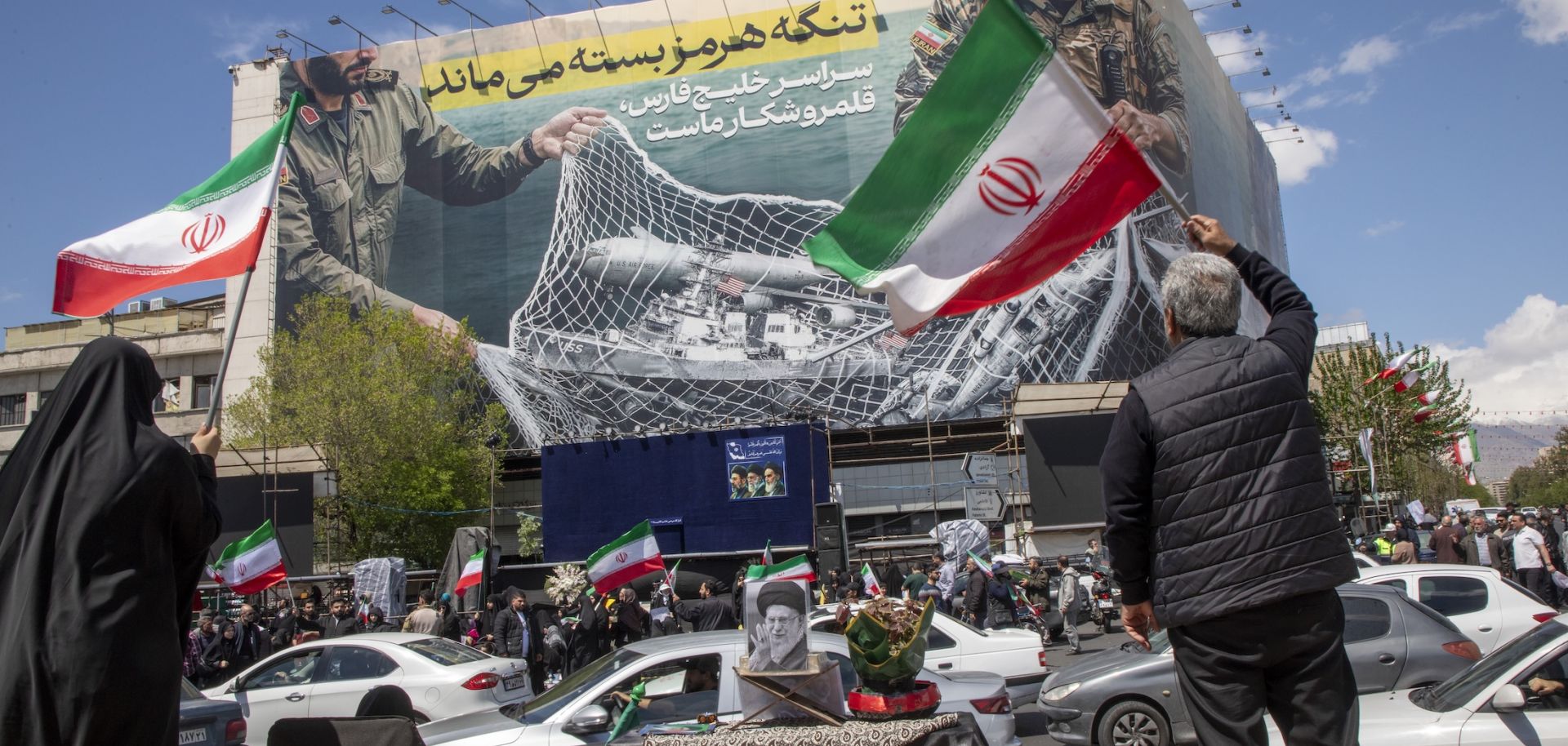
The two-week ceasefire in the Iran war leaves major stumbling blocks for Iran and the United States to achieve a durable agreement. Upcoming negotiations failing would likely result in a rapid escalation of hostilities, including systematic strikes on critical infrastructure across the region. On April 7, U.S. President Donald Trump announced a two-week ceasefire with Iran, contingent on the full and immediate reopening of the Strait of Hormuz, following a proposal brokered by Pakistan. The ceasefire came just hours before a deadline for large-scale U.S. strikes against Iranian power plants and additional civilian infrastructure, which Trump said would also be delayed by two weeks. Iranian Foreign Minister Abbas Araghchi confirmed Tehran's acceptance, stating Iran would ensure safe passage through the strait during the ceasefire. The two-week window is intended to facilitate negotiations toward a broader settlement. U.S.-Iran talks are expected to take place in Islamabad beginning on April 10. Israel has also agreed to pause its strikes in Iran, but disputes remain over the U.S.-Iran ceasefire's regional scope. Pakistani officials and Iran indicated the ceasefire extends to Lebanon, where Hezbollah is fighting an Israeli ground invasion, but Israeli Prime Minister Benjamin Netanyahu said fighting in Lebanon would continue.

- So far, Hezbollah has not attacked Israel or Israeli troops in southern Lebanon since the ceasefire, despite Israel launching its most widespread attack across all Lebanon, including the capital Beirut, after the ceasefire occurred.
- Kuwait and the United Arab Emirates are still reporting Iranian missile and drone attacks despite the ceasefire. Kuwaiti authorities stated they faced an intense wave of attacks during the morning, intercepting at least 28 drones, some of which targeted critical infrastructure, including oil facilities, power stations and water desalination plants, causing significant damage. Concurrently, the United Arab Emirates' defense ministry confirmed that its air defense systems were actively intercepting incoming Iranian missiles and drones.
War-weariness ahead of threatened escalation likely pushed both sides toward the two-week pause in hostilities to pave the way for talks. The two-week ceasefire follows a rapid escalation cycle in which the United States threatened to expand strikes on Iranian critical infrastructure, including energy and civilian infrastructure like power plants. Iran signaled readiness to widen its retaliation across the Gulf and the broader region in response. As such, all the parties involved were bracing for much greater physical and economic damage had the war continued. Furthermore, despite the U.S.-Israeli attacks having significantly degraded Iran's military capabilities and command structures, Iran sustained a high tempo of missile and drone attacks across the region, demonstrating residual capacity and ability to absorb attacks. The closure of the Strait of Hormuz sustained pressure on global energy flows and raised the economic and strategic costs, especially for the United States and its allies and partners. Taken together, both sides entered the pause amid growing political and operational fatigue: Washington facing risks of deeper regional entanglement and economic fallout, and Tehran balancing continued escalation against mounting internal strain and damage to infrastructure.
- U.S. domestic pressures also likely shaped the context for the ceasefire. Rising public concern over the economic costs of escalation — particularly higher energy prices — combined with political backlash to President Trump’s April 7 threat that "a whole civilization will die tonight," contributed to mounting pressure for a temporary de-escalation. 
- According to reporting by Axios citing unnamed U.S. and regional officials, Iranian Supreme Leader Mojtaba Khamenei, who has been communicating via intermediaries after being injured in a strike that killed his father, had recently told negotiators to try to achieve a deal for the first time since the war broke out on Feb. 28. His blessing in agreeing to the ceasefire was reportedly decisive.
- In the hours following the U.S. and Iranian announcements, both sides have claimed that they have achieved successes from the nearly six-week-long war. The United States has emphasized the damage to Iran's military assets, industrial capacity and killing of senior leaders. Iran, meanwhile, can claim to have survived the conflict with its regime intact and to have succeeded in its attrition campaign against the Gulf states, the United States and Israel.
Coming negotiations are likely to focus on translating the tactical pause into a more durable arrangement, but the probability of a comprehensive agreement remains low given persistent gaps in both sides' core positions. As demonstrated by the Kuwaiti and Emirati claims of ongoing attacks, there are steep hurdles to a lasting peace agreement. Both sides entered the ceasefire with diverging interpretations of its scope and obligations, particularly whether de-escalation extends to areas like Lebanon and how the Strait of Hormuz will be reopened. Key factors remain unresolved, including the mechanics and security guarantees for reopening the Strait of Hormuz, the extent of sanctions relief for Iran and whether Tehran's missile program and enriched uranium stockpiles will be subject to any meaningful constraints. Additionally, both sides have claimed victory over the other, which means they are likely to enter negotiations with maximalist demands likely to hinder talks. Further, Israel is likely to oppose or actively undermine any agreement perceived as conceding strategic space to Iran, particularly if it preserves Tehran's deterrence architecture or regional posture like support for regional proxies, raising the risk of unilateral Israeli action that could disrupt negotiations. Even if both sides were to overcome these challenges to agree to a deal, it would be extremely fragile and liable to break down over time, especially as Iranian hardliners have only further consolidated their influence over policymaking during the course of the war.
- Iran's proposal includes full sanctions relief, Tehran imposing fees on vessels transiting the Strait of Hormuz for reconstruction purposes and a region-wide ceasefire extending across theaters including Lebanon. U.S. officials have described it as "not good enough," though still a "significant step," reflecting partial alignment but continued gaps on core demands.
- Even if the Trump administration were prepared to offer full sanctions relief, the process would face significant bureaucratic and legal hurdles — not least due to some sanctions relief requiring congressional assent — that would complicate rapid implementation.
- The United States is unlikely to accept any arrangement that effectively cedes control of the Strait of Hormuz to Iran without a credible and enforceable framework, particularly given the strait's role in global energy security and legal norms around free transit. However, it remains uncertain whether Iran — which views its current leverage over the strait as a strategic advantage and has signaled intent to institutionalize that control through regulated access and transit fees — would agree to dilute that position in a final deal, another potential thorn in negotiations.
- Ballistic missiles will remain a central sticking point, with Iran highly unlikely to accept meaningful limits on its missile range or capabilities, particularly as these systems constitute one of Tehran's primary remaining deterrents following sustained degradation of its conventional forces. Past and current negotiations indicate Iran consistently treats its missile program as nonnegotiable.
- Ambiguity over whether Lebanon is covered by the ceasefire creates a structural vulnerability in the pause that Israel can exploit to undermine the agreement. If Iran were to proceed with the deal without securing a halt in Lebanon, it would risk signaling abandonment of Hezbollah. However, a refusal to move forward without Lebanon's inclusion would increase the likelihood of the deal collapsing altogether, an outcome that aligns with Israel's position of continuing operations against Hezbollah irrespective of the U.S.-Iran pause.
A breakdown of ceasefire talks would likely trigger a rapid resumption of hostilities with a higher escalation ceiling, likely including the systematic targeting of critical infrastructure including energy, power and water networks across the region. A failure in negotiations between both sides would likely lead them to significantly escalate the target sets as both sides would be looking to maximize damage to compel one another to halt hostilities. Both sides retain significant target sets that would further destabilize the region and threaten the global economy. In the event of a breakdown, the United States would likely try to force Tehran's capitulation with intense airstrikes on Iranian power plants, critical infrastructure like desalination plants and other civilian targets. The United States would then likely further consider the possibility of ground operations in Iran given that the military assets needed would all be in place by then. For its part, Iran would likely intensify efforts to expand and enforce a more sustained disruption of the Strait of Hormuz, increasing risks to global shipping and energy markets. Tehran would likely also escalate missile and drone attacks across the Gulf, including on sensitive energy targets, potentially drawing regional states more directly into the conflict, raising global energy prices and causing rippling economic damage. Such attacks would be proportionate to U.S. and/or Israeli actions, meaning that attacks on Iran's critical infrastructure would likely be met with attacks on the Gulf's. In parallel, Iran's regional allies in Lebanon, Iraq and Yemen are likely to also escalate their own attacks. The Houthis, for instance, thus far have only attacked Israel, but in an escalatory scenario, Iran would likely press the group to disrupt the crucial Bab el-Mandeb Strait, compounding global trade and economic strain in addition to the disruption of the Strait of Hormuz.
- Another plausible pathway in the event of negotiations collapsing would be a U.S. decision to disengage without a formal agreement, assessing that its core objectives of degrading Iran’s nuclear program, ballistic missile capabilities and broader military infrastructure have already been sufficiently achieved, while maintaining Iran in a weakened state and retaining the option to reinitiate strikes in response to any renewed or imminent threat. Notably, both U.S. and Iranian leadership framing the current outcome as a "victory" reinforces this possibility, suggesting each side may see limited incentive to make further concessions in a comprehensive deal.
- Despite the ceasefire, shipping companies and commercial vessels remain extremely cautious and have not resumed normal transit patterns via the Strait of Hormuz while uncertainty lasts, reflecting low confidence in the durability and clarity of the ceasefire. Any signals of negotiation breakdown or renewed escalation would likely further deter movement, elevate insurance premiums and deepen disruptions to maritime traffic, particularly across the Strait of Hormuz and adjacent routes. Iran fully implementing its threatened tolling system for ships to pass would likely further deter some vessels.