
What We're Tracking
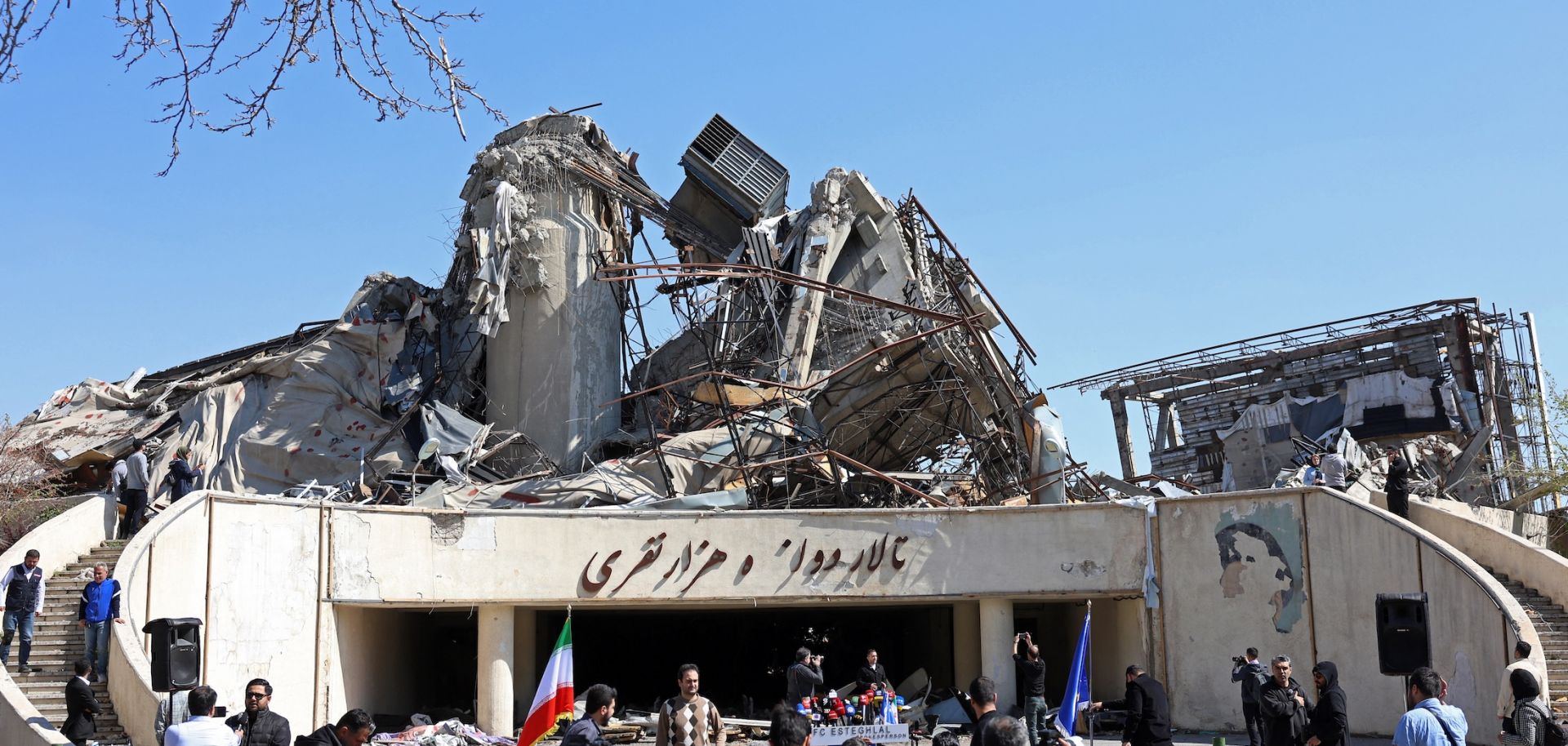
The Iran war continues. The Iran conflict will continue with an elevated risk of escalation over the next week amid intensifying U.S. rhetoric against Tehran and additional U.S. military assets arriving in the region. During his April 1 speech, U.S. President Donald Trump threatened to hit Iran "extremely hard" over the next two to three weeks, with little indication of a potential breakthrough in negotiations or a de-escalation of the conflict ahead of Trump's April 6 extended deadline to reopen the Strait of Hormuz. Consequently, U.S.-Israeli strikes will likely continue to target Iranian military sites, and could expand to target additional civilian and critical infrastructure or to include a potential ground operation. If the United States and/or Israel escalates the conflict, Iran would very likely proportionately respond with attacks against U.S. and Emirati-linked tech companies, as well as commercial and critical infrastructure throughout the region, especially in Gulf countries.
Taiwan's opposition restarts China talks. The chairperson of Taiwan's main opposition Kuomintang, Cheng Li-wun, will travel to the mainland from April 7-12 at the invitation of Chinese President Xi Jinping, with whom Cheng will likely meet. This is likely one of a series of future high-level talks between the KMT and the Chinese Communist Party, as the former seeks to convince Taiwanese of the utility of diplomatic and economic engagement with China rather than military competition. In Taiwan, however, popular opinion of China and Xi is quite negative, so this campaign could backfire for the KMT, which continues to struggle in national elections. Still, the meeting could yield limited economic gains for Taiwan or KMT-run counties and, at the very least, lay the groundwork for one or more follow-up meetings. Coming ahead of U.S. President Donald Trump's May 14-15 visit to Beijing, Xi and Cheng likely intend for the visit to bring Washington onside in supporting cross-strait engagement and de-emphasizing military competition with China, including through arms sales to Taiwan. Trump may support the former, but he is unlikely to significantly scale back arms sales to Taiwan.
The National Assembly selects Vietnam's political leadership. On April 6, Vietnam's legislative body will select the country's top political leaders, including the state president, prime minister and National Assembly chair, three of Vietnam's so-called five pillars of leadership. Communist Party General Secretary To Lam, Vietnam's de facto top leader, will likely consolidate authority by also assuming the role of state president. This would be the first such sustained combination of the two roles outside of brief, exceptional arrangements, since Ho Chi Minh in 1951-1969 — thus marking a rare departure from Vietnam's rule-by-consensus model. This means policymaking, particularly on administrative restructuring, anti-corruption enforcement and industrial policy, will likely become more centralized and streamlined.
Rutte goes to Washington amid renewed NATO tensions over Iran. NATO Secretary-General Mark Rutte will visit Washington next week amid heightened trans-Atlantic tensions driven by U.S. frustration over Europe's lack of support for its operations related to Iran. The visit follows criticism from U.S. President Donald Trump, who questioned European allies' reliability after refusals to deploy naval assets and to grant overflight and basing access to U.S. aircraft involved in the conflict. He raised doubts about the U.S. commitment to NATO, casting doubt on the alliance's credibility. His remarks were reinforced by Secretary of State Marco Rubio, who suggested Washington may reassess its NATO ties after the conflict. In parallel, European discussions will continue on a potential European-led broad coalition to restore navigation through the Strait of Hormuz once hostilities end. Any such effort would likely remain operationally limited, focusing on securing a ceasefire, clearing mines, and protecting tanker routes while avoiding direct confrontation with Iran. Further planning involving military authorities is expected in the coming weeks, but any commitment will remain contingent on de-escalation.
Djibouti votes as Cameroon revises its constitution. Cameroonian lawmakers will meet through April 5 to examine constitutional amendments establishing the new position of vice president, and the ruling Cameroon People's Democratic Movement's large parliamentary majority leaves little doubt that the proposed amendments will be adopted. The reforms stipulate that the vice president will complete 93-year-old President Paul Biya's term should he suddenly die or be incapacitated. The move fits within Biya's efforts to support the rise of an heir apparent and avert a potential succession crisis, but Cameroon's elites are likely to remain riven by factionalism amid conflicting political and business interests. Meanwhile, Djibouti will gear up for presidential elections on April 10, which President Ismail Omar Guelleh is virtually certain to win. The lack of competitive elections could trigger demonstrations from frustrated opposition supporters, but they are unlikely to threaten Guelleh's hold on power. His reelection will portend policy continuity, with his government set to focus on shielding Djibouti from the entry of Yemen's Houthis into the Iran war and on averting any escalation of tensions in the southern Red Sea.
Recommended Reading
The second quarter will test global resilience as lingering conflicts and energy shocks converge to heighten economic uncertainty and geopolitical volatility.
Podcasts
Visit the podcasts page to hear conversations about geopolitical and risk intelligence.
