
Editor's Note: The following text is excerpted from the 2026 Second-Quarter Forecast; the complete text is available to subscribers at the Focused Access level and above.
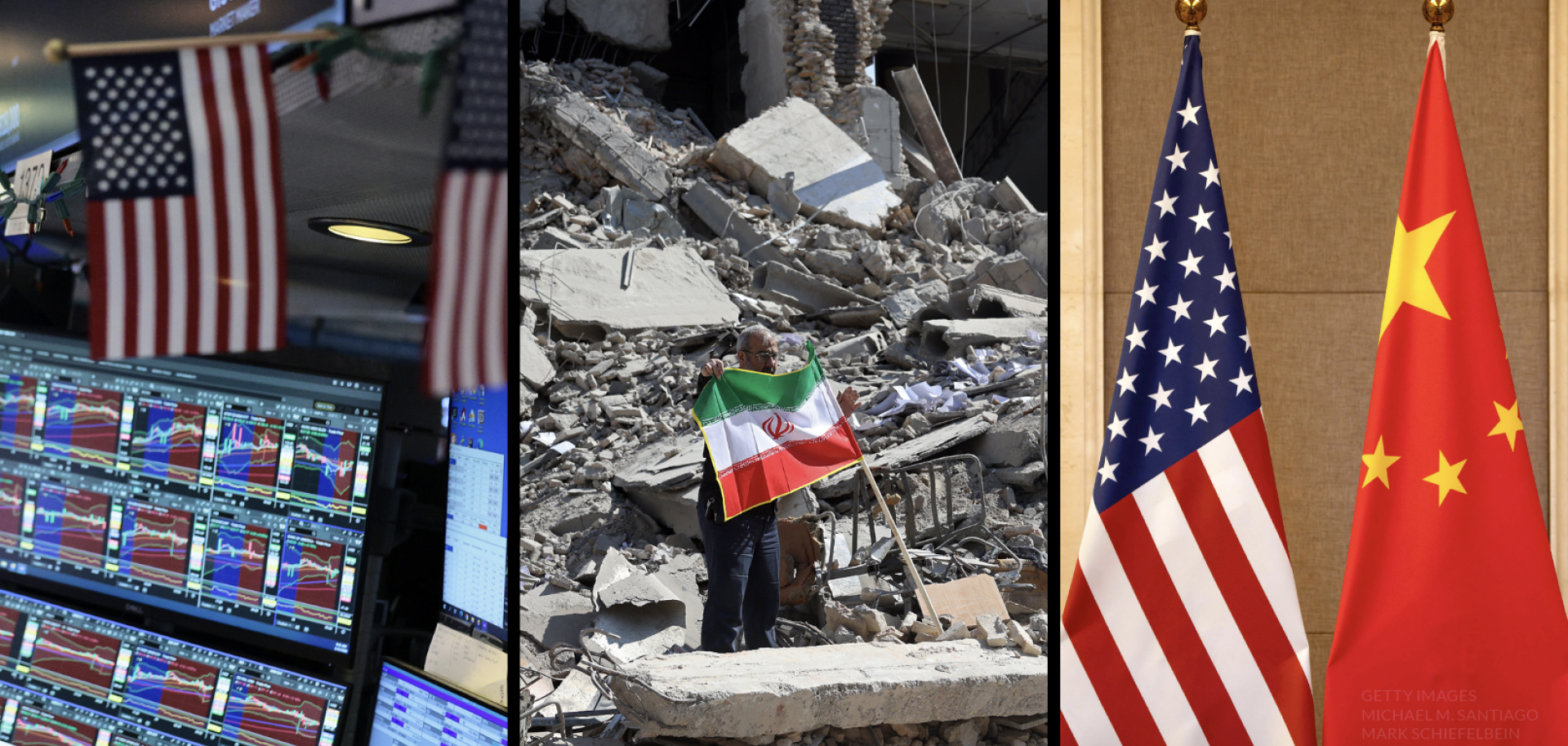
The second quarter will be defined by the lingering economic and political repercussions of the Iran war, as persistent security risks and energy market volatility in the Middle East ripple across the globe via higher costs, disrupted trade flows and intensifying domestic political divisions over the roles of the United States, Israel and Iran. Uncertainty surrounding global trade will add to this instability, with the administration of U.S. President Donald Trump pursuing alternative tariff mechanisms after the Supreme Court struck down its earlier measures, prompting key partners to delay or only cautiously implement recent trade understandings until the contours of U.S. strategy become clearer. Financial markets will remain sensitive to tail risks, including the low-probability but high-impact scenarios of an artificial intelligence-driven equity correction or judicial decisions that could undermine confidence in the U.S. Federal Reserve's institutional independence.
At the same time, a high-profile summit between Trump and Chinese leader Xi Jinping will likely extend the current tactical easing in U.S.-China tensions without resolving deeper structural disputes over technology, market access and supply-chain security. This outcome would keep companies and governments uncertain about the long-term trajectory of the bilateral relationship and leave the door open to new trade escalations later in the year.
Against this uncertain backdrop, major economies from Japan to Germany will likely sustain or expand stimulus efforts to cushion slowing growth and contain political backlash tied to inflation and employment risks. Meanwhile, Gulf states will roll out emergency measures aimed at restoring investor confidence, reviving tourism and reinforcing their positioning as stable commercial hubs following the reputational damage of the Iran war.
Because of the hostilities between Iran and its adversaries, the broader global security environment will remain fraught during the quarter. Prospects for meaningful progress toward ending Russia's invasion of Ukraine will stay limited as Moscow, emboldened by higher oil prices, calculates it can still improve its battlefield position before engaging seriously with ceasefire terms. Elsewhere, unresolved conflicts — including renewed instability in northern Ethiopia and escalating tensions along the Afghanistan-Pakistan border — will sustain elevated geopolitical risk and the potential for localized escalation. Meanwhile, as pressure from the Iran front eases, Israel will likely redirect military focus toward Lebanon and Gaza, prolonging regional tensions and humanitarian strain, even as the immediate phase of the Iran conflict winds down.
Finally, Hungary's general election in April could bring an end to a decade and a half of euroskeptic governance in the Central European state, while Armenia's parliamentary election in June will directly impact the viability of its peace agreement with Azerbaijan. Across the Atlantic, Colombia's presidential election in May-June will test whether the country joins the ongoing right-wing wave sweeping across Latin America.
Taken together, these trends suggest that the second quarter will be characterized by a fragile and uneven stabilization of global conditions. While the winding down of the Iran war may remove one immediate source of escalation risk, the conflict's economic, political and security aftershocks — compounded by unresolved great-power tensions, persistent regional conflicts and pivotal electoral contests — will continue to weigh on market confidence and government policymaking.
