
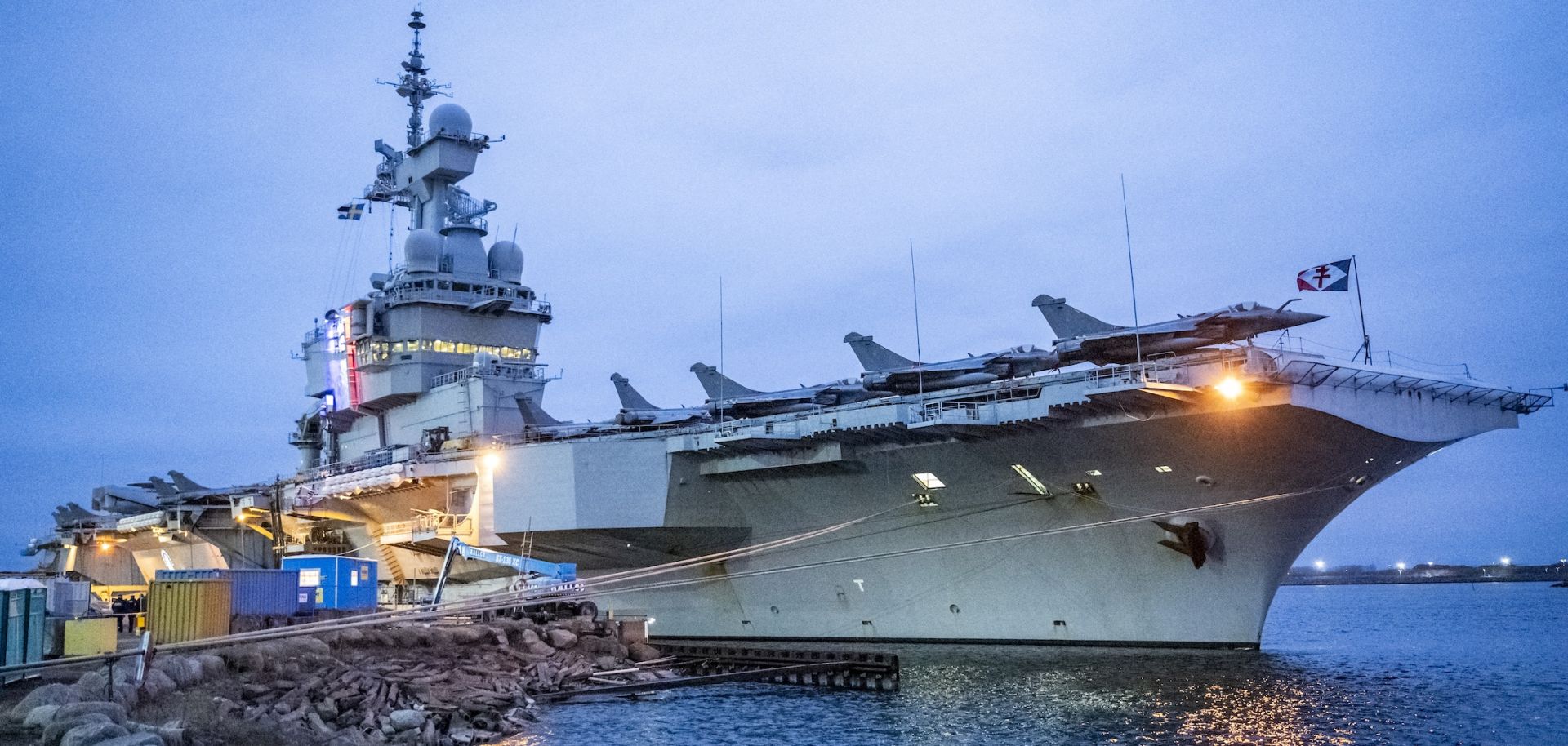
A prolonged conflict in the Middle East would increase Europe's exposure to security risks, including potential attacks on European-linked assets, renewed migration pressures and an elevated terrorism threat, particularly if European capitals assume a more active military or diplomatic role against the Iranian regime. On March 1, France deployed the Charles de Gaulle aircraft carrier and other naval assets to the Eastern Mediterranean after an Iranian drone strike hit a French naval facility in Abu Dhabi. The United Kingdom authorized U.S. use of British bases for "defensive" missile interceptions and confirmed a drone strike on its Sovereign Base Areas in Cyprus the same day. The European Union said it would reinforce Operation Aspides, its naval mission protecting commercial shipping in the Red Sea and Persian Gulf, while EU foreign ministers jointly called for maximum restraint and adherence to international law. European Commission President Ursula von der Leyen urged Iran to pursue a democratic transition following the assassination of Supreme Leader Ayatollah Ali Khamenei. Separately, France, Germany and the United Kingdom jointly warned Tehran they were prepared to take proportionate defensive action against missile and drone launch sites if attacks persist, while at the same time continuing to urge for de-escalation and negotiations. Spain publicly opposed the initial U.S.-Israeli strikes and denied the United States authorization for offensive use of its bases in the ongoing operations, underscoring divisions within the bloc, while Italy has so far maintained a largely cautious stance.

- Spain's stance on the ongoing conflict stands out among major European countries. Madrid explicitly condemned the U.S.-Israeli strikes as unjustified, destabilizing and inconsistent with the U.N. Charter. It barred the use of its Rota and Moron air bases, jointly operated with the United States, for attacks on Iran, prompting at least 15 U.S. aircraft to depart Spanish facilities.
- The United Kingdom's RAF Akrotiri air base in Cyprus was struck by an Iranian drone on March 1, causing limited damage and marking the first confirmed spillover of the conflict onto EU territory. On March 2, a senior commander of Iran's Islamic Revolutionary Guard Corps warned that missile strikes against Cyprus could intensify, alleging that the United States had expanded its military footprint on the island and cautioning that British and allied facilities could face further attacks. Reports indicated that additional missiles were launched toward Cyprus but were intercepted before impact.
- Iranian Shahed drones struck the French Camp de la Paix naval base in Abu Dhabi on March 1, causing material damage but no reported casualties. Iranian strikes have also targeted multinational bases hosting European personnel, including at Arbil International Airport in Iraq and Al Azraq in Jordan, activating air defenses and forcing troops to take shelter.
Europe will likely seek to contain escalation while backing the United States in a largely limited, defensive capacity, with deeper military or diplomatic involvement contingent on further attacks against European-linked military assets or significant political developments in Iran. European governments will likely remain diplomatically engaged but militarily restrained in their approach to the conflict over the coming weeks, prioritizing de-escalation while maintaining defensive deployments and alliance commitments that support U.S. operations through intelligence sharing, airspace access, logistical hubs, missile defense coordination and the protection of regional bases and shipping lanes. Depending on the evolution of the political situation in Iran, Brussels could more openly signal support for opposition figures or transitional arrangements, though no clear alternative leadership has emerged and the fragmented nature of Iran's opposition limits immediate options. Divisions among European countries will persist and may deepen moving forward, with France, Germany and the United Kingdom combining deterrence messaging with calls for negotiations, Southern European governments emphasizing regional stability and migration concerns and several northern and eastern members aligning more firmly with U.S. strategic objectives. European exposure will rise if further NATO-linked facilities come under attack, including Greece's Souda Bay, French and British naval deployments in the Eastern Mediterranean and Gulf or European contingents in Iraq. Absent such triggers, Paris and London will concentrate on force protection, intelligence cooperation and safeguarding commercial shipping rather than launching direct strikes on Iran.
- The European Commission said on March 2 that the EU's mutual defense clause under Article 42.7 would be discussed in the coming days following Iranian drone strikes against Cyprus, signaling that member states may formally assess collective security implications if further attacks target EU territory or European-linked military installations. Still, governments remain highly cautious about formally invoking the clause and are unlikely to move beyond consultations.
- On March 2, Greece announced the immediate deployment of two frigates and two F-16 fighter jets to Cyprus. Defense Minister Nikos Dendias stated Athens would support Cypriot defense against any further threats. French Foreign Minister Jean-Noel Barrot said on March 2 that Paris stood ready to help defend countries targeted by Iranian attacks, citing Saudi Arabia, the UAE, Qatar, Iraq, Bahrain, Kuwait, Oman and Jordan. France also said on March 3 that it would send a frigate as well as anti-drone and anti-missile systems to Cyprus. Germany and Italy are also reportedly set to send limited naval reinforcements to Cyprus at its government's request.
- British Prime Minister Keir Starmer confirmed on March 2 that the United Kingdom would not participate in the U.S.-Israeli offensive strikes against Iran, citing "lessons learned" from the 2003 invasion of Iraq, but would permit use of British bases for defensive purposes. Starmer also confirmed London had deployed aircraft and intercepted Iranian drones targeting bases in Iraq and Cyprus.
Any expansion of Iranian retaliation against European-linked assets in the region would significantly raise the risk of direct European involvement and accelerate escalatory dynamics between Tehran and European countries. As the regime grows increasingly desperate, Iran could further widen its retaliation strategy across the wider region, including by directly targeting European-linked military and logistical infrastructure that supports U.S. and NATO operations across the broader region. Potential targets would include air-refueling hubs in Southern Europe, pre-positioned equipment sites, missile defense systems, intelligence nodes and command-and-control facilities enabling allied deployments. Tehran could also escalate through asymmetric measures, including cyberattacks on European ports, energy grids and satellite networks, or by harassing European-flagged commercial vessels transiting key maritime chokepoints such as the Red Sea. Even limited strikes resulting in European casualties or damage to critical infrastructure would increase pressure for NATO consultations under Article 4 and could prompt additional naval, air and missile defense deployments by European states. While framed as defensive, such measures would deepen Europe's operational exposure and heighten escalation risks, particularly if Tehran views expanded force protection as indirect participation in offensive containment.
- Iranian Foreign Ministry spokesperson Esmail Baghaei said on March 3 that Tehran would treat any European participation in so-called "defensive strikes" as active participation in the U.S.-Israeli campaign and therefore as an act of war.
- A more direct and prolonged European role in a conflict with Iran would also intensify pressure on already constrained fiscal and military resources, particularly if sustained high energy prices weigh on growth, tax revenues and defense budgets, potentially diverting resources from Ukraine. Concurrent operational demands in the Middle East could shift assets, logistics and political focus away from NATO's eastern flank, while higher borrowing costs and renewed inflation would further limit budget flexibility. These dynamics could delay or reduce additional military and financial support for Kyiv. On March 2, Ukrainian President Volodymyr Zelensky warned that the NATO mechanism for jointly financing of U.S. weapons purchases could suffer if U.S. and allied attention remains tied to the Middle East, especially given Ukraine's reliance on European-funded Patriot air defense systems.
A prolonged conflict or destabilization in Iran could trigger another migration shock for Europe that could reignite intra-EU political fractures and stoke sociopolitical tensions within member states. If hostilities persist and escalate for several weeks or Iran experiences severe internal instability, outward displacement pressures could intensify, with many Iranians likely seeking entry into the European Union via Turkey and the Western Balkans corridor. In 2015 — when war in Syria, instability in Iraq and Afghanistan and the collapse of Libya as a key North African transit hub drove mass displacement toward Europe — more than 1 million asylum seekers reached the Continent. Although flows from Iran alone would probably remain lower than that — absent a total collapse comparable to Syria during the peak years of its civil war — even several hundred thousand arrivals over time would strain already overstretched asylum systems, particularly in frontline states such as Greece and Italy. Moreover, secondary movements toward northern Europe could reignite disputes over relocation quotas, burden-sharing and border enforcement among EU member states, prompting renewed or tighter unilateral border controls that would disrupt the movement of goods and people within the Schengen area. Additional inflows would likely further intensify already high anti-immigration sentiment, strengthening far-right parties and potentially destabilizing fragile coalition governments, while increasing the likelihood of anti-migrant protests and riots similar to episodes of violent unrest seen in recent years across the United Kingdom, Spain, Ireland and the Netherlands.
- U.S. President Donald Trump has said the military campaign against Iran was initially planned to last about four to five weeks but has acknowledged that operations could extend well beyond that time frame, underscoring his administration's intent to sustain pressure on Tehran's nuclear and missile capabilities. U.S. military leaders have described the operation as still in its early stages.
- The European Union's Agency for Asylum warned in a March 3 report that continued conflict in Iran could produce displacement on a scale comparable to the largest refugee movements of recent decades. If even 10% of Iran's roughly 90 million population were forced to flee, flows could rival past peak crises, particularly if Turkey serves as a primary transit route into Europe, the report noted.
Should European military and diplomatic involvement against Tehran escalate, the risk of retaliatory hybrid and asymmetric activity — including terrorist attacks — on European soil would increase significantly. Any deeper European military or diplomatic alignment against Tehran, particularly in the case of explicit support for regime change or direct involvement in U.S.-Israeli strikes, could elevate the risk of retaliatory measures, including Iran-linked hybrid activity on European soil. These could include increased surveillance and intimidation of dissident networks, cyber disruptions targeting ports or energy infrastructure, and targeted and indiscriminate violence. Jewish, Israeli and U.S.-associated diplomatic, commercial and community sites would face elevated threat levels, but high-visibility public venues and "soft targets" could also become symbolic targets of broader terror attacks in case of a wider campaign of terror on the Continent sponsored or inspired by the regime and intended to impose psychological and political costs. Even in the event of regime fragmentation or collapse, rogue elements of the IRGC or affiliated networks could continue external operations independently. At the same time, jihadist groups may exploit the conflict for recruitment and mobilization, raising the likelihood of lone-actor attacks. Finally, heightened communal tensions could further increase the risk of retaliatory violence and far-right targeting of Muslim communities, compounding pressures on domestic security services already managing elevated threat levels.
- Russia could also seek to capitalize on heightened social and security tensions in Europe by escalating its own hybrid operations, disinformation campaigns and efforts to amplify political polarization. Moscow may also probe NATO's eastern flank to test alliance cohesion and stretch allied capabilities if Europe shifts its attention and resources toward the Middle East.