
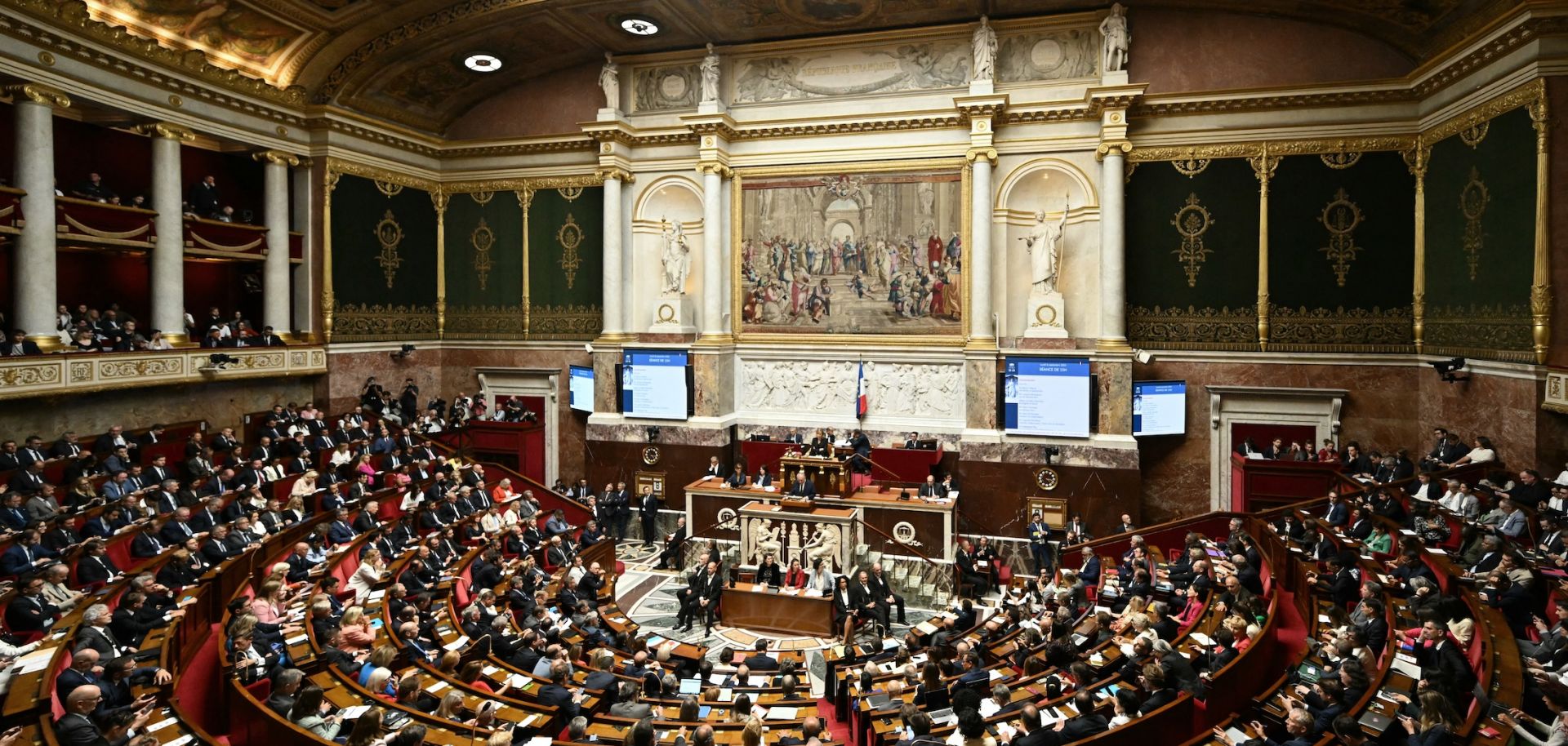
(BERTRAND GUAY/AFP via Getty Images)
France's then-Prime Minister Francois Bayrou (C) delivers his general policy statement during an extraordinary parliamentary session prior to a confidence vote over the government's austerity budget at the National Assembly in Paris on Sept. 8, 2025.
Following Prime Minister Francois Bayrou's ousting in a no-confidence vote, France's next government will have to navigate a highly divided Parliament to pass a deficit-cutting 2026 budget, either by striking a compromise or bypassing Parliament, which would heighten the risk of mass unrest. French Prime Minister Bayrou resigned on Sept. 9 after losing a confidence vote in the National Assembly the day before, with 364 lawmakers voting against him and 194 in support. President Emmanuel Macron said he would appoint a new prime minister, who will be the third in just over a year, "in the coming days." The new prime minister will be tasked with forming a new government and — crucially — forming a working majority in Parliament.
