
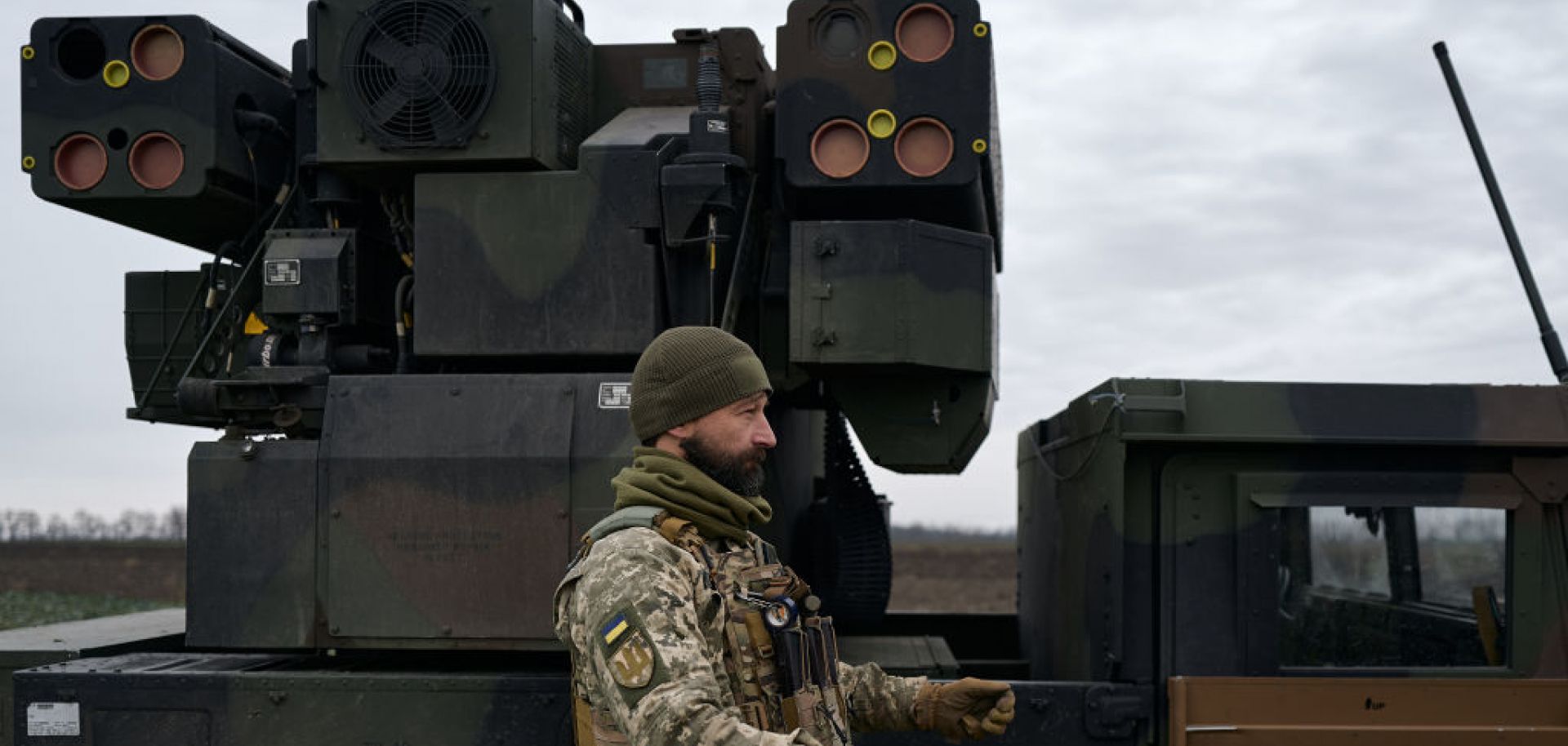
Despite growing frustration with Russia, the Trump administration is highly unlikely to dramatically ramp up pressure in a way that significantly alters the Kremlin's calculus, meaning major progress in peace talks will remain unlikely until at least later this year as Russian troops continue to press their summer offensive. On July 10, U.S. President Donald Trump said in an interview with NBC News that the United States had reached a deal with NATO leaders in which allies would purchase U.S. military systems, including crucial Patriot air defenses, and then transfer them to Ukraine; Trump also floated that he would have ''a major statement to make on Russia on Monday.'' The disclosures came after multiple signs in recent days that Trump is becoming increasingly frustrated with Russian President Vladimir Putin personally and with Russia's attacks in Ukraine. On July 8, Trump publicly inveighed against Putin, saying he has been throwing a lot of ''bullshit'' and lamenting that Putin had not taken steps to de-escalate the war. The day before, Trump directed the U.S. Department of Defense to restart weapons deliveries to Ukraine that had been paused the prior week, apparently without his knowledge. Finally, on July 8, Trump said he was ''looking very strongly'' at signing a bipartisan bill that would impose new sanctions on Russia and high tariffs on countries that purchase Russian energy and other products, but which also gives the president some flexibility over implementation.

- Since Russia launched its invasion in February 2022, the United States has given Ukraine three Patriot batteries and an unspecified number of interceptors, which are vital to Ukraine's air defenses. NATO does not collectively buy weapons, but multiple members of the alliance, particularly Germany, have indicated an openness to buying U.S. weapons and then transferring them to Ukraine. So far, however, there is little information about what weapons would be involved in such a scheme, the timeline for transfers or other details.
- Among other things, the current draft of the Sanctioning Russia Act of 2025 would levy new sanctions on major Russian banks and impose new restrictions on U.S. citizens' and companies' ability to engage in various business activities with Russian companies. Meanwhile, it would impose no less than 500% tariffs on countries that purchase Russian oil, gas, uranium and other goods. The bill provides a carve-out for countries that send aid to Ukraine, which would avoid exposing Western countries but still leave major countries like China and India vulnerable. Additionally, the president could unilaterally waive sanctions for 180 days and do so again with congressional assent.
- On July 1, U.S. officials confirmed media leaks that the United States had paused the delivery of some military aid to Ukraine as part of a comprehensive review of U.S. weapons stockpiles. Since then, numerous media reports have indicated that Pentagon leaders had taken the action without coordinating with the White House.
Trump has vacillated in his blame for stalled efforts to wind down the war in Ukraine, but recently has focused on the Kremlin as Russian forces have stepped up their attacks. Since coming to office, Trump has oscillated between blaming Russia and Ukraine for the failure to de-escalate the conflict amid a lack of progress in two rounds of direct peace talks and multiple rounds of separate talks between U.S. envoys and officials from both sides. Still, in recent weeks, Trump's rhetoric has signalled he is growing more frustrated with Moscow than Kyiv, culminating in his strong critiques of Putin in recent days. Trump's recent shift has come as Russian forces have accelerated the pace and intensity of their attacks in the air and on the ground in Ukraine. Most significantly, Russia has dramatically ramped up the number of projectiles it has been firing in its nightly drone and missile attacks on Ukraine, targeting not only cities near the frontline but also Kyiv and places far away in central and western Ukraine. These attacks have been stretching Ukraine's air defense capabilities and have drawn particular critiques from Trump, who has acknowledged that more U.S. support for Ukraine is necessary. Meanwhile, on the ground, Russian forces are continuing to make slow but steady gains across multiple parts of the frontline, pressing their manpower advantages.
- Overnight on July 8-9, Russia fired a record 728 drones (some of which were decoys) and 13 missiles, setting a new record for daily aerial barrages for the third time in two weeks. While Ukrainian forces are still able to shoot down or electronically jam many of the projectiles, Russia's strikes are increasingly stretching Ukraine's air defenses thin, even as Russia is accelerating its drone production such that many analysts expect Russia to soon be able to routinely launch more than 1,000 drones per night. When announcing on July 7 that the United States would reverse the pause on weapons deliveries, Trump implicitly acknowledged the toll of Russian aerial attacks by saying that Ukrainians ''have to be able to defend themselves'' because ''they're getting hit very hard.''
- Trump spoke with both Putin and Ukrainian President Volodymyr Zelensky in separate calls on July 3 and 4, but publicly acknowledged frustration with the lack of progress in his latest conversation with Putin, after which Russia launched what was then the largest barrage of overnight aerial attacks on Ukraine.
Despite his shift in rhetoric, Trump is highly unlikely to take steps that would markedly change the Kremlin's calculus for the foreseeable future, making meaningful progress in peace talks unlikely at least until later in the year. Although Trump has repeatedly publicly floated ideas for toughening Washington's stance on the Kremlin, his recent rhetoric and actions suggest he is getting more serious about adding some level of pressure on Russia. This makes it more likely that his administration provides more military aid for Ukraine, directly or via allies, and/or takes steps to impose new penalties on Russia. Nonetheless, according to numerous media reports and Trump's own public statements, he remains extremely hesitant to dramatically ramp up coercive pressure on Russia due to fears of scuttling rapprochement with the Kremlin and miring his administration in a war from which Trump seeks to extricate the United States. As a result, any new steps to support Ukraine are more likely to be incremental than transformative, such as facilitating the delivery of only a limited number of major weapons systems and/or signing the Russia sanctions bill but temporarily waiving its enforcement as a threat to hang over the Kremlin. Compared with much more aggressive steps, such actions would not sufficiently change Russia's maximalist negotiating stance, especially given that Russia's military production advantages are growing and that the ongoing offensive is enabling Russian forces to capture more territory. This means Russian troops will continue to launch increasingly numerous and frequent volleys of aerial attacks, as well as press their summer offensive on the ground — at least until the late fall when weather conditions will slow the pace of ground attacks. In the meantime, while Russian and Ukrainian envoys will likely meet again, they are unlikely to make significant progress in talks to wind down the war. And, while the likelihood for progress will rise at the end of the year as fighting on the ground slows, any deal that emerges is more likely to be on terms favorable to Russia, absent a more dramatic shift in the Trump administration's policy.
- While Trump has signalled greater openness to the Russia sanctions bill, he reportedly wants even greater flexibility to waive sanctions without congressional oversight before he considers signing it into law. There could also be further changes to the text that water down its impact and enable Trump to sign the bill and potentially even enforce small parts of it without imposing massive sanctions. Aside from what it would mean for the war in Ukraine, Trump likely wants greater flexibility because imposing 500% tariffs on countries like China and India would escalate U.S. trade wars to an unprecedented level and risk plunging the U.S. economy into a recession.
- Russia and Ukraine have yet to agree on a date for a third round of direct talks, but the first two have yielded few results other than exchanges of soldiers who were captured or killed. Russia has adopted a hardline stance in negotiations in which it has prioritized signing a comprehensive peace deal that recognizes its complete control over the four eastern Ukrainian provinces largely occupied by its troops and Crimea (which it annexed in 2014), limits on Ukraine's military development, and the removal of Western sanctions, among other things. By contrast, Kyiv has consistently said it is open to a temporary ceasefire but ruled out Moscow's demands as non-starters.