
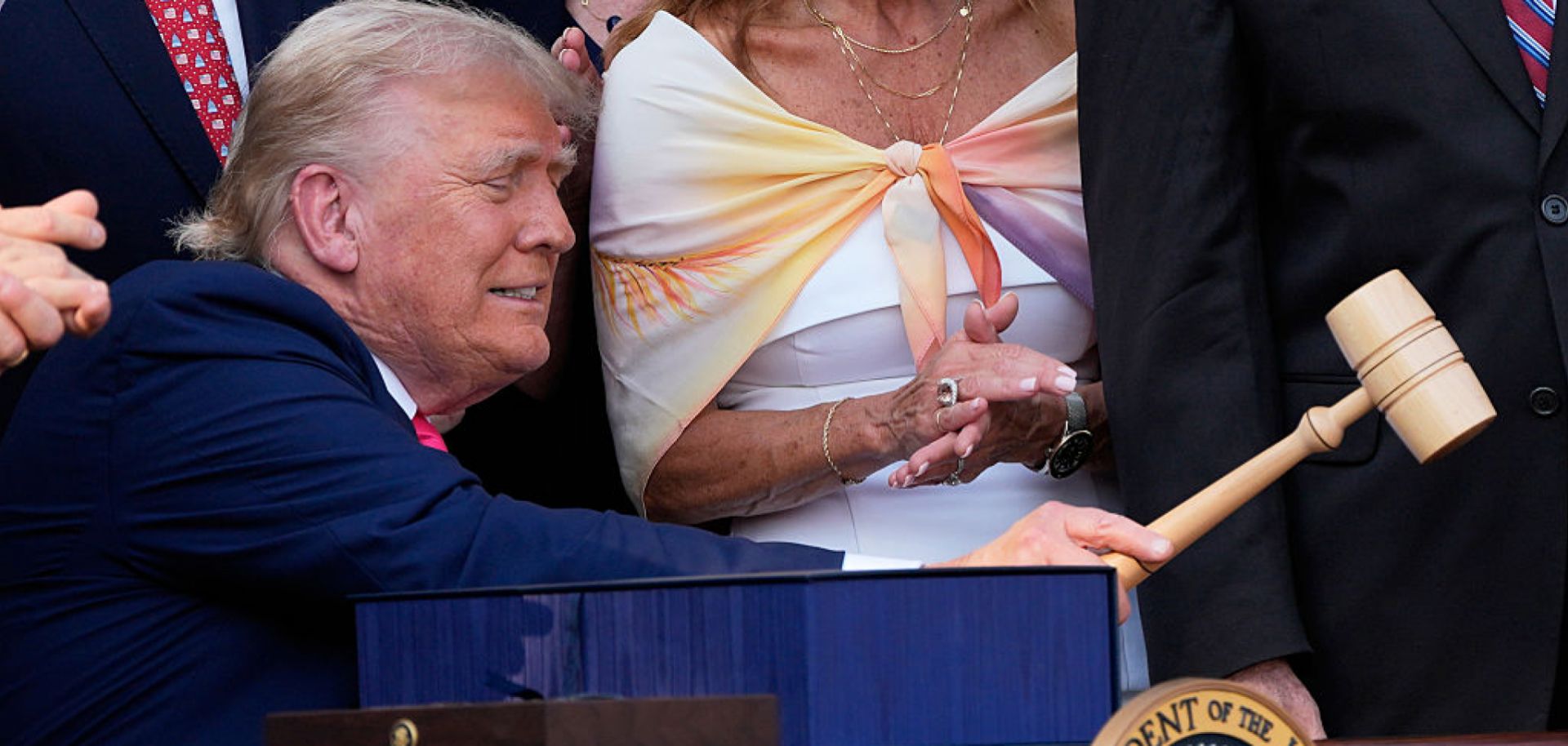
The recent extension of the income tax provisions of the 2017 Tax Cuts and Jobs Act as part of a budget reconciliation bill will support short-term U.S. economic growth, but add nearly $3 trillion in government debt over the next decade. The bill, which U.S. President Donald Trump signed into law July 4, increases spending on the military, border security and immigration enforcement, while reducing spending on Medicaid and other social programs. It also extends the 2017 TCJA income tax cuts, which would have expired next year, and phases out Biden-era energy tax credits.
- The Senate approved the budget reconciliation bill by a 51-50 vote July 1, and the House passed it by a 218-214 vote July 3, after several fiscal hawks — who had opposed the bill because of its impact on the fiscal deficit and debt — folded. All Democrats voted against the legislation.
- The bill will add an estimated $2.8 trillion to government debt over the next decade, as the TCJA income tax cuts would otherwise have expired in 2026.
A failure to extend the tax cuts would have led to a U.S. economic slowdown in 2026. The first Trump administration passed the TCJA in 2017, which included major tax cuts, especially to income taxes. The tax provisions were set to expire next year, which would have dealt a significant negative fiscal shock to U.S. economic growth, had they not been extended. The extension of TCJA tax cuts and other provisions will support economic growth in the short term. In its latest Summary of Economic Projections, the Federal Reserve forecast U.S. real gross domestic product growth to reach 1.4% and 1.6% in 2025 and 2026. In its April World Economic Outlook, the International Monetary Fund meanwhile put real U.S. GDP growth at 1.8% and 1.7%. Now that the bill has been signed into law, the U.S. economic outlook should improve slightly, Even though most forecasts already implicitly assumed that income tax cuts would be extended, some of other tax provisions and increased spending on border security should provide an additional, modest lift to short-term economic growth.
The budget reconciliation will add to U.S. government debt over the next decade and weaken sovereign creditworthiness and fiscal flexibility, though this will likely remain manageable in the next few years. The Congressional Budget Office estimates that the bill will increase government debt by $2.8 trillion by 2034, with the costs of all tax provisions amounting to $4.5 trillion and the spending cuts amounting to $1.7 billion. The increase means that the U.S. government will continue to run large deficits, possibly exceeding 5% to 6% of GDP, which will reduce fiscal flexibility and, over time, lead to higher debt servicing costs. Over the medium term, growing U.S. government debt could lead to higher yields and increasing debt servicing costs. In the context of lower structural economic growth due to U.S. trade and immigration policies, which the provisions of the budget reconciliation probably will not offset beyond the short term, U.S. government debt will continue to increase over the short, medium and long term. Broader financial market volatility or a significant increase in yields due to larger deficits, however, remain unlikely. Thanks to the dollar's status as the dominant global international reserve currency, the U.S. government enjoys significant financing flexibility, and investors will remain confident that the U.S. government will take corrective fiscal action should concerns about debt sustainability emerge. This could change, however, were Congress to pass further costly fiscal measures, or the government to undermine investor confidence through economic policies, such as taxes on foreign investment, that would cast doubt on the stability of economic governance or the rule of law. While the projected increase in U.S. government debt could lead international credit rating agencies to take a more skeptical view of U.S. sovereign creditworthiness in the medium term, the agencies — which typically assign credit ratings over a five-year horizon — have largely factored in the extension of the TCJA cut into their current ratings. If they did lower their ratings, the market impact would be very limited, as investors assess U.S. creditworthiness daily, making credit ratings a lagging indicator.
- In its most recent budget and economic outlook, the CBO projects U.S. government debt (held by the public) to increase from just under 100% of GDP to 119% of GDP by 2035. Ten-year U.S. government bond yields were largely unchanged and the dollar was modestly weaker following the bill's passage on July 7. Equity markets were down slightly.
- U.S. House Speaker Mike Johnson has announced his intention to pass two more budget reconciliation bills before the 2026 midterms. Technically, Congress can pass up to three reconciliation bills — which avoid a filibuster in the Senate, as reconciliation bills only require a simple majority — a year.
