
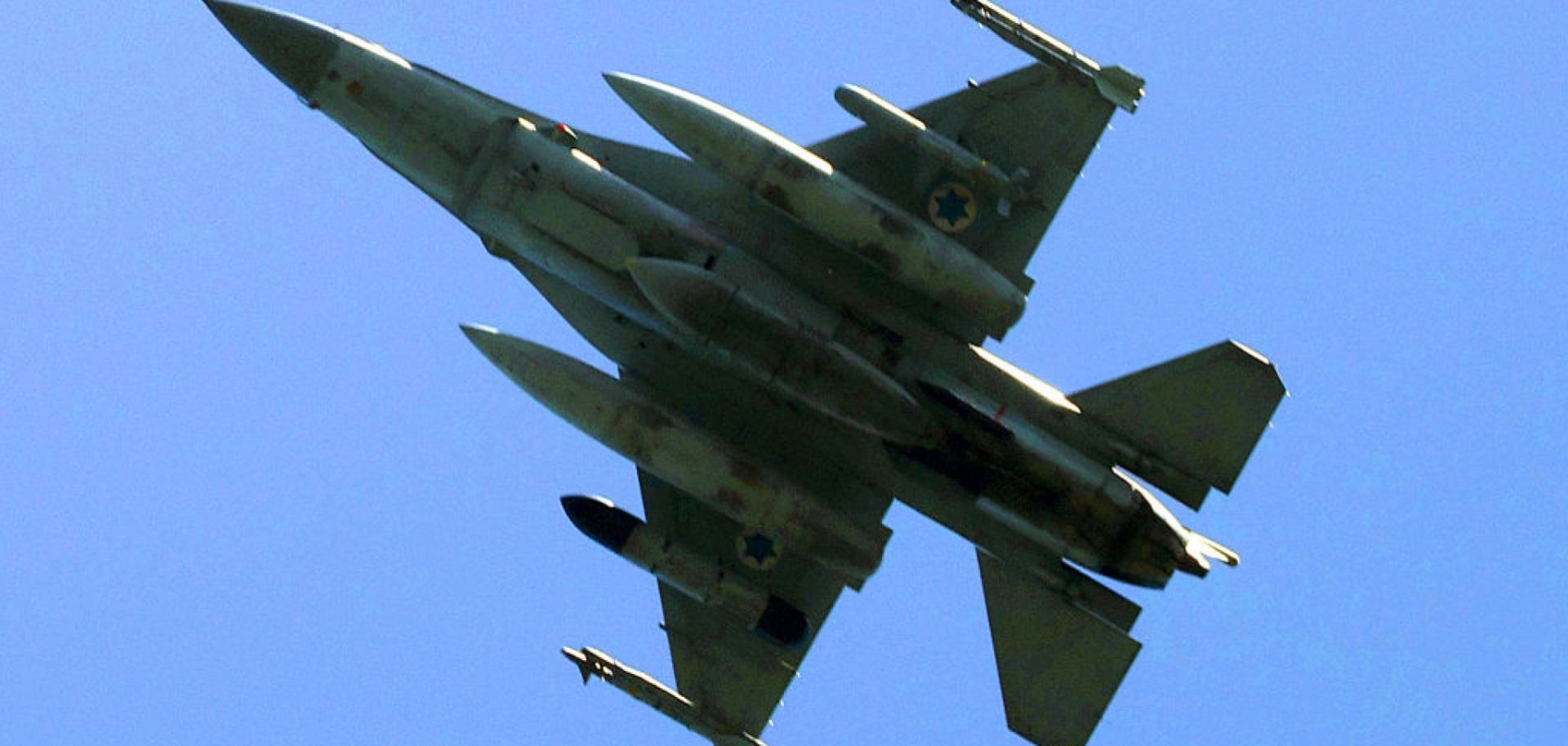
An Israeli Air Force F-16 fighter aircraft on March 24, 2025, over the city of Yokneam Illit in northern Israel.
Israeli launched a "preemptive" strike on Iran in the early hours of June 13, Israeli Defense Minister Israel Katz announced as he declared a special state of emergency inside Israel. About an hour later, the Israel Defense Forces said in a statement that "dozens of [Israeli Air Force] jets completed the first stage that included strikes on dozens of military targets, including nuclear targets in different areas of Iran." CNN reported that the attacks could last several days. Video footage shared on social media showed explosions occurring in Tehran at the start of the attack. Explosions were also reported in Esfahan, Arak and Kermanshah, all of which house nuclear and/or military sites. Katz added that "a missile and drone attack against the State of Israel and its civilian population is expected in the immediate future."
The scope and scale of Israel's attack on Iran is unclear and could involve several waves with initial strikes targeting radars, air defense systems, aircraft and control towers to enable more direct strikes on sensitive nuclear facilities, as the IDF statement said that it had just completed a "first stage" of an attack, suggesting that the attacks would persist. Iran and some of its proxies have vowed to respond to any Israeli attack on its soil. The scope of any retaliation will depend heavily on the scale of Israel's attack. Iran's retaliation to Israeli strikes on its soil in 2024, as well as strikes on its proxies Hamas and Hezbollah, were relatively measured and methodical, suggesting that Iran will try to take steps to limit escalation after its response. If Israel carries out significant damage to its nuclear program, however, Iran may also escalate significantly in nonkinetic ways, such as by withdrawing from the Nuclear Non-Proliferation Treaty. U.S. officials have said the United States has not participated in the strikes or facilitated them, which limits the potential for Iranian attacks directly on U.S. assets in the region in retaliation, though Iranian proxies in Iraq and Yemen may do so nonetheless.
The strikes began after the self-imposed U.S. 60-day deadline to negotiate a nuclear deal with Iran expired June 12 after five rounds of nuclear talks, with the likelihood of a deal being low. A sixth round was set to begin June 15, but with Israel's strikes on Iran, the likelihood of that round occurring has significantly declined. The strikes also came after the International Atomic Energy Agency board passed a resolution June 12 saying Iran had breached its international safeguard obligations. In response, Iran announced plans to replace less advanced IR-1 centrifuges at its Fordow enrichment facility with more advanced IR-6 centrifuges and would begin constructing a new enrichment facility. On June 11, the U.S. ordered nonessential personnel to evacuate embassies in key countries like Iraq that could be the target of eventual Iranian retaliation.
