
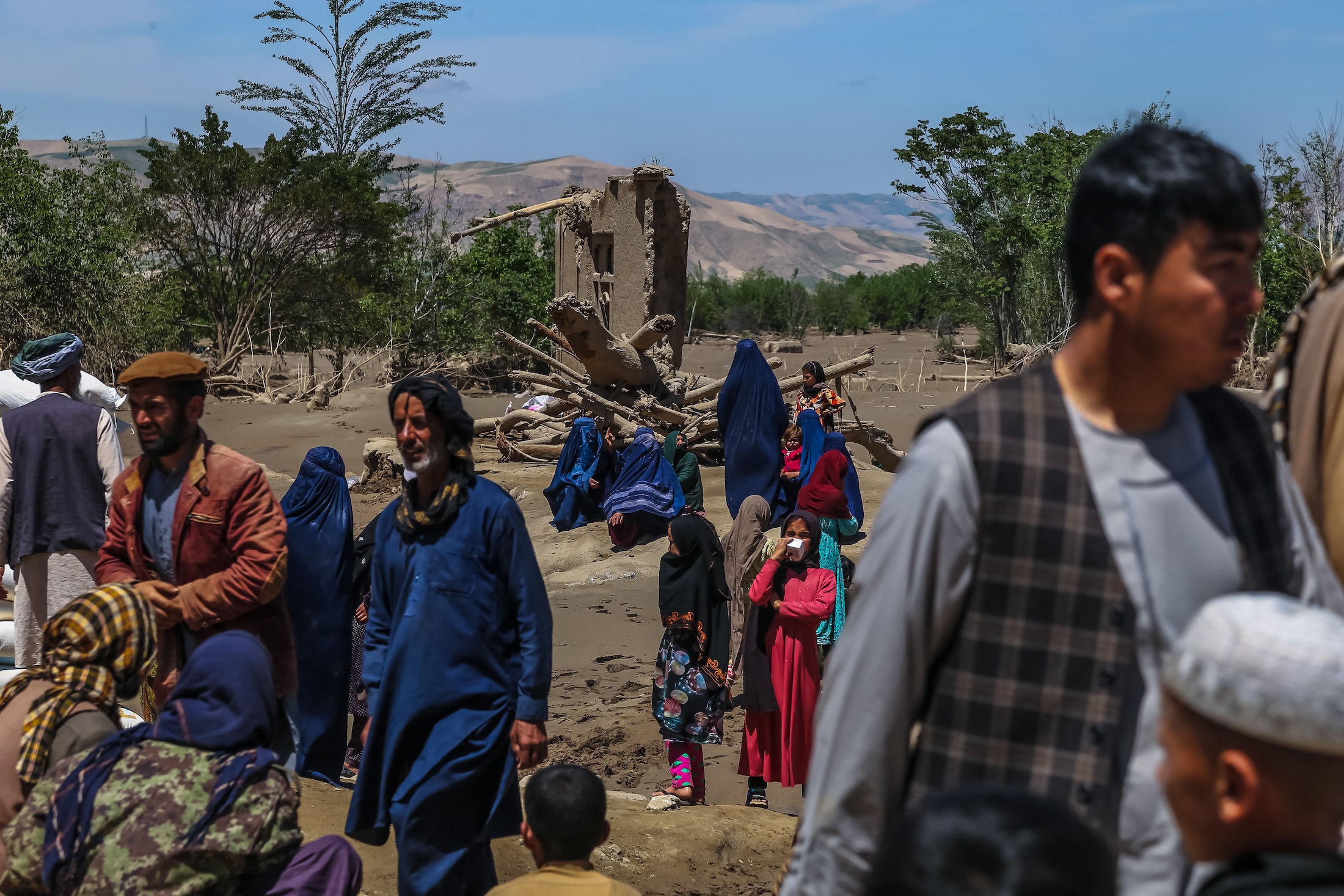
In Afghanistan, foreign aid cuts, resurgent militancy and the continued forcible return of Afghan migrants from neighboring countries will likely worsen the Afghan Taliban's governance challenges and capacity to provide security, threatening to cause disunity and severe destabilization that could trigger internal conflict. Recent weeks have seen several developments that bode poorly for Afghanistan's stability. Since late 2024, the frequency of militant attacks by the Afghan Taliban's chief rival, the Islamic State Khorasan Province, has steadily risen after a prolonged lull driven by Afghan authorities' successful counterterrorism operations in 2023. Recent months have seen ISKP attacks on foreign, namely Chinese, nationals, and bombings targeting Afghan government buildings and officials. The highest-profile attack has been the December 2024 suicide bombing that killed Khalil Haqqani, the country's acting minister for refugees and the uncle of acting Interior Minister Sirajuddin Haqqani, making him the seniormost Afghan Taliban official killed in a militant attack since the group retook Afghanistan in August 2021. In the weeks since Khalil Haqqani's killing, local reports suggest disunity within Afghanistan's authorities has also intensified, fueled in part by Haqqani supporters' suspicions that his rivals within the Afghan Taliban were responsible for his assassination. The apparent discord within the group spilled into the open in January when an audio recording purportedly of Afghan Taliban deputy Foreign Minister Sher Mohammad Abbas Stanikzai was released. In it, Stanikzai reportedly implicitly criticized the group's supreme leader, Haibatullah Akhundzada, with whom he has previously disagreed over domestic policy. That same month, Stanikzai left Afghanistan under unclear circumstances, with local reports suggesting he fled to the United Arab Emirates after Akhundzada issued a warrant for his arrest. Afghanistan has also faced a surge in returning refugees after Pakistan reportedly began another wave of Afghan migrant deportations in February. While a challenging prospect under any circumstances, U.S. President Donald Trump's pause of U.S. development assistance and the U.S. Department of State's subsequent stop-work order in late January has exacerbated the pressure Afghanistan's authorities face given Afghanistan's overwhelming reliance on foreign support to stave off humanitarian catastrophe.
- Though the State Department has granted exemptions for aid assessed as life-saving, allowing some relief operations globally to resume, media reports indicate the process for applying for such exemptions has been hamstrung by the U.S. government's effective dismantling of the U.S. Agency for International Development. The administration's whittling the agency's workforce from more than 10,000 employees to several hundred deemed essential has reportedly left little to no staff to process waiver requests, which rendered the mechanism "effectively moot" at least for some time, according to four anonymous sources interviewed by Reuters in early February.
- It remains unclear precisely which aid operations in Afghanistan remain suspended and which have either continued or been able to resume, but local reports indicate the Trump administration's actions have broadly disrupted relief services in the country. Aid organizations, including the Norwegian Refugee Council, say they have had to halt a range of programs, including those related to food security, education, shelter, personal safety and health. In late February, the World Health Organization's Health Cluster for Afghanistan reported that nearly 200 health facilities and mobile health teams remain suspended, disrupting services to an estimated 1.6 million Afghans in 27 of Afghanistan's 34 provinces.
- According to the United Nations, more than half the population, or some 23 million to 24 million Afghans, depend on humanitarian aid to meet their basic needs. This includes an estimated 21 million people without adequate access to water and sanitation services, 14.8 million people experiencing acute food insecurity, 14.3 million people with limited access to health care, and 7.8 million women and children who require nutrition assistance. The United States has played an outsized role in supporting Afghanistan's relief efforts, funding more than 40% of them in 2024. According to the U.S. Special Inspector General for Afghanistan Reconstruction, it has also spent nearly $3.71 billion in Afghanistan since the withdrawal of U.S. forces, making it the country's largest source of humanitarian aid.
Recent developments stem from long-standing challenges the Afghan Taliban has failed to overcome in the nearly four years since the group returned to power in Afghanistan. Disagreements within the Afghan Taliban began soon after the group returned to power in August 2021 as the unity of common enemies during the war with the U.S.-led coalition faded and made way for differing views on the country's governance and future. This cleavage between so-called hard-liners and more pragmatic group members has even fueled sporadic speculation and local reports of pragmatists plotting coups to wrestle power from the group's supreme leader and fellow hard-liners. While these rumors have never been confirmed and hard-liners in recent years have bolstered their influence within the group, local reports indicate grievances among more pragmatic Afghan Taliban officials have continued to simmer. ISKP, another challenge that surged after the Afghan Taliban retook power, meanwhile regularly attacks Afghan Taliban fighters and religious minorities, and occasionally foreign nationals. The Afghan Taliban's counterterrorism capabilities gradually improved and ultimately culminated in a series of successful counterterrorism raids in 2023 that severely disrupted ISKP's capacity, or at least willingness, to conduct frequent domestic attacks. But ISKP's decentralized structure has enabled it to survive, and its low profile in recent years has likely allowed it to avoid Afghan Taliban scrutiny and regroup. Meanwhile, the Afghan Taliban thus far appears to have weathered waves of Afghan returnees since regional countries, namely Pakistan, intensified deportations of Afghan migrants around 2023. Afghan authorities have done so largely due to international aid and relief organizations, which have helped process returnees and provided temporary shelters. But these foreign relief organizations have faced funding cuts in recent years as the West's focus on Afghanistan has shifted to other priorities like the conflicts in Ukraine and the Middle East. That the administration of U.S. President Trump has signaled it will deprioritize foreign assistance to support human rights, education, public health and similar humanitarian initiatives further suggests Afghanistan is unlikely to get the same level of aid that since August 2021 has helped alleviate deteriorating conditions in the country.
- The most contentious decision the Afghan Taliban's supreme leader has made is his unexpected about-face that banned older girls from returning to school in March 2022. His decision effectively rescinded a pledge many members of the Afghan Taliban had supported or at least softened on, and which Afghan Taliban officials had publicly reiterated mere days before Akhundzada's edict. Though the group officially said the restriction would be lifted when it could develop "a comprehensive plan [on girls' education] according to Shari'a and Afghan culture," neither has come to pass, and the ban has remained a grievance among Afghan officials who support girls' access to education and by those who see Akhundzada's edict as unnecessarily alienating to Afghans and the international community.
- ISKP attacks that have drawn the greatest international concern have been those carried out outside of Afghanistan. Among the highest profile have been the March 2024 Crocus City Hall attack in Moscow, Russia; the January 2024 bombing of the funeral of slain Iranian Gen. Qassem Soleimani in Kerman, Iran; and at least two cross-border rocket attacks in 2022 that targeted Tajikistan and Uzbekistan border areas. As many recent ISKP-claimed and unclaimed attacks have taken place along the Afghan-Tajik border, the group's budding resurgence will likely elicit greater concern among Afghanistan's neighbors over ISKP's intent and capability to pursue further attacks outside Afghanistan.
Further foreign aid cuts and resurgent militancy would exacerbate the Afghan Taliban's governance challenges, threatening to worsen instability by intensifying refugee outflows and risks of violence. Aid for Afghanistan will likely further wane as its largest humanitarian donor, the United States, considers deep, long-term cuts to relief and development programs abroad. Other countries will also continue shifting toward other strategic challenges perceived as more immediate or urgent, namely European countries focusing on the Continent's defense as they perceive the United States as an increasingly unreliable partner and fear it is moving closer to Russia. As regional countries will be most at risk if conditions in Afghanistan severely worsen, this would prompt some — particularly China, which would very likely be the most capable — to try and make up gaps in humanitarian aid. However, it remains unclear just how many of Afghanistan's neighbors have the capacity and/or will to support such efforts, let alone to the extent the broader international community has in recent years. This is particularly the case given many of Afghanistan's neighbors are facing their own economic, political and security challenges that will limit their ability to make up gaps in broader international support for Afghanistan. Conditions in Afghanistan are at risk of further worsening given the budding resurgence of ISKP. Its resumption of regular attacks would stoke fear among Afghans, especially religious minorities, and among the few foreign actors (namely China) that have demonstrated cautious interest in investing or otherwise becoming more deeply involved in the country. These developments, alongside additional waves of Afghan refugees deported from nearby countries, would intensify the challenges faced by the Afghan Taliban and aid organizations, risking further deterioration of the country's humanitarian crisis and stability. It could also intensify refugee flows to regional countries like Iran and even farther abroad, such as to Europe.
- Relief organizations have faced a worsening challenge in providing humanitarian support as countries have significantly cut aid to Afghanistan in the years since the August 2021 Afghan Taliban takeover. The U.N. 2022 Humanitarian Response Plan for Afghanistan was 73.8% funded by foreign donors, but its 2023 and 2024 response plans were only 52% funded. Thus far, 12.3% of this year's plan has been funded, and many aid organizations have said they fear cuts to Afghan aid will only worsen this year.
- Besides the United States, the other major foreign donors for Afghan aid include the European Commission, Asian Development Bank, the United Kingdom, Germany, Japan, Canada, Australia and Sweden. Illustrating declines in Afghan aid from these other major donors, the United Kingdom provided about $454.5 million in funding for the U.N. 2022 Humanitarian Response Plan for Afghanistan, but by 2024, its funding had declined to around $174.65 million. Similarly, Germany provided around $447.1 million in 2022, but only $95 million for Afghan aid in 2024.
- Though deporting Afghan migrants back to Afghanistan — a country facing growing governance and humanitarian challenges — is detrimental to longer-term regional stability, countries like Pakistan and Iran leading such efforts probably will continue to do so for the foreseeable future. Popular anti-Afghan sentiment in these countries is fairly high, with many blaming Afghan migrants for worsening conditions. Governments will likely believe that the perceived near-term benefits of expelling them, like reduced resource strains, outweigh longer term considerations of regional stability.
A severe deterioration in humanitarian conditions and security in Afghanistan could intensify tensions and potential fractures within the Afghan Taliban, leading to internal conflict, worsening regional spillover and potentially even fueling militant threats to countries abroad. Should the Afghan Taliban prove unable to effectively respond to domestic challenges and conditions in the country severely worsen, it could intensify grievances against the group's hard-line leadership, which many more pragmatic members believe have implemented unnecessarily alienating policies that have discouraged many foreign countries from closer ties and stifled Afghanistan's longer term stability and growth. The cleavage between Afghan Taliban hard-liners and pragmatists may widen should militant attacks significantly increase. Though such attacks would somewhat unify the group against a common enemy, pragmatists would risk increasingly seeing such attacks as further evidence of hard-liners' inability to stabilize the country. Successful assassinations of Afghan Taliban leaders would further intensify group divisions, including by fueling suspicions within the group of treachery — as seen following ISKP's killing of Khalil Haqqani in December 2024. Should these divisions grow sufficiently severe, they would threaten civil conflict in Afghanistan between hard-liners and pragmatists, but probably also between other competing factions within the Afghan Taliban. Ethnic and religious minorities would likely also play a role, as the group has mistreated and/or sidelined Hazara Shiites, Tajiks and Uzbeks, fueling grievances among these communities. Regional countries would likely try to stem the conflict, but their efforts would struggle in the face of foreign countries' and Afghan Taliban factions' differing interests. Western countries' greater focus on other geostrategic challenges would likely also reduce the resources the broader international community can quickly muster for an Afghan crisis. Beyond further destabilizing the region and surging refugee flows, such a scenario would also open the door for militant groups such as ISKP to have more space to plot attacks against Afghanistan's neighbors and those farther abroad, such as in Europe or the United States.
