
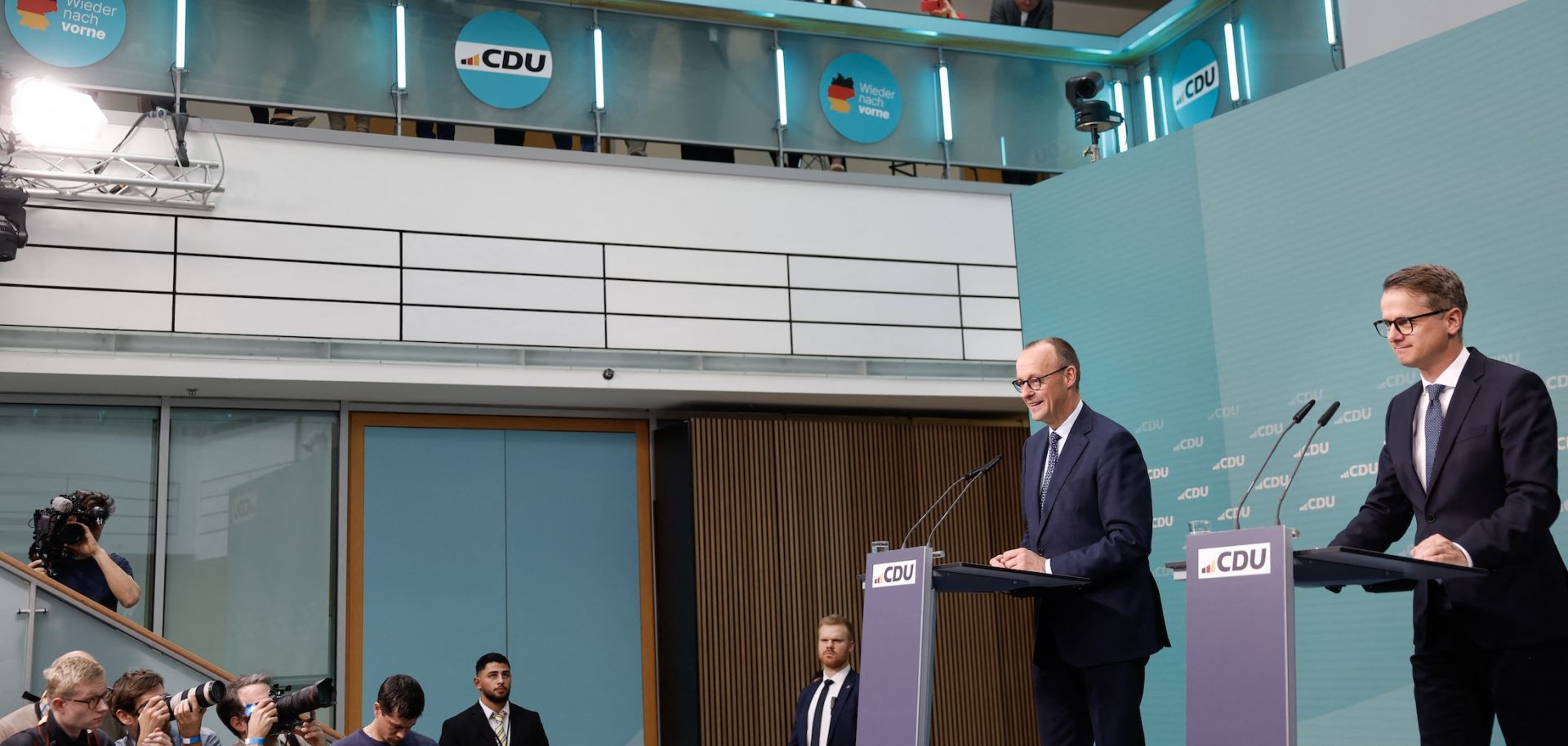
Germany's new government will likely be more stable and coherent than its predecessor, enabling the CDU/CSU to prioritize economic stimulus and pursue stricter migration policies, a less ambitious climate agenda and a more assertive foreign policy vis-a-vis Russia, China and the United States. The center-right alliance between the Christian Democratic Union (CDU) and its Bavarian sister party, the Christian Social Union (CSU), emerged as the largest bloc in the German parliament following snap federal elections on Feb. 23 , securing 28.5% of the vote. The far-right Alternative for Germany (AfD) party came in second with 20.8%, surpassing outgoing Chancellor Olaf Scholz's center-left Social Democratic Party (SPD), which garnered 16.4%, and the Greens, with 11.3%.
