
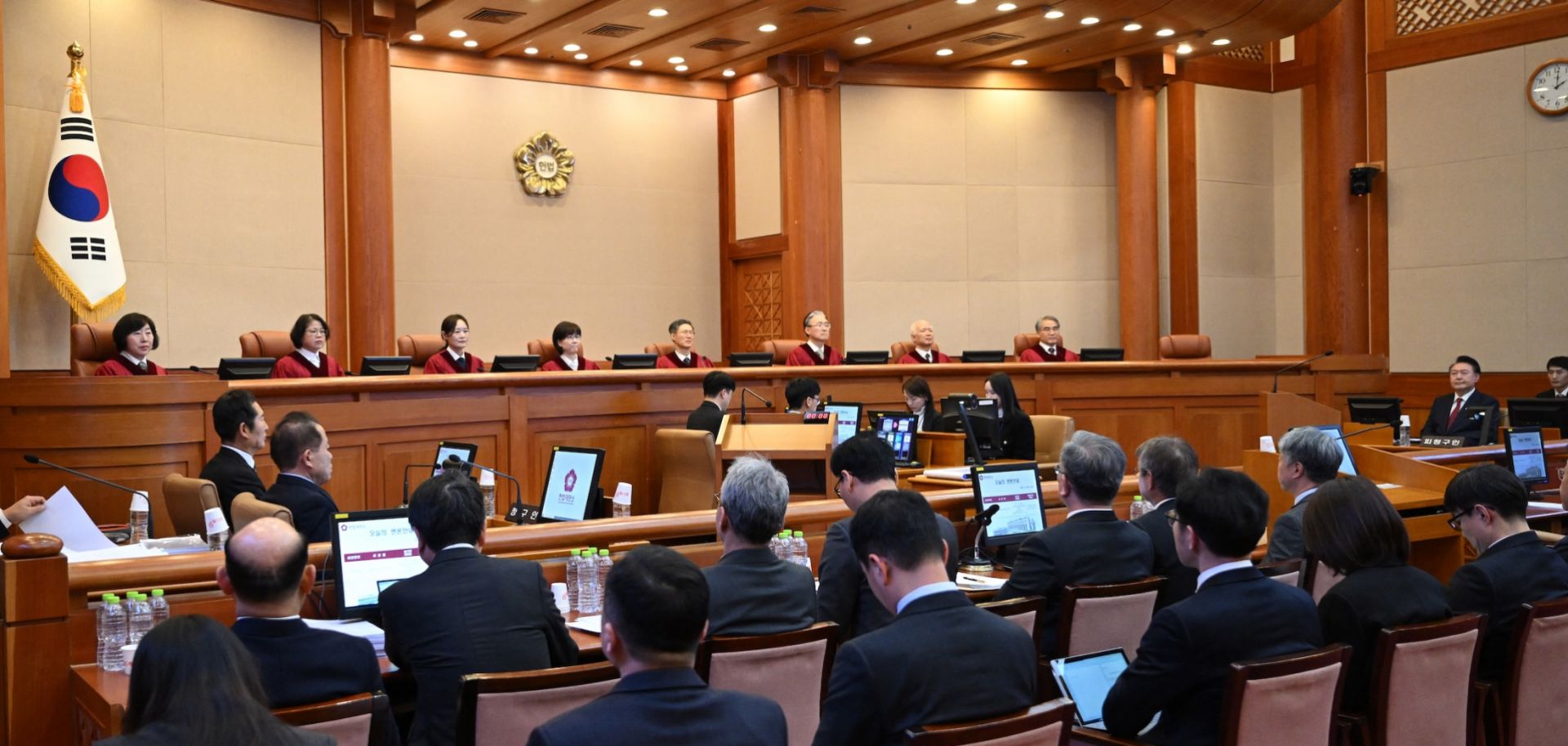
South Korean President Yoon Suk Yeol's impeachment would pave the way for a progressive government that shifts toward pro-labor policies and rapprochement with China and North Korea; but if Yoon remains in office, ongoing political instability, protests and potential fractures within the ruling party could weaken conservative governance ahead of the 2027 election. The South Korean Constitutional Court held its 10th oral argument session for President Yoon's impeachment trial on Feb. 20 and will hold its final session for concluding arguments on Feb. 25. Afterward, the court's deliberation — which will culminate in a ruling to either confirm, overturn or dismiss Yoon's impeachment — is expected to last into early or mid-March, though deliberations for some past impeachment trials of South Korean presidents have concluded faster.
