
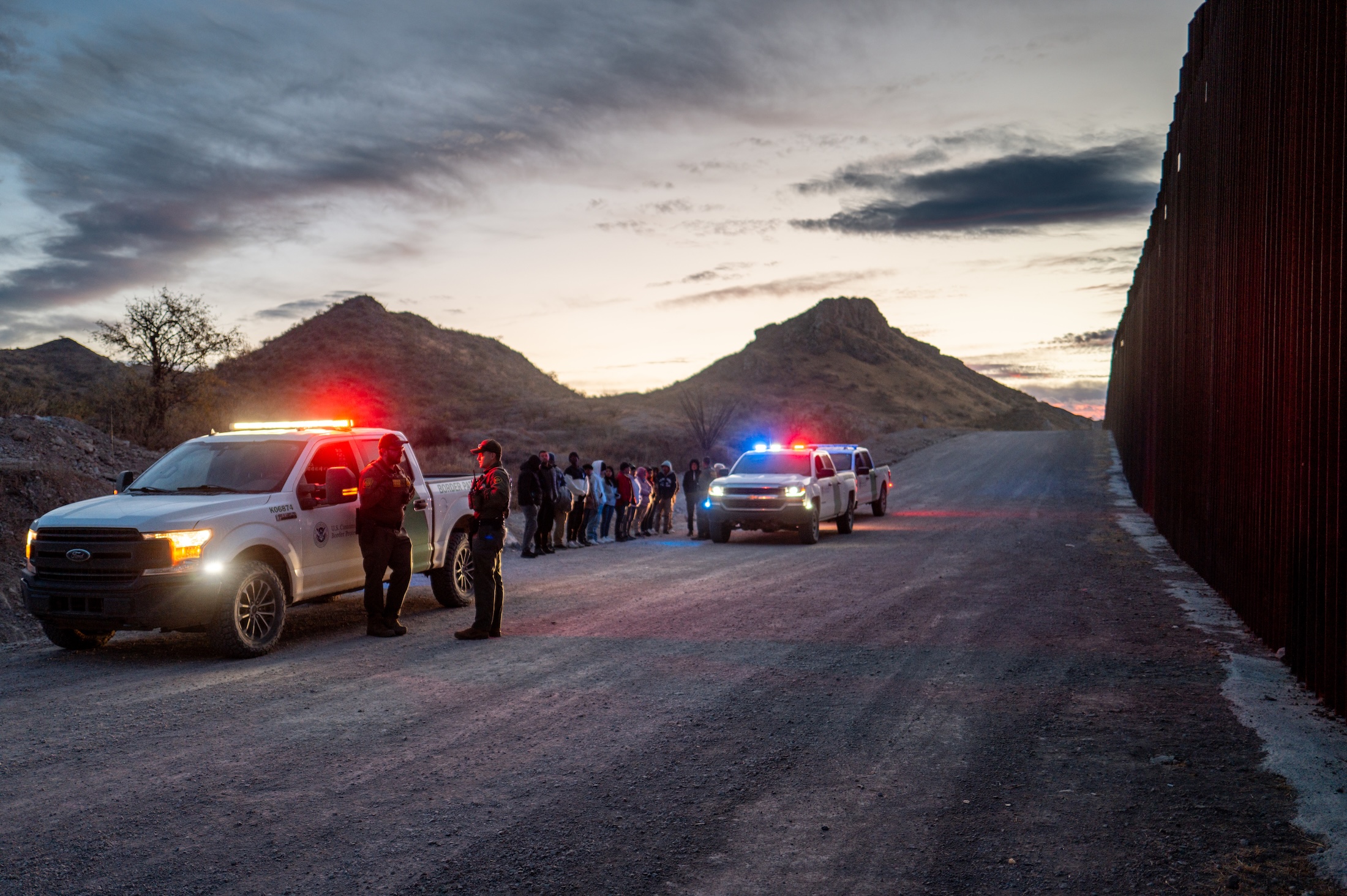
U.S. President Donald Trump's mass deportation plan will likely lead to protests at detention facilities and sporadic acts of violence, and make activists likelier to use various digital and physical means to target companies and executives linked to the controversial effort. A day after Trump took office, his plan to carry out his repeatedly pledged effort to expel millions of undocumented immigrants from the United States is beginning to take shape. As expected, he signed multiple immigration-related executive orders, including declaring a national emergency at the southern border, opening the door to using the armed forces to assist law enforcement in deportation efforts and suspending the asylum system. The latter allows the arrest and deportation of anyone with a pending asylum case, and the orders in general permit the use of a variety of aggressive means to carry out what he has promised will be the "largest deportation operation in American history." Before his inauguration, leaks in the media indicated that the administration would be launching immediate raids in major cities to detain unauthorized immigrants, but reports now suggest the timing may be slightly delayed. Although there are many political, legal and resource constraints on the administration's ability to follow through on its promises to deport millions of people soon after taking office, even a watered-down version of this effort would be highly controversial.
- Various federal laws that Trump’s executive orders cited — including the National Emergencies Act of 1976, Immigration and Nationality Act of 1952 and Alien Enemies Act of 1798 — provide the president wide discretion, helping to legally insulate Trump despite inevitable lawsuits and opening the door to dozens of special powers. Though federal law prohibits the armed forces from directly carrying out law enforcement duties — meaning active duty soldiers could not physically arrest or deport undocumented immigrants — they could carry out numerous duties in support, such as providing military bases and assets to house or transport detainees.
- Federal law contains provisions that enable the National Guard to perform more core law enforcement duties. This means that individual state governors or Trump — were he to federalize Guard units, as prior presidents of both parties have done to bolster security at the southern border — could use them more expansively to support deportation efforts, though doing so would also invite legal challenges.
- The U.S. Department of Homeland Security estimates there were 11 million undocumented immigrants in the country as of the beginning of 2022, a number that has increased since then. The consultancy Oxford Economics estimates that 8.3 million unauthorized immigrants have entered the country in the intervening years, though most have made asylum claims, and thus technically are not breaking U.S. law while their claims are being adjudicated.
- According to multiple media reports, Trump's designated border czar, Tom Homan, has been lowering expectations in conversations with Republican lawmakers, telling them that the administration will not be able to swiftly carry out millions of deportations due to resource constraints at Immigration and Customs Enforcement, the U.S. agency that would take the lead in any mass deportation plan. In addition to insufficient funding for ICE agents, detention beds and other necessities, expelling millions of undocumented immigrants would also invite political pushback from Democrats and likely at least some Republicans concerned about the optics of removing so many people. This would be especially true if doing so included controversial moves like separating families and/or led to labor shortages and price increases as many economists have warned.
Regardless of the scale of the mass deportation effort, protests targeting detention facilities are likely, especially if reports emerge of unsafe, unsanitary or otherwise controversial conditions. In 2018, in response to mass deportation efforts during Trump's first term, a loose movement known as "Occupy ICE" emerged in which participants staged repeated protests outside of buildings affiliated with ICE. Even if a similar one does not emerge in Trump's second term, immigration activists are likely to at least sporadically carry out protests outside of detention facilities and related infrastructure, such as bus routes used to transport migrants to the southern border or airports for eventual removal. The locations of ICE detention facilities are publicly available. While most are not in dense urban areas where protests would be more disruptive to the surrounding areas, ICE and other federal agencies that have roles in any mass deportation plan — such as U.S. Customs and Border Protection — all have corporate offices in downtown areas of major cities that will present attractive targets for activists. Judging from past anti-deportation protests, local and state government buildings are also likely targets for protests as activists seek to pressure them not to cooperate with ICE. Protests outside of the private homes of public officials linked to the deportation effort are also likely. Should Trump enlist active duty or Guard troops, protests near military facilities would also be likely. Even if most protests are peaceful, acts of vandalism — such as spray painting graffiti or smashing windows or doors — are likely at some protests, judging from those that occurred during Trump's first term. Protests would grow and become more frequent if reports emerge that conditions inside detention facilities are unsafe, unsanitary or otherwise controversial, such as widespread reports in Trump's first term of migrant children being separated from their families and kept in rudimentary cells frequently described as cages.
- Since Trump's election, dozens of protests have occurred nationwide in which activists have gathered outside of government buildings in major cities to urge local and state politicians to take pro-migrant positions. While most of these protests have been small — with participation in the low hundreds or less — their size and frequency can be expected to rise once the administration ramps up its mass deportation plan.
Over time, more aggressive efforts to deport larger numbers of people, especially by targeting families and long-established members of local communities in contentious raids, would increase the likelihood of larger protests and targeted violence. Even if the administration initially prioritizes deporting comparatively less contentious populations – such as those facing criminal charges, presenting national security threats or who have only been in the country for a short period – Trump campaigned heavily on removing large numbers of undocumented migrants and his political base will expect his administration to deliver. Moreover, while Trump and his advisers have consistently said they — like past administrations of both parties — will focus on removing undocumented migrants who face criminal charges beyond their illegal entry into the country, numerous studies indicate this pool of people is comparatively small. A senior ICE official reported to Congress that as of late July 2024, there were approximately 663,000 unauthorized migrants with criminal histories on the agency's docket — a comparatively small portion of the overall total. As a result, over the course of Trump's term and as agencies like ICE and CBP receive more funding, the administration will become more likely to expand its mass deportation efforts to target long-term residents, families and others with much deeper ties to local communities. Doing so would likely include carrying out high-profile raids not just at workplaces but also at schools, houses of worship, hospitals, public demonstrations and other so-called "sensitive locations" — as media leaks suggest the administration intends to do. These more aggressive and more contentious efforts would raise the likelihood of generating larger protests that do not specifically target locations like ICE detention facilities, but more generally occur in public places. They would also increase the probability that a subset of more aggressive activists carry out violent attacks using improvised explosive or incendiary devices, firearms or other weapons. Aside from ICE facilities and personnel, such attacks could also target federal buildings housing immigration courts, local government offices linked to supporting deportation efforts and public officials who publicly support Trump's efforts. More aggressive, let alone violent, actions from far-left groups would also elevate the likelihood that they engage in street clashes with far-right activists.
- In July 2019, police officers killed a self-described anti-fascist (who in a letter he mailed in advance to a member of a local armed far-left group said "I am antifa") after he refused to drop his firearm after officers found him throwing incendiary objects in an apparent attempt to destroy an ICE detention center in Tacoma, Washington. While this and other incidents — such as shootings or improvised explosive devices targeting ICE offices — during Trump's first term were outliers, they illustrate how some more militant activists could become so aggrieved that they are willing to carry out acts of violence.
- Compared to those on the far-right, far-left extremist groups are more likely to focus their violence on property, not people, though there is always the risk that a lone actor or small cell will carry out a lethal attack independent of coordination with a formal group.
- Given Trump's plan to use the military to assist with deportations (and separate threat to use the armed forces to quell significant unrest), it is possible that in an extreme scenario there could be a violent confrontation between protesters and soldiers that leads to casualties that risks sparking larger civil disturbances.
Especially if mass deportation efforts expand in scope and scale, more militant activists will become more likely to use cyber and physical means to harass, intimidate and even attack companies and executives at all tied to the plan. While activists will focus on physical government targets and personnel directly responsible for overseeing deportations, they will also have incentives to target private companies and executives they see as in any way linked to the administration's efforts, especially if these become more aggressive over time. As seen repeatedly in ongoing protest movements like those led by environmental campaigners and pro-Palestinian activists, targeting companies and senior corporate leaders is increasingly seen as a way to exert grassroots pressure when the government is unresponsive to activists' demands. To begin with, activists would prioritize companies directly tied to deportations, such as private firms contracted by ICE and other federal agencies to assist with logistics like running detention centers or transporting detainees. Activists would be likely to expand their focus to other companies with more tenuous links to deportations. These would include technology companies that provide surveillance, data analysis, facial recognition, cloud computing or other services to the federal government; consulting and private security companies that provide staffing, intelligence or other support linked to deportation efforts; banks, insurance companies and other financial institutions that do business tied to deportation efforts; and construction, maintenance, food services and other firms charged with building, maintaining or in any way supporting detention facilities. Even if companies themselves have no links to deportation efforts, public comments made by, or the political affiliations of, their executives could put such companies in activists' crosshairs. No matter the reason, activists could target these companies and executives in a range of ways. On the digital side, these extend from carrying out more rudimentary hacktivist attacks like distributed denial-of-service attacks or website defacements to more concerning hack-and-leak operations, especially those that doxx executives and facilitate so-called "swatting" or other physical attacks. Activists could carry out physical sit-ins or other protests against corporate offices or executives' personal residences, or engage in various forms of property damage ranging from low-level vandalism to much more aggressive acts like arson or other forms of physical sabotage. In extreme cases, physical attacks against senior executives are possible, especially if they do not have personal protection.
- While companies and their leaders would face the greatest threats from far-left activists and extremists, they may also face far-right threats should they be publicly seen as pushing back, let alone obstructing, the administration's mass deportation push.
