
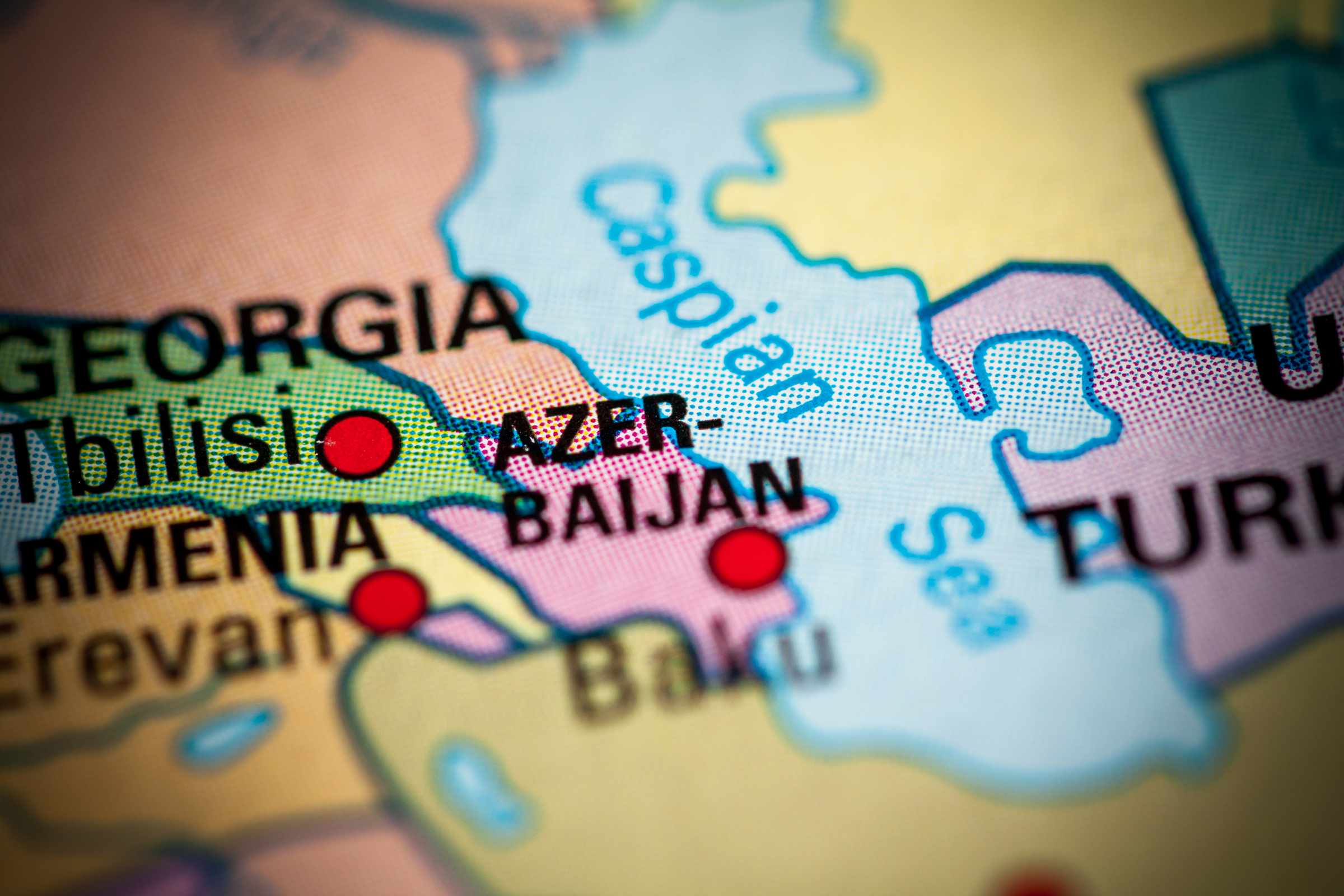
A Russian air defense system was responsible for the downing of Azerbaijan Airlines Flight J2-8243 on Dec. 25 near the Kazakh city of Aktau, which killed 38 people, Euronews reported Dec. 26, citing unidentified Azerbaijani government sources familiar with a preliminary investigation. Some 29 people reportedly survived the crash. The Embraer jet's communications were reportedly disrupted by electronic warfare systems during its approach over Grozny, the capital of the Russian republic of Chechnya. These claims appeared corroborated by a gap in the aircraft's publicly available tracking data while it was flying over southwest Russia. A Russian Pantsir-S air defense system reportedly fired a missile around this time, with Russian sources claiming that the country's air defense systems were actively engaging a Ukrainian unmanned aerial vehicle attack. Though the jet's pilots subsequently requested an emergency landing at nearby Russian airports, they were not granted permission and were instead ordered to fly across the Caspian Sea toward Aktau, around which Flight J2-8243 ultimately crashed. The revelations appeared to differ significantly from the purported preliminary findings of Russia's civil aviation authority, which has suggested the crash resulted from an emergency possibly caused by a bird strike. If confirmed, it would mark the second time in roughly a decade that Russian forces have downed a commercial airliner, following a Russian surface-to-air missile's July 2014 downing of Malaysia Airlines Flight 17 over eastern Ukraine during the Donbas war. Air travel over and around Russian and Ukrainian airspace has been significantly disrupted, particularly since Russia invaded Ukraine in February 2022, both due to Russia's closure of its airspace to most foreign aircraft, as well as airlines' avoidance of flying over high-risk areas.
The Russian downing of the airliner, if confirmed, demonstrates the persistent danger of flying in airspace even beyond Ukraine's borders, where Russia and Ukraine employ electronic warfare systems, regularly conduct attacks using aerial munitions, and utilize air defenses. Over the last 18 months, Ukrainian forces have increasingly used long-range weapons, including unmanned aerial vehicles, to target critical infrastructure deep into Russia, prompting the Russian military to increasingly engage in air-defense countermeasures. These heightened countermeasures have raised the risk of civilian aircraft being misidentified as a threat, with Flight J2-8243 appearing to be the latest misidentification. Though the varying restrictions on air travel around Russia and Ukraine have significantly limited the frequency of commercial airliners targeted during the two countries' yearslong war, such risks will remain elevated amid Russia and Ukraine's employment of electronic warfare system that can disrupt communications and potentially other essential equipment pilots of civilian aircraft rely upon, which appears to have also led to the recent Azerbaijan Airlines crash. As pilots of civilian passenger and cargo aircraft fly around these conflict zones, they will thus remain vulnerable to being misidentified by air defense forces and systems, as well as to potentially catastrophic impacts from ordnance launched by or exchanged between the warring parties. Against this backdrop, commercial airline companies will likely reconsider the flight paths of their planes to further limit risks of accidental shootdowns in the coming weeks. That said, the threat to air travel in the region will remain high because civilian airliners will generally remain unaware of imminent kinetic activity, as neither Russia nor Ukraine typically give advanced warning to preserve operational security; this risk will be particularly pronounced for Chinese aircraft, which have not been subject to the same restrictions Russia has placed on Western aircraft flying over its territory.
