
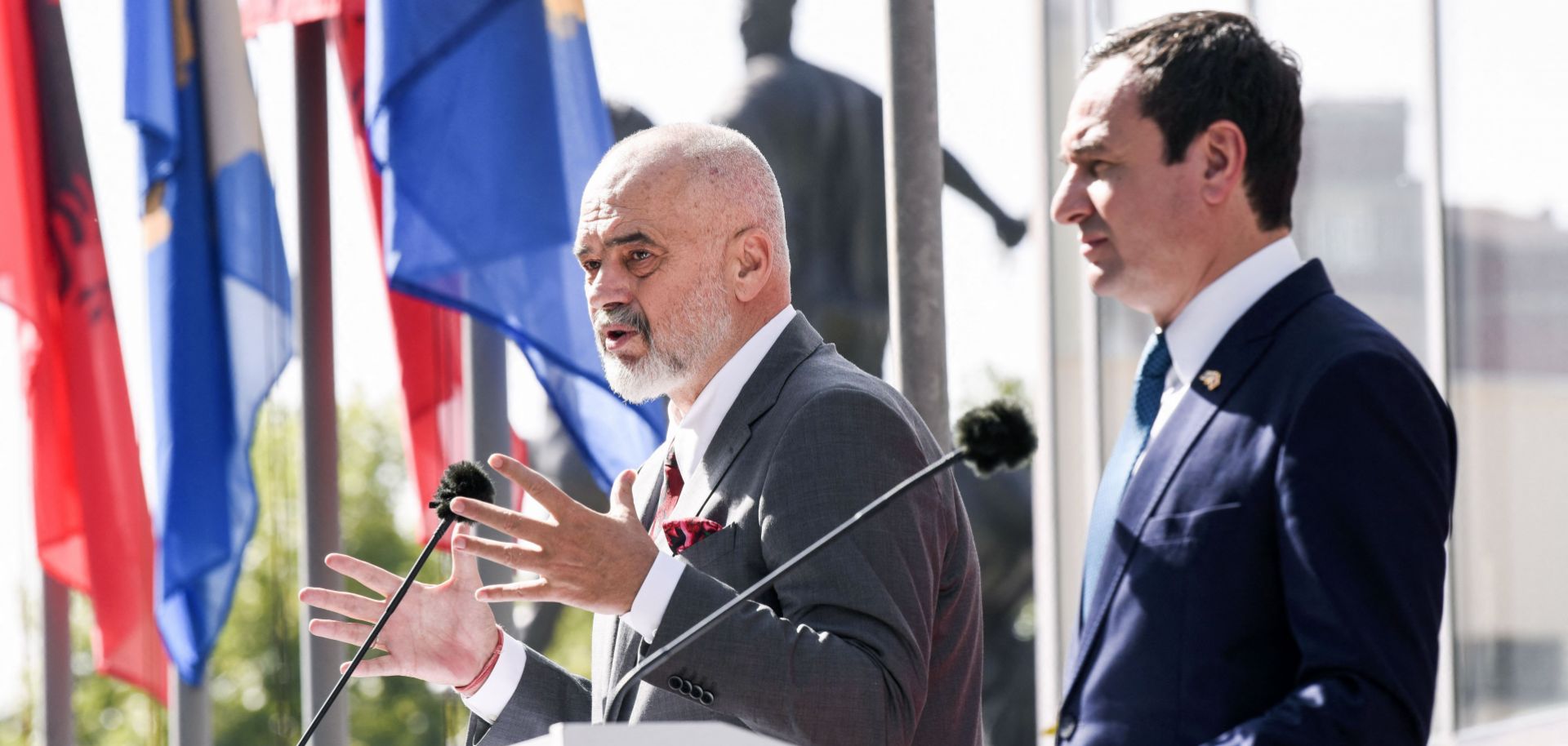
Kosovo Prime Minister Albin Kurti (right) and his Albanian counterpart, Edi Rama, hold a joint press conference in Pristina on Sept. 27, 2021.
While the unification of Kosovo and Albania is unlikely, the mere threat could result in political and economic brinkmanship between Kosovo and Serbia and sporadic episodes of unrest in the Balkans. On Nov. 20, Kosovo Prime Minister Albin Kurti said that he would support a referendum on unification with Albania if it was “peaceful and democratic,” though he admitted that such a vote was not a priority for his government. In response, Serbian Prime Minister Ana Brnabic accused Kurti of undermining stability in the region. Kurti made similar statements in February after his nationalist Vetevendosje party won Kosovo’s general election.
- Kosovo, which is home to a large Albanian population, unilaterally declared independence from Serbia in 2008. Serbia does not recognize Kosovo’s independence, a position that countries including Russia and China support. Countries including the United States, Germany, the United Kingdom and France recognize Kosovo.
- Serbia has historically seen Kosovo as the birthplace of Serbian civilization, making it a particularly sensitive issue among Serbians.
- Serbia and Kosovo have participated in ongoing EU-sponsored talks to normalize their relationship. But progress has been slow due to persistent sticking points like granting greater autonomy to ethnic-Serbian populations in northern Kosovo.
Kosovo and Albania’s shared culture and close political and economic ties are driving their rhetorical support for unification. Albanian politicians have often spoken in favor of unification with Kosovo, and opinion polls suggest that both populations are open to the idea. Unification with Albania — a country that is recognized by the entire international community — could solve Kosovo’s recognition problem, which has left it unable to join international organizations like the United Nations. In addition, unification could offer both Kosovo and Albania a faster way to integrate their economies at a time when their prospects of joining the EU are distant. (Albania is a candidate for EU accession, but progress has been slow. And Kosovo’s chances of ever joining are even slimmer since five EU member states, including Spain and Romania, don’t recognize its independence.)
- In 2015, Albanian Prime Minister Edi Rama said unification with Kosovo was “inevitable.” In 2018, Rama suggested that the two countries should have a joint presidency and a common security and foreign policy.
- According to a 2019 opinion poll by the Open Society Foundation (OSF), 75% of Albanians and 64% of Kosovars said they would vote for unification if there was a referendum. However, support for unification fell to 29.5% in Albania and 43.5% in Kosovo if unification included a tax to finance the process.
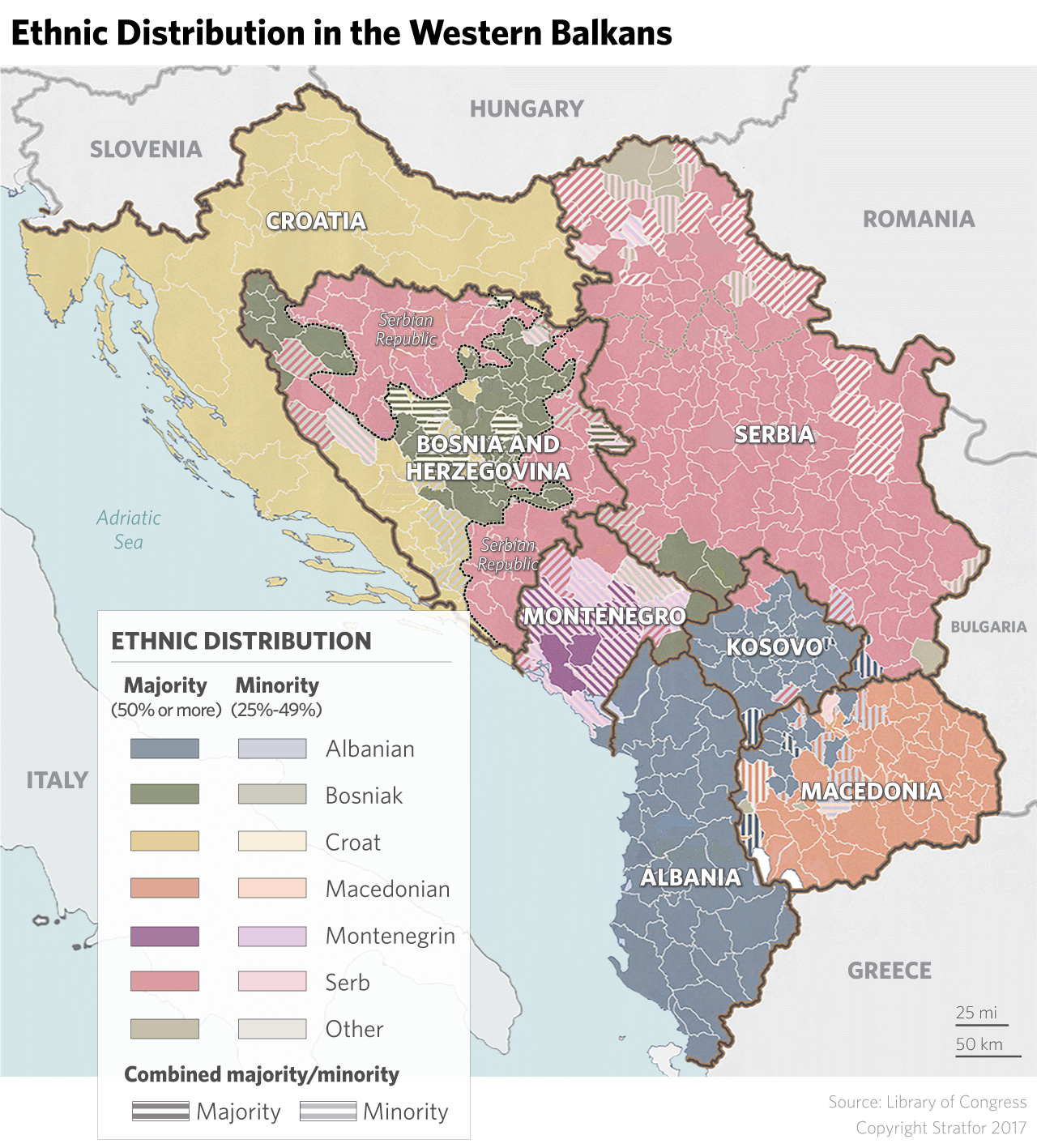
But despite Albania and Kosovo’s recent rhetoric, international opposition and domestic constraints in both countries will likely prevent unification for the foreseeable future. A significant part of the international community would oppose unification because it’d open the door to territorial redesigns in the Western Balkans that would severely destabilize the region. In Kosovo, unification would require a constitutional reform, which the government would also struggle to obtain. Moreover, there could be disputes between Pristina and Tirana over the type of integration (whether to constitute a federal or a unitary state) as well as Kosovo’s role in it. Integrating both territories would require billions of euros in public spending as well, which could prove prohibitive for Kosovo and Albania’s small economies. As a result, Kosovo and Albania are likely to continue deepening their political and economic cooperation (such as removing barriers to trade) without taking any meaningful steps in the direction of becoming a single country.
- The creation of a “Greater Albania” could destabilize Northern Macedonia, which is home to a large Albanian minority, as many would seek to join the new state. It could also destabilize countries like Bosnia and Herzegovina, Montenegro and Kosovo itself, as ethnic Serbians in these territories could push to create a “Greater Serbia” led by Belgrade.
- U.N. Security Council members and Serbian allies China and Russia would likely oppose unification, which would complicate its recognition by international organizations.
- While the United States recognizes Kosovo’s independence and is a NATO ally of Albania, the White House is likely to be skeptical of a plan that could destabilize the Western Balkans.
- The European Union would also likely warn Albania that absorbing a disputed territory could weaken its chances of joining the bloc, which could discourage Tirana from endorsing the idea.
- The idea would also be legally difficult to apply in Kosovo because its constitution explicitly excludes unification with any other states. Changing the Kosovo constitution would require a two-thirds majority in parliament and endorsement from minority groups in the country, which means that Kosovo Serbians would have veto power.
During its disputes with Serbia, Kosovo will likely continue suggesting unification with Albania, which will reduce the room for bilateral cooperation and will open the door to ethnically motivated unrest in the Western Balkans. Kosovo’s recurrent references to unification with Albania will contribute to the overall mistrust with Serbia that will delay any significant progress in the EU-sponsored dialogue. It will also contribute to sporadic acts of economic and political brinkmanship and to potential social unrest, especially in Kosovo’s northern border regions. While Belgrade and Pristina will try to keep unrest within tolerable margins, the risk of an escalation (both in terms of violence and the areas involved) will persist.
- Political and economic disputes between Serbia and Kosovo are frequent. Between late 2018 and early 2020, for example, Kosovo imposed a 100% tariff on Serbian products to protest Serbia's efforts to block its accession to international organizations.
- In early 2021, Kosovo temporarily banned cars with Serbian plates from entering the country to protest a similar measure by Serbia. This led to protests on both sides of the border that resulted in authorities increasing the presence of security forces.
