
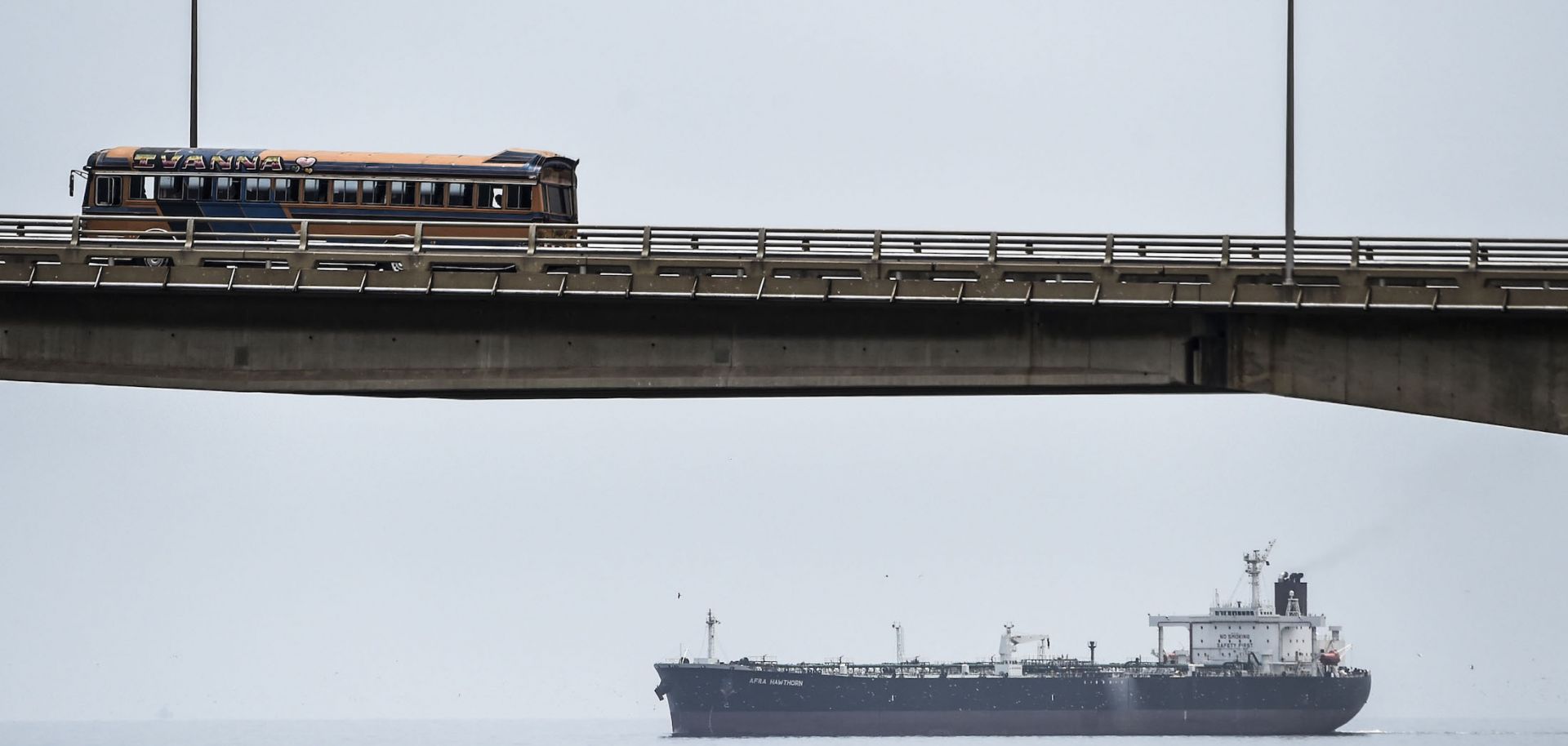
An oil tanker sails on Maracaibo Lake in Maracaibo, Venezuela, on March 15, 2019.
OPEC'S relevance will slowly decline over the next two decades as the global transition from fossil fuels continues to accelerate and oil's dominance in the transportation sector is diminished by alternatives, including electric vehicles and potentially hydrogen, resulting in a more turbulent oil market. Previous prognostications about OPEC's decline have long proved inaccurate, with the cartel of oil producers having withstood a number of crises since its 1960 founding. These have included the oil embargoes of the 1970s, the 1979 Iranian Revolution, the Iran-Iraq War of the 1980s, the 1990 Iraqi invasion of Kuwait, the 2003 U.S. invasion of Iraq and the 21st-century rise of U.S. shale oil. But this time is different. None of the previous crises represented a fundamental shift in the energy sector that effectively removed the uniqueness of petroleum as a transportation fuel. And this reality has already prompted traditional OPEC heavyweights to openly question the cartel's future and the benefits of being in it.
- In December 2020, leaks emerged that the United Arab Emirates had launched an internal study reviewing its OPEC membership and whether restraining production could lead to stranded oil assets in the future. The United Arab Emirates has targeted boosting production capacity to 5 million b/d — 93 percent above its current quota under OPEC — by 2030.
- Long-standing OPEC member Qatar withdrew from the group in 2019 over political differences with its fellow Gulf Cooperation Council members and to focus on expanding its liquefied natural gas exports in the coming years.
The importance of petroleum in the global market is largely attributed to the unique characteristics that made it indispensable for the transportation sector. That dominance will be eroded significantly as electric vehicles become cost competitive and governments become more aggressive in phasing out diesel and gasoline vehicles by 2040. Nevertheless, despite peaking within the next decade or so, demand for oil is likely to have a lengthy plateauing period due to a lengthy period of vehicle fleet rollover that will keep demand from drastically declining through the 2030s. The high energy density and the relative ease and safety of transporting oil have given it a near-monopoly in the transportation sector — powering 90 percent of it in 2018 globally — while every alternative suffers significant drawbacks. But that status is starting to end. Already, BP is suggesting that oil demand has peaked, and even more optimistic forecasts suggest oil demand could peak by the early 2030s as those timetables have been accelerated by COVID-19. Governments are also accelerating timelines to phase out vehicles using fossil fuels, such as the November announcement by the United Kingdom that it intends to ban the sale of such new vehicles by 2030 — five years earlier than previous targets. Nevertheless, a full transition will take place over decades, as the turnover of the auto fleet is a long process in developed countries and oil demand for transportation is set to continue growing in developing countries.
- Norway's Equinor is projecting that oil demand will peak around 2027-28, Energy Consultancy Ryastand Energy estimates that demand will peak in 2028 and the International Energy Agency is expecting demand to peak "within the next ten years."
- OPEC officially maintains that demand will plateau by 2040, but this stance represents heavy political influence from oil-producing countries.
The plateauing phase of oil demand will mask the shifts going on inside major OPEC countries that will likely lead to the cartel trying to become less focused on propping up markets — although this process will be a lengthy one. OPEC's leaders that have traditionally sought to prop up prices like Saudi Arabia and the United Arab Emirates are increasingly being embroiled in fights for market-share with non-OPEC oil producers like Russia and the United States. As alternative fuels become more cost competitive in the transportation sector, OPEC producers have less incentive to prop up prices and subsidize alternatives over the long run. While OPEC is unlikely to disappear any time soon due to organizational and technical benefits of membership, by the mid-2030s — if not earlier — its relevance as a market-setting actor will have declined substantially.
- The United Arab Emirates is not the only OPEC member to have openly questioned whether production restraint will lead to stranded assets in the future: Fellow GCC members Saudi Arabia and Kuwait have targeted expanding oil production, and Saudi Arabia itself has conducted similar reviews in the past.
- The decline in oil's importance will also continue to drive diversification efforts in oil-producing countries, but how successful the transition will be and the political ramifications in the short term of structural reform will vary depending on the country.
- The United Arab Emirates and Kuwait are best positioned to weather the storm given their financial cushions through years of built-up oil reserves in their sovereign wealth funds, while poorer OPEC members Iraq, Algeria, Angola and Nigeria will have significant — perhaps even permanent — fiscal crises for the foreseeable future.
The global political importance and influence of oil-producing countries will decline in the future as OPEC becomes a less relevant global organization and friendly ties with oil-producing countries do not carry the same benefits as they once did. Perhaps no relationship based primarily on mutual interests in oil market stability and stable oil supplies has been as significant as the Saudi-U.S. relationship. That relationship will undergo a dramatic transformation as oil becomes less a focal point of U.S. foreign policy. U.S. focus in the Middle East will remain on physical security and countering Chinese, Russian and/or Iranian influence as well as on human rights concerns. U.S. policy relating to Saudi Arabia and its role in such interests will not be as hamstrung by second- and third-order concerns about oil market stability. Already some major oil producers like the United Arab Emirates have recognized this shift and tried to broaden their international standing through other mechanisms, such as finance, trade and security; this process will only accelerate as oil becomes less important.
The decline of OPEC's influence on markets will also shake up the way that oil markets behave. Previously, OPEC would either increase or decrease production to try to stabilize oil prices (when prices fell), offset declines in production elsewhere (during conflicts) and generally establish a stable price environment. Its success in doing so has slowly declined over time as the oil market has been saturated with other producers, but as the response to COVID-19 and the 2014 oil price collapse showed, OPEC could still organize a major response in a crisis. In the future, organizing such responses will become more difficult. This could lead to increased variance in prices during demand and/or supply shocks.
