
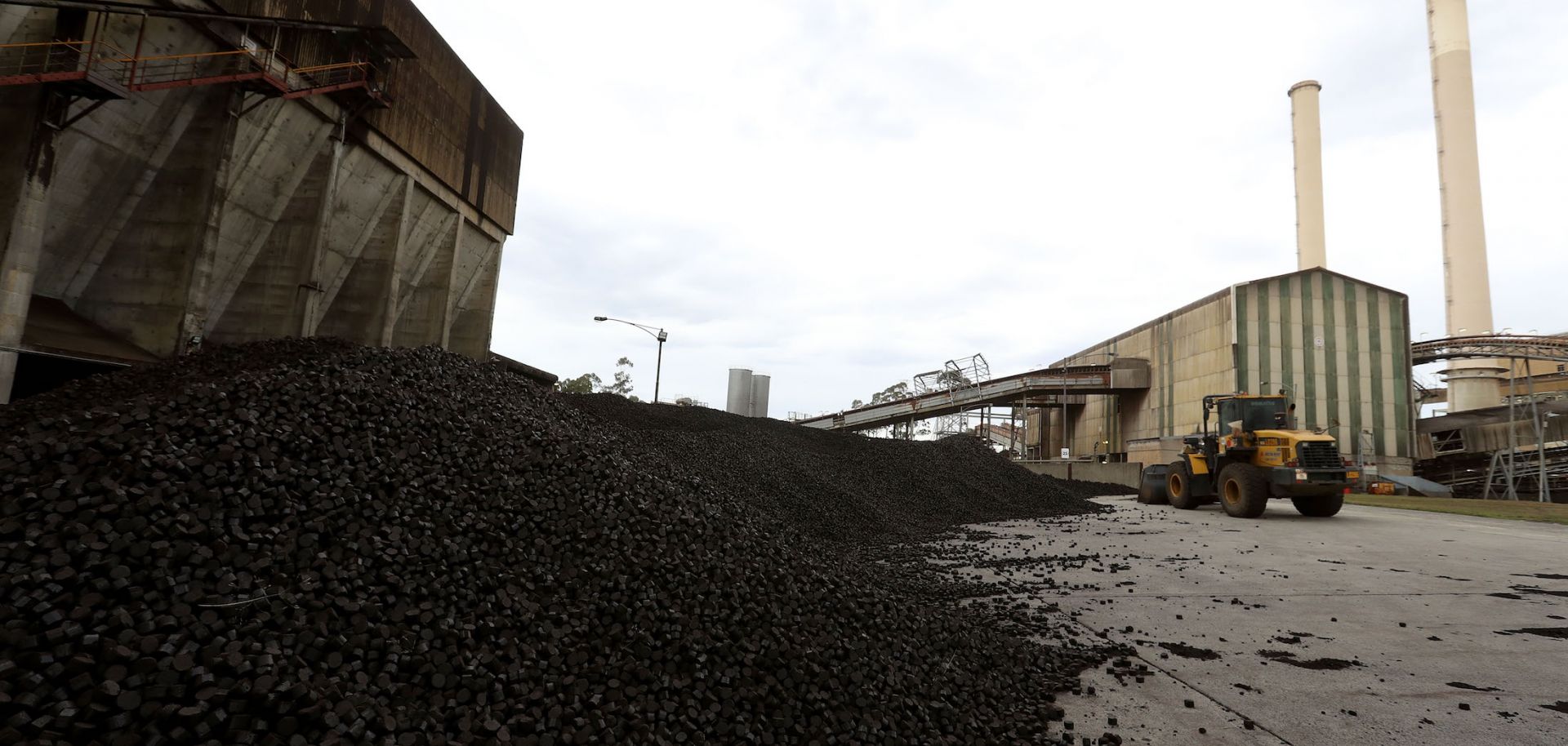
A pile of briquettes, which are compressed blocks of coal dust, is seen in Melbourne, Australia, in March 2017.
Reports that China has halted purchases of Australian coal suggest Beijing is increasing economic pressure to curb Canberra’s more confrontational stance. Such moves, however, are unlikely to inhibit Australia’s greater strategic shift to rebalance against Chinese encroachment in the region. On Oct. 14, leaks indicated that around 850,000 tonnes of Australian coking coal on ten Panamax vessels bound for China was being diverted to other markets. This follows an Oct. 13 confirmation from Australia's trade ministry that it was determining whether Beijing has suspended purchases of Australian coking and thermal coal. Reports from the day before indicate that Chinese officials told most large power stations and steel mills in early October to halt the use of Australian coal. Many ports were also reportedly told not to offload the product, causing buyers to respond by halting purchases for fear they wouldn’t clear customs. If confirmed, China's suspension of Australian coal purchases would be an escalation from earlier agricultural restrictions that cut off $411 million of annual barley trade (which make up less than 1 percent of Australia's total goods trade). These earlier measures also included targeting some beef exports and expelling journalists, along with targeting the small beef sector and journalists.
- In 2019, 21.6 percent of Australia's coal exports ($9.5 billion) went to China, or 3.5 percent of its total goods exports. It is unclear how extensive China's current coal restrictions are, with reports that some purchases are still ongoing. Earlier in 2020, China tightened imports of Australian coal through import quotas and delays in issuing licenses for both coal and iron ore.
- While China is largely self-sufficient for much of its coal production, it still imports coal — around half of which comes from Australia. China's September coal imports were down 38 percent year-on-year, with lower electricity demand due to mild autumn weather and the expiration of quotas, which allowed for greater consumption of domestic product. China can shift more toward domestic output, particularly given the need to support interior provinces badly hit by the economic fallout from COVID-19. It also has alternative supplies available from Indonesia, Russia and Mongolia.
- Australia has a number of alternative coal markets as well. Japan is the largest consumer of Australian coal, India is the third-largest and South Korea is the fourth. Unlike China, these other buyers are facing major pandemic-related economic setbacks that make them less viable markets in 2020 and into 2021. This will make the potential current ban sting more than it would have otherwise.
As Beijing seeks to pressure Canberra without jeopardizing the two countries’ long-standing bilateral trade relationship, it will likely choose tactics calculated to signal displeasure with current Australian policy, while avoiding measures that would cause long-term damage, such as targeting iron ore exports. Australia’s high level of economic reliance on China is the greatest limiter to its ability to confront Beijing, a lever China will seek to preserve in order to maintain long-term influence. But although China has steadily increased pressure on Australia throughout 2020, it has limited its focus to smaller-scale exports, such as barley, that have a sharp impact on a particular demographic. To demonstrate the necessity of amicable relations to Canberra, China has resisted the many other restrictions and cutoffs that it could impose, including targeting iron ore or expanding agricultural product restrictions to include beef and wool.
- China accounted for 32.8 percent of overall Australian goods exports in 2019, with consumption particularly concentrated in raw commodities and Australia’s export-oriented agricultural sector.
- Iron ore, by contrast to coal, is a far more important export for Australia to China. China consumes 83.3 percent of Australia’s total iron ore exports ($54.8 billion), over 11 times as much as the next largest buyer, Japan. Australian iron ore exports to China also account for 20 percent of the country's total exports of all goods.
Developments over the past year have also soured the Australian electorate on China, meaning overly aggressive tactics by Beijing would also risk only further alienating the public. Since early 2020, Australia-China tensions have been growing amid Australia's more confrontational stance on China's regional rise, alleged Chinese influence operations in Australia and the COVID-19 pandemic. The Australian political scene is sharply divided, leaving open the possibility of a return toward a more amicable Australian government towards China. The narrow parliamentary lead by the ruling Liberal-National coalition leaves open the ever-present prospect of a swing back toward Labor Party, which has historically had a better working relationship with China.
- Australian public perceptions of China have dropped precipitously in recent years, with Pew Research Center survey data out Oct. 6 finding "unfavorable" perceptions of China rose to 81 percent in 2020 — up 24 percent since 2019.
- The next Australian elections are set for early to mid-2022.
