
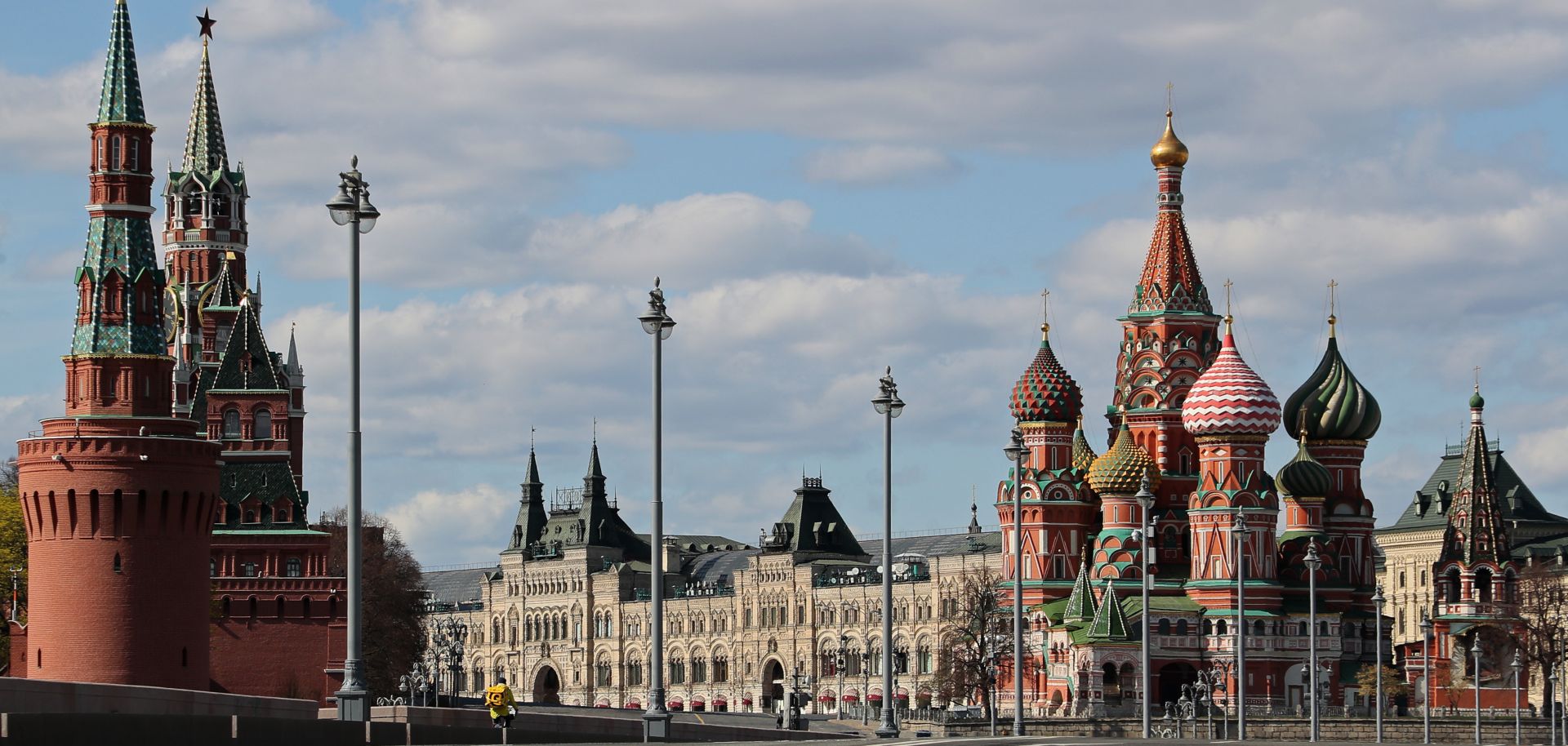
The Kremlin.
Though democratic processes are codified by law in Russia, government limitations on opposition activity and efforts to control nearly every aspect of political life have rendered elections largely a formality. Without an opposition able to operate effectively, the Kremlin enjoys carte blanche to define policy and maintain power. For nearly two decades, the United Russia party has dominated Russian politics as an instrument of President Vladimir Putin's control. The system known in Russia as "managed democracy," under which opposition activity is heavily suppressed, has made this possible.
Taking control of the narrative on economic challenges in the media and the government's political performance plus rigging the system by creating new opposition parties will be key to Putin's ability to retain power. Tests of how well the regime has done with its managed democracy will come in rapid succession in the coming years in the form of the 2020 constitutional referendum, 2021 Duma elections and the 2024 presidential election.
The Kremlin aggressively manages media narratives in a key part of its efforts to sustain its popularity with voters and to suppress any counternarratives. Most recently, this effort has become clear through the role of Andrei Shmarov, currently acting editor-in-chief at Vedomosti. Vedomosti has long been one of Russia's larger independent dailies, but following the announcement of the newspaper's sale on March 17, Shmarov has started rejecting stories that criticize the Kremlin. In an April 22 meeting, Shmarov allegedly even referred directly to the Kremlin's preferences as the reason for ending the newspaper's cooperation with the Levada Center, an independent polling and research group. The breach with the Levada Center was caused by recent polls that show Russians sharply divided over proposed constitutional amendments that would allow Putin to serve two more terms as president. Shmarov had already come under criticism just two weeks ago for not publishing an article about Igor Sechin, the head of Russia's recently state-owned oil company Rosneft.
The Kremlin is also preparing to divide the opposition through establishing new opposition political parties to draw away votes from what in Russia is described as the "real" opposition. Rather than rely solely on dominating public debate, the Kremlin has instead put great effort into the expansion of these opposition parties. While separate from United Russia, they tacitly support it. For the major parties in the Duma, such as the Communist Party and the Liberal Democratic Party, this has long been known. Since 2019, however, a growing number of new political parties has been established not officially aligned with the Kremlin, but also not overtly opposed it. Many of these parties, such as the Direct Democracy Party or the For Truth movement, focus on specific popular issues such as direct democracy through smart device apps, conservatism or environmentalism, likely siphoning votes from potentially viable opposition candidates and parties. Meanwhile, non-Kremlin aligned opposition parties, like Alexei Navalny's Russia of the Future or Dmitry Gudkov's Party of Changes, have found themselves denied registration by the Russian Ministry of Justice, denying their candidates the opportunity to seek office.
With economic woes increasing dissent, Putin and those around him are having to work harder to control Russia. Prior to the COVID-19 crisis, the government had already seen its popularity dwindle over an inability to pull Russia back from the slump after its 2015-2017 financial crisis. This contributed to Putin replacing former Prime Minister Dmitri Medvedev with Mikhail Mishustin. His task of reviving the Russian economy, however, has become nearly insurmountable due to fallout from the global pandemic. Taking control of the narrative on economic challenges in the media combined with other tactics of managed democracy will be key to Putin's ability to retain power amid these new challenges.
