
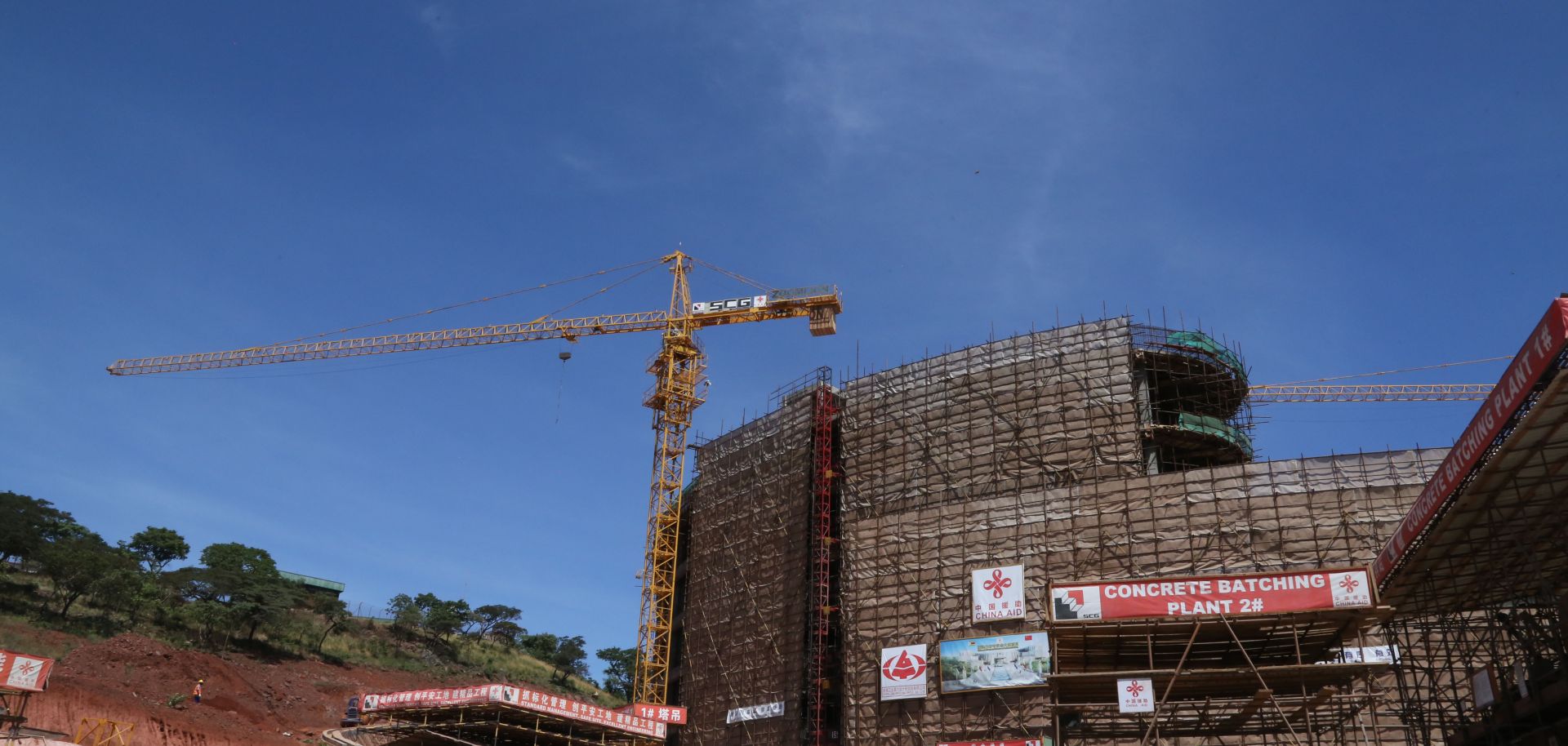
A new parliament building rising in Harare, Zimbabwe, shown in this Nov. 27, 2019, image, is being built by China's Shanghai Construction Group and is paid for by the Chinese government, an example of 'diplomacy spending' by Beijing.
By Nick Routley for Visual Capitalist
On a mountaintop a few miles north of the bustling streets of Harare, Zimbabwe, a curving, modern complex is beginning to take shape. This building, once completed, will be the home of the African country’s parliament, and the centerpiece of a new section of the capital city.
(Click to enlarge.)
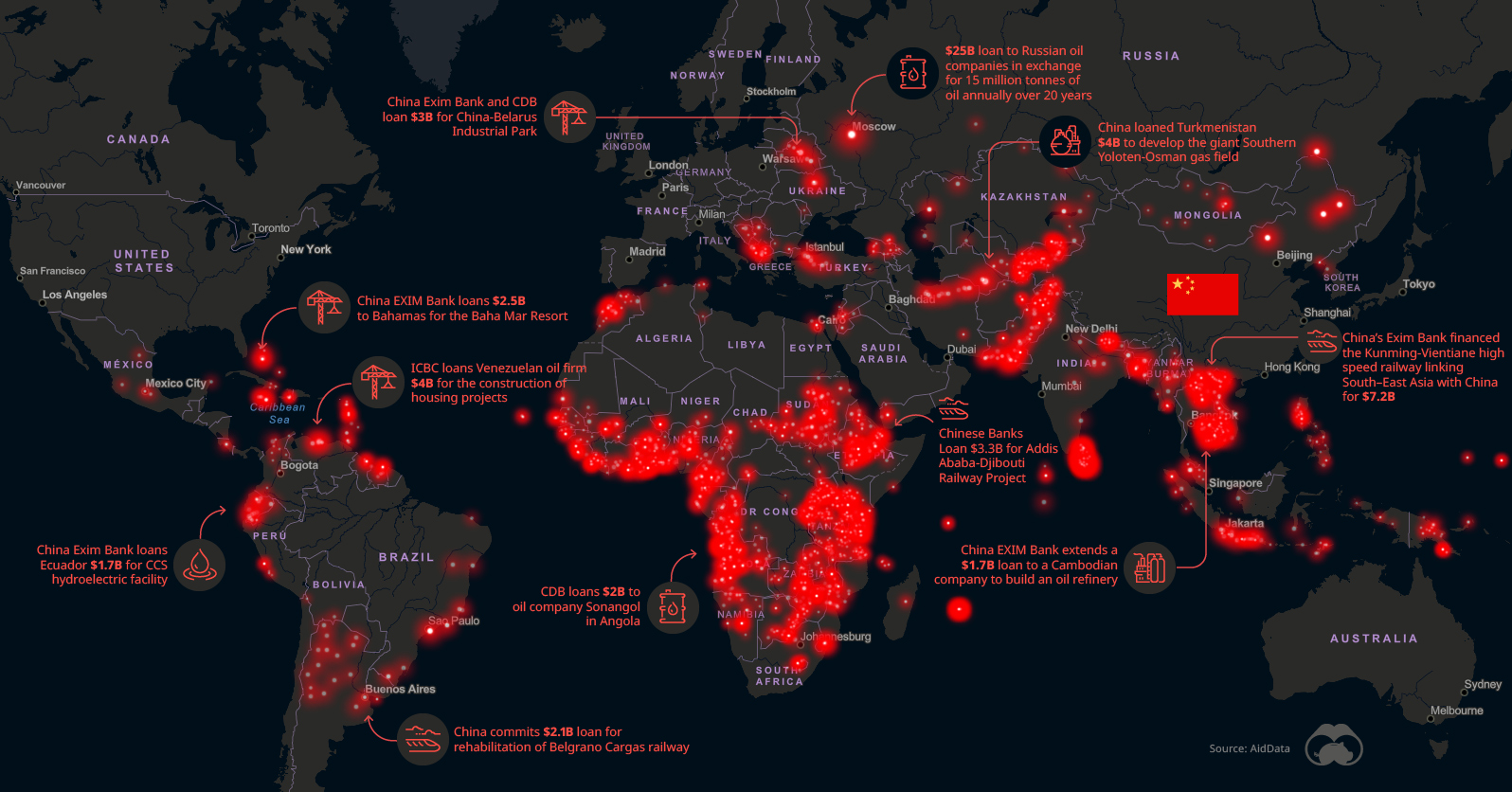
Aside from the striking design, there’s another unique twist to this development — the entire $140 million project is a gift from Beijing. At first glance, gifting a country a new parliament building may seem extravagant, but the project is a tiny portion of China’s $270 billion in "diplomacy spending" since 2000.
AidData, a research lab at the W&M Global Research Institute, has compiled a massive database of Chinese-backed projects spanning from 2000 to 2017. In aggregate, it creates a comprehensive look at China’s efforts to grow its influence in countries around the world, particularly in Africa and South Asia. Below, we’ll look at three diplomacy spending hotspots around the world, and learn about key Chinese-funded megaprojects, from power plants to railway systems.
1. Pakistan
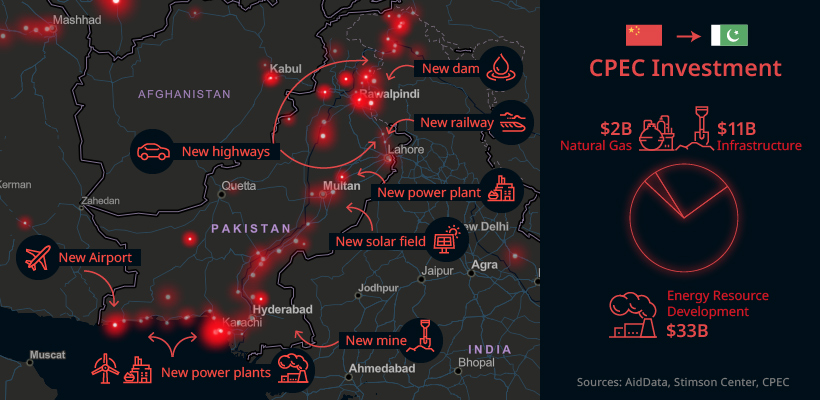
In 2015, Chinese President Xi Jinping visited Islamabad to inaugurate the China-Pakistan Economic Corridor (CPEC), kicking off a $46 billion investment that has transformed Pakistan’s transportation system and power grid. CPEC is designed to cement the strategic relationship between the two countries, and is a portion of China’s massive Belt and Road Initiative, formerly referred to as One Belt, One Road.
(Click to enlarge.)
One of the largest projects financed by China was the Karachi Nuclear Power K2/K3 project. This massive power generation project is primarily bankrolled by China’s state-owned Exim Bank, which has kicked in over $6.6 billion over three phases of payments.
Billions of dollars in Chinese capital have also funded everything from highway construction to renewable energy projects across Pakistan. Pakistan’s youth unemployment rate sits as high as 40 percent, so jobs created by new infrastructure investments are a welcome prospect. In 2014, Pakistan had the highest public approval rating of China in the world, with nearly 80 percent of respondents holding a favorable view of China.
2. Ethiopia
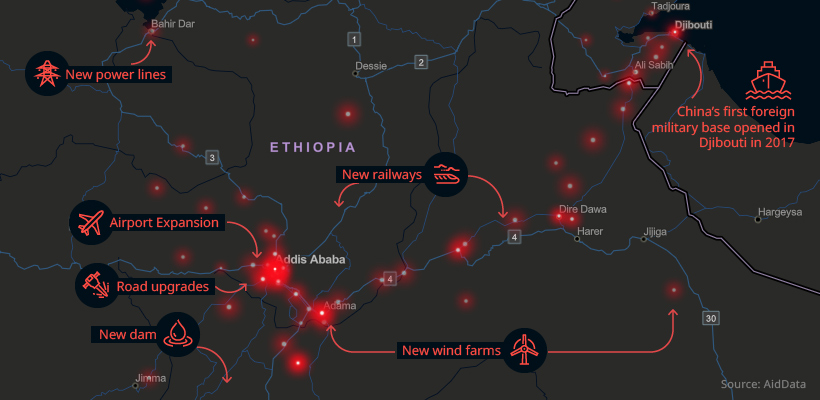
Ethiopia has seen a number of changes within its borders thanks to Chinese financing. This is particularly evident in its capital, Addis Ababa, where a slew of transportation projects — from new ring roads to sub-Saharan Africa’s first metro system — transformed the city.
(Click to enlarge.)
One of the most striking symbols of Chinese influence in Addis Ababa is the futuristic African Union headquarters. The $200 million complex was gifted to the city by Beijing in 2012.
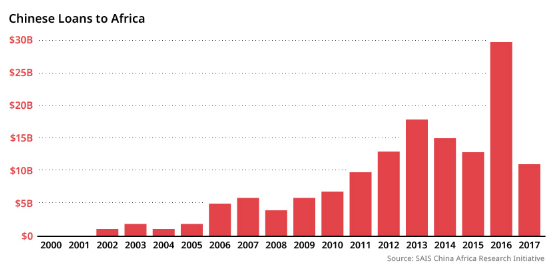
Though Ethiopia is a clear example of Chinese investment transforming a country’s infrastructure, a number of other African nations have experienced a similar influx of money from Beijing. This financing pipeline has increased dramatically in recent years.
3. Sri Lanka
In the wake of political turmoil, Sri Lanka is increasingly looking to China for loans. From 2000 to 2017, over $12 billion in loans and grants have poured into the deeply indebted country.
Perhaps the most contentious symbol of the relationship between the two countries is a port on the south coast of the island nation, at a strategic point along one of the world’s busiest shipping lanes. The Hambantota port project — which was completed in 2011 — followed a now-familiar path. Eschewing an open bidding process, Beijing’s government financed the project and hired a state-owned firm to construct the port, primarily using Chinese workers.
By 2017, Sri Lanka’s government was burdened by debt the previous administration had taken on. After months of negotiations, the port was handed over with the land around it leased to China for 99 years. This handover was a strategic victory for China, which now has a shipping foothold within close proximity of its regional rival, India.
Playing the Long Game
Africa’s economic rise will likely be a major contributor to global growth in the coming years. Already, six of the 10 fastest growing economies in the world are located in Africa. China is also the top trading partner on the continent, with the United States sitting in third place.
China's spending on its Belt and Road Initiative has also earned Beijing plenty of influence in the rest of Asia as well. If the ambitious megaproject continues along its current trajectory, China will be the central player in a more prosperous, interconnected Asia.
