

What Happened
According to a May 14 report by the Argus commodities media service, crude oil production by Venezuela's state-owned energy company Petroleos de Venezuela (PDVSA) has dropped to an average of 500,000 barrels per day (bpd) this month. In contrast, OPEC estimated the average daily crude production in April at nearly 770,000 bpd. Several factors appear to be behind the decline, including U.S. government sanctions on both imports of crude from Venezuela and exports of the diluents that PDVSA needs to blend with the country's heavy crude to prepare it for export. Another issue contributing to the decline is PDVSA's decision to reduce output from facilities that upgrade the country's tar-like oil ahead of a planned shift toward a less technologically complex method of blending heavy and lighter crude for export.
Why This Matters
The effects of the first round of U.S. sanctions on Venezuela have strained a production system already plagued by widespread structural problems, including the flight of laborers abroad, a history of poor maintenance and endemic corruption. What's more, a further sharp decline in Venezuelan crude production — effectively the country's sole source of export revenue — appears to be just over the horizon as secondary U.S. sanctions are set to take effect. Such measures are designed to prevent businesses and individuals outside the United States from conducting economic transactions with PDVSA. And according to an estimate by S&P Global Platts, those sanctions could cause production to slip to just 375,000 bpd by the end of 2020.
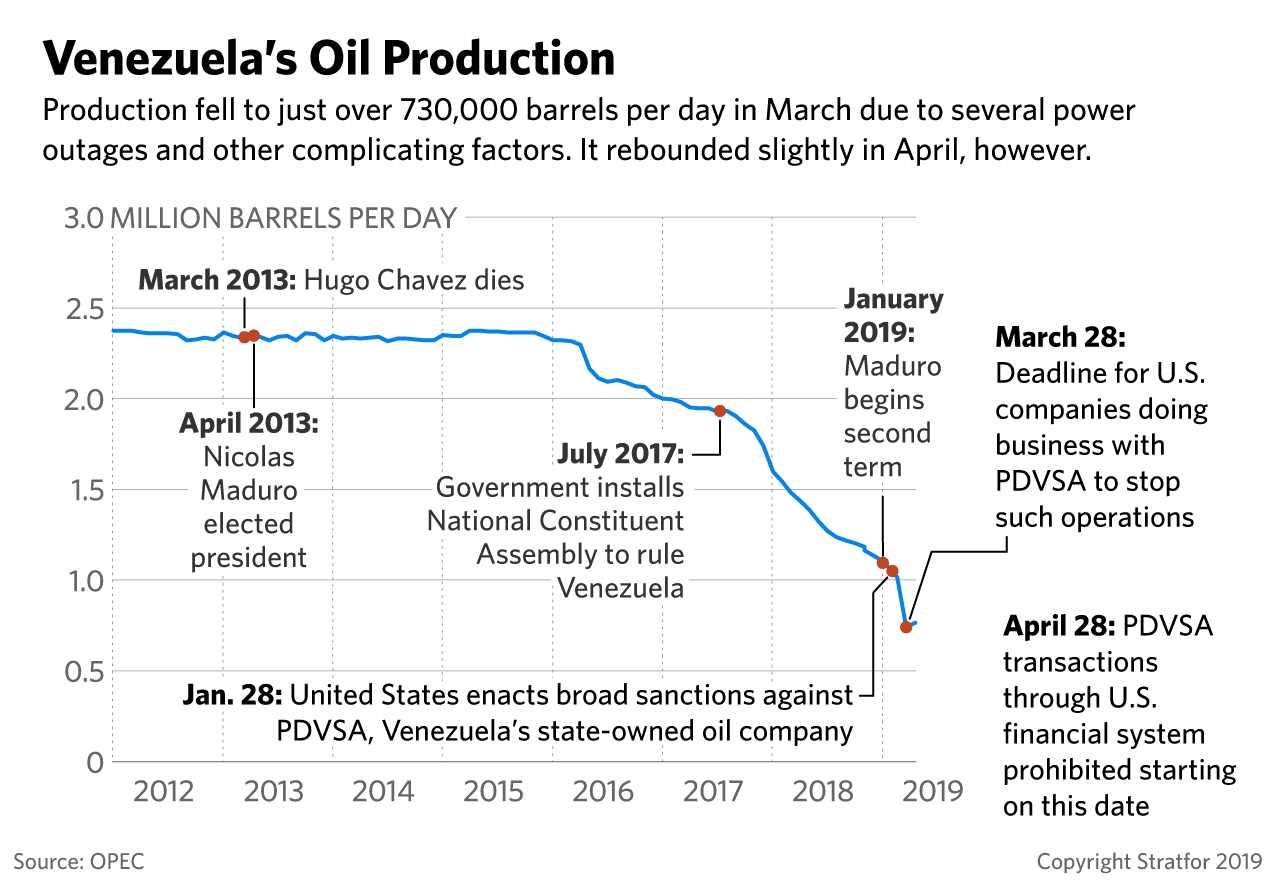
Heavier sanctions, combined with Venezuela's endemic economic and political problems, would be a recipe for increasing chaos. As the oil sector collapses, the center of economic power is shifting toward illicit industries. Revenue from control of cocaine trafficking routes, illegal mining in remote Venezuelan regions and in neighboring states, as well as officially tolerated corruption, are all crucial in ensuring the Nicolas Maduro government retains the elite's loyalty. As oil revenue dries up, income from illicit resources will become more critical to keeping the peace between elites.
But this revenue stream is unlikely to be sufficient to satisfy everyone in Venezuela's military establishment. The threat posed by the armed forces to the Maduro government will increase as commanders push for a bigger share of illicit income. The prospect of a more chaotic future spurred by declining crude production could also prompt military figures — whose support for Maduro is already fraying — to break with him and again challenge his rule.
Background
Venezuela's government is trying to neutralize the challenge posed by the political opposition and its leader, Juan Guaido. A military rebellion that Guaido called on April 30 failed, but the U.S.-backed opposition will continue its efforts to influence military commanders to turn against the government.
