
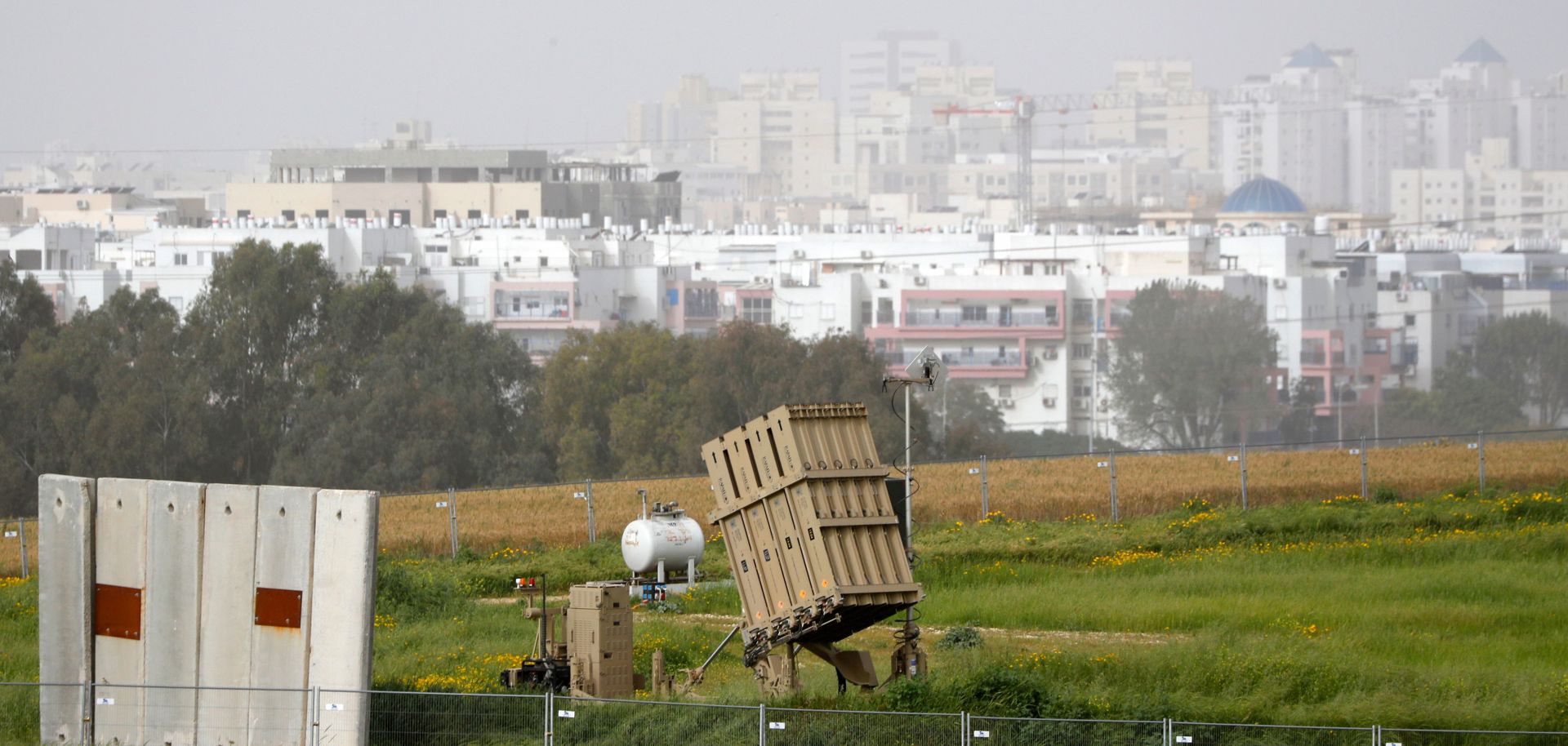
An Iron Dome battery, designed to intercept and destroy incoming short-range rockets and artillery shells, is pictured on March 30 in the Israeli town of Ashdod.
Editor's Note: This security-focused assessment is one of many such analyses found at Stratfor Threat Lens, a unique protective intelligence product designed with corporate security leaders in mind. Threat Lens enables industry professionals and organizations to anticipate, identify, measure and mitigate emerging threats to people, assets and intellectual property the world over. Threat Lens is the only unified solution that analyzes and forecasts security risk from a holistic perspective, bringing all the most relevant global insights into a single, interactive threat dashboard.
Israel Defense Forces (IDF) announced the deployment of air defense Iron Dome units on April 30 throughout the country in anticipation of potential rocket attacks from Gaza during May. IDF warned that Palestinian Islamic Jihad, the second-most powerful militant faction in Gaza, might fire rockets at Israel to disrupt events surrounding the Eurovision musical competition, which is being held May 14-18 in Tel Aviv, and/or the May 8-9 Israeli Independence Day celebrations. May will also see the beginning of the Islamic holy month of Ramadan, which starts May 5 or May 6, and Nakba Day on May 15, the annual Palestinian commemoration of the displacements and other upheavals that followed the creation of the modern state of Israel. The last three events have all previously triggered conflict between the Israelis and Palestinians.
The deployment of the Iron Dome units shows that the Israeli military takes the threat of Palestinian rocket fire seriously. May in Israel could see everything from isolated rocket fire to full-scale conflict similar to the 2014 Gaza War. This means that anyone traveling or doing business in Israel should create or review contingency plans for potential disruptions related to rocket fire in the coming month. The threat of rocket and mortar fire is greatest in the immediate vicinity of Gaza, but most of Israel is in range of the most advanced rockets in Hamas' arsenal.
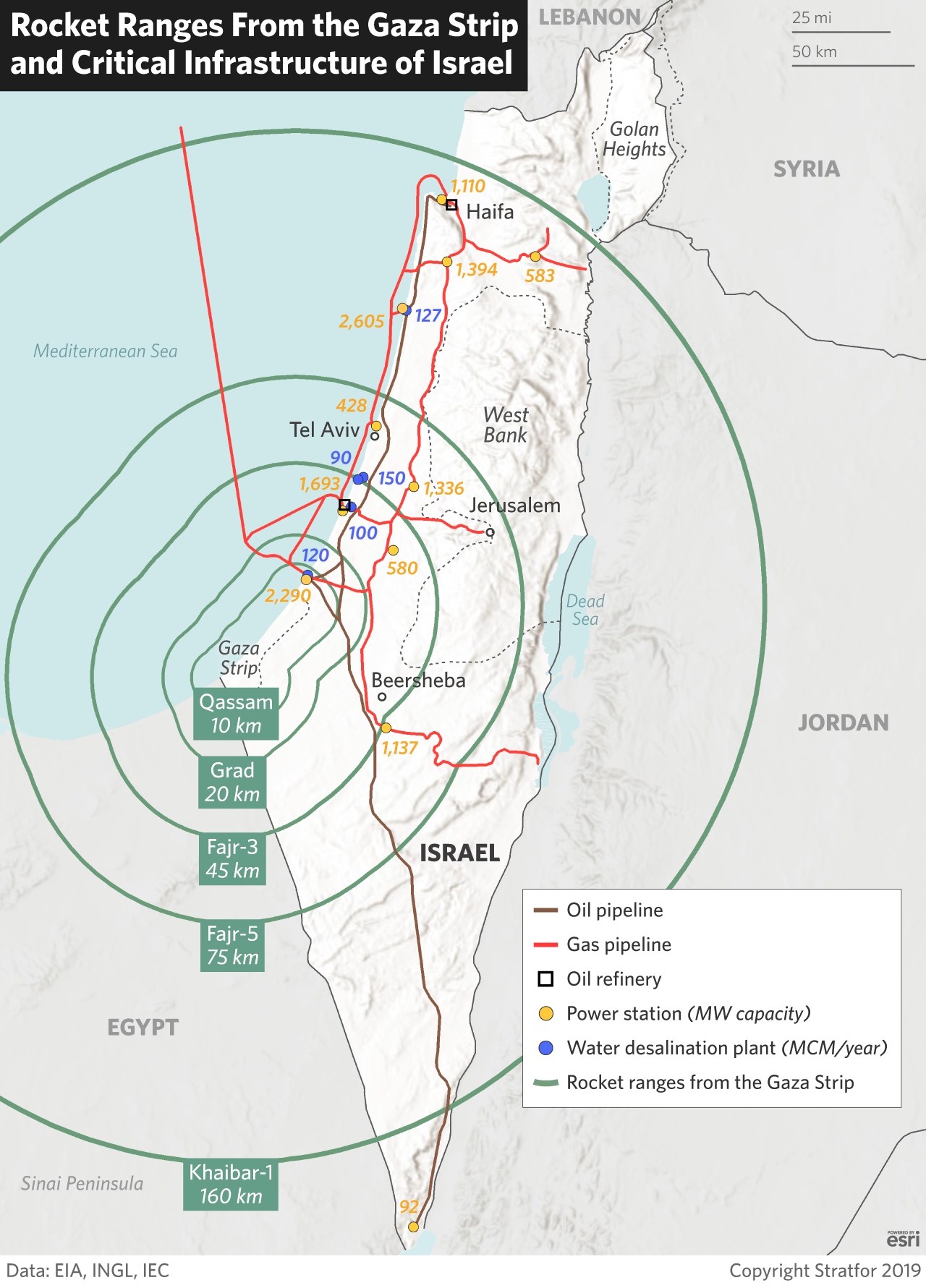
Another full-scale conflict — in which factions in Gaza fire thousands of rockets at Israel and Israel responds with a ground invasion of Gaza — would put most of Israel at risk of rocket fire, disrupting air traffic in the region and shutting down most, if not all, commercial activity in much of central and southern Israel. Even isolated rocket fire can pose a direct threat to civilians in Israeli cities, forcing authorities to block roads and temporarily shutter commercial activity. More intense military exchanges, even if they fall short of full conflict, would cause even longer disruptions.
While Iron Dome air defense systems can be useful in intercepting projectiles, operational limitations mean they are not a fail-safe measure against rocket fire. Individual units can only protect a limited area, and Israel has a finite number of systems it can deploy. A March 25 strike in central Israel showed that isolated rocket fire can affect civilian targets in areas not covered by Iron Dome, while subsequent exchanges — not to mention previous conflicts in 2012 and 2014 — showed that rocket barrages can overwhelm IDF such that it cannot intercept all of the rockets.
Israeli-Palestinian tensions are already high. In the wake of its April 9 elections, Israel will now be more willing to respond with greater force to rocket fire from Gaza. Several factors could signal a major conflict with the Palestinians:
- Rocket strikes from Gaza leading to casualties in Israel.
- Rockets striking cities some distance from Gaza, such as Beersheba or Tel Aviv.
- The deployment of Israeli military personnel near the Gaza border.
- Israeli airstrikes or assassinations in Gaza targeting Palestinian militant leaders.
- A full call-up of Israeli reservists.
