
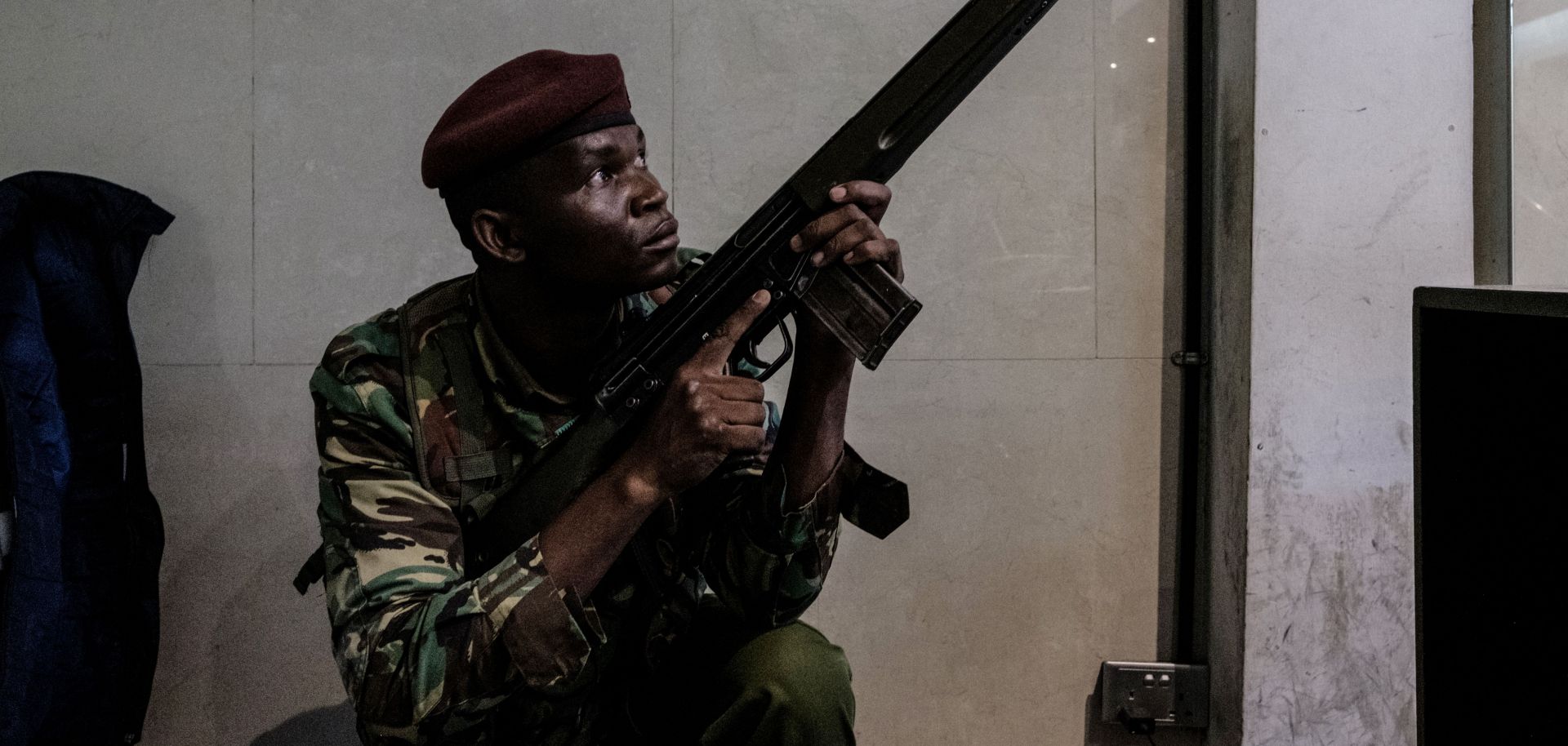
A Kenyan security officer secures a building attached to the Dusit D2 compound in Nairobi after a prolonged gun battle rocked the upmarket hotel complex, Jan. 15.
Editor's Note: This security-focused assessment is one of many such analyses found at Stratfor Threat Lens, a unique protective intelligence product designed with corporate security leaders in mind. Threat Lens enables industry professionals and organizations to anticipate, identify, measure and mitigate emerging threats to people, assets and intellectual property the world over. Threat Lens is the only unified solution that analyzes and forecasts security risk from a holistic perspective, bringing all the most relevant global insights into a single, interactive threat dashboard.
Kenyan President Uhuru Kenyatta declared on Jan. 16 an end to the attack and siege on a hotel in an upscale neighborhood in Nairobi, almost 19 hours after the incident was first reported. A small group of militants affiliated with al Shabaab stormed the Westlands compound — which encloses a bank, hotel, drinking establishments and the offices of several multinational corporations — on the afternoon of Jan. 15. The Kenyan government has revised the reported death toll to 21 — far fewer than the al Shabaab claim of 47 deaths. However, at least 50 people are still unaccounted for, meaning that the official death toll may still rise. At least two Westerners are among the dead: one American and one British citizen. Al Shabaab was quick to claim responsibility for the attack, with a spokesman for the group announcing that the compound was specifically targeted because it was in an "opulent" part of the capital, frequented by Westerners and tourists. This rationale is consistent with past jihadist attacks against hotels — a favored target set for jihadists.
In the immediate aftermath of the attack, security forces will attempt to crack down on militant networks, as they have previously. Sporadic gun battles may break out as raids take place, though incidents are likely to be focused on areas of Nairobi that are hubs of Somali activity — such as Eastleigh — rather than upscale areas typically frequented by expatriates.
The Jan. 15 attack falls in line with the capabilities exhibited in previous al Shabaab attacks in Kenya, such as the Westgate Mall attack in 2013 and the Garissa University College attack in 2015. In the Westgate Mall attack, al Shabaab used four "inghimasi" (suicide commandos) and there were five attackers involved in the Garissa attack. The use of inghimasi is a tactic frequently employed by al Shabaab in Somalia, particularly against targets in Mogadishu. The execution of such attacks varies somewhat in Somalia, where militants often initiate the assault with a suicide vehicle bomb to breach a perimeter, providing access for inghimasi assaulters. Reports from the scene suggest that this attack was initiated by a fighter wearing a suicide vest — the Kenyan government lists the number of dead attackers at 5 — meaning that this attack likely followed that same tactical playbook but on a smaller scale.
Scheme of Maneuver
The Dusit Hotel's CCTV camera system captured the gunmen — equipped with assault weapons and ammunition carriers — arriving at the front of the premises after overcoming the manned security checkpoint. The attackers then formed two two-man fire teams that entered the hotel using separate entrances. Working as pairs — in the full knowledge that theirs was a fight to the death — the attacker's coordination hindered the ability of first responders to deal with the immediate threat. This is one explanation for the reason it took so long for security forces to finally neutralize the inghimasi and end the incident. The tactics on display indicate that the attackers received some training and indoctrination as inghimasi by al Shabaab members in Somalia.
Despite the success in overcoming security and gaining access to the hotel, the number of fatalities resulting from the attack was comparatively low — the Westgate and Garissa attacks killed 71 and 148 people, respectively. The low death toll thus far is possibly due to the fact that the attackers struck during the afternoon, a time when there were relatively few people at the hotels and bars — as opposed to breakfast time or during dinner and happy hour. The gunmen did not appear to come equipped with breaching tools and it is likely they struggled to get past locked and secured doors. As seen in previous incidents where attackers cannot force entry to interior spaces, the perpetrators instead focus on public areas such as atriums, cafes and restaurants.
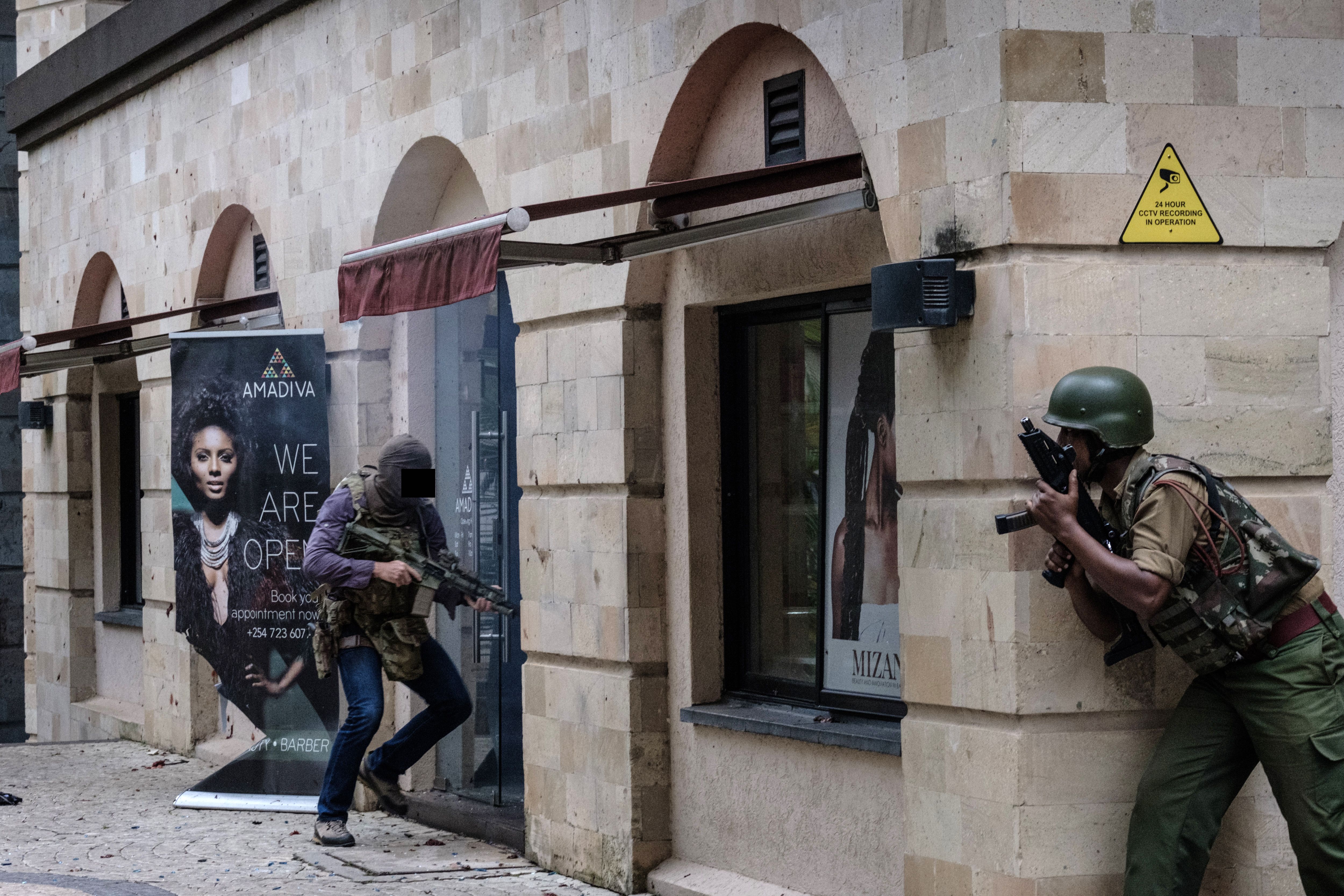
While al Shabaab retains the ability to plan and execute attacks of this type, it does not have the capability to stage major attacks in Kenya at a high tempo. Planning can take months, and the longer the pre-operational planning and the more people involved, the greater the chance of the perpetrators being detected and intercepted by Kenyan security forces. Armed assaults will remain a persistent, albeit intermittent, threat to travelers and expatriates in Nairobi and throughout Kenya for the foreseeable future.
It is important to remember, though, that travelers are not helpless in the face of this sort of persistent threat. As Threat Lens has noted elsewhere, there are steps that travelers can and should take before and during an attack to mitigate risk and increase odds of survival. This most recent attack also serves as a reminder that individuals cannot totally rely upon others for their security. Indeed, heavily armed suicide commandos are capable of overwhelming the security at most soft targets in Kenya, or elsewhere for that matter. Because of this fact, individuals must take ownership of their personal security and be prepared to take appropriate action to protect themselves, colleagues and/or loved ones in the unlikely event that things go bad.
