
Courts may allow ConocoPhillips to take control of key PDVSA assets in the Caribbean, including a refinery and two storage facilities.
Old disputes over the nationalization of its oil industry 11 years ago are coming back to haunt Venezuela and further threaten its political stability. In April, an arbitration panel at the International Chamber of Commerce ruled that state-owned Petroleos de Venezuela (PDVSA) owed ConocoPhillips $2 billion for seizing the U.S. company's assets in 2007. Complicating matters for Venezuela's energy company, other creditors and private companies are also looking for compensation, including Canadian energy contractor SNC-Lavalin, which has sued PDVSA for missing a $25 million payment.
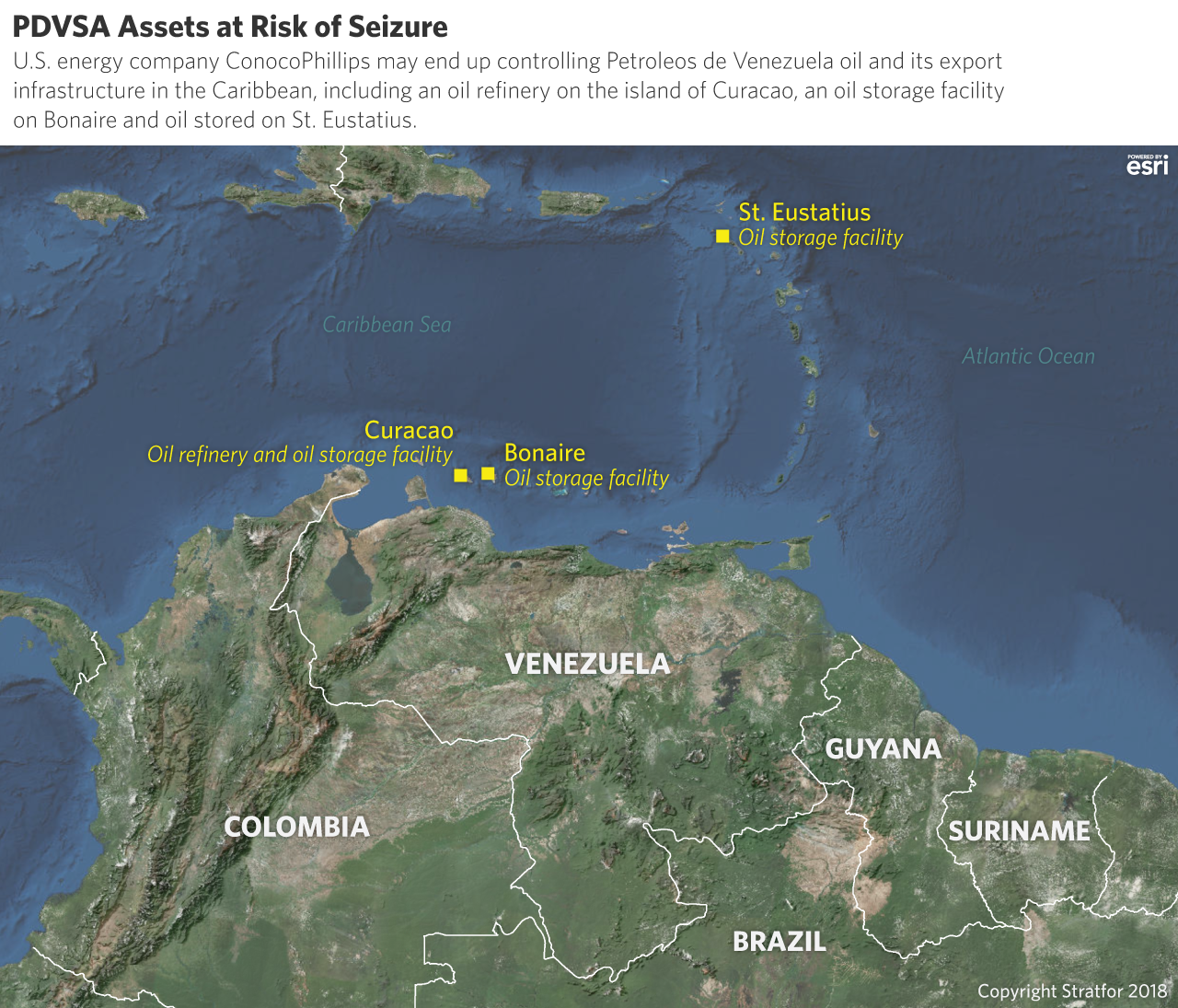
To prod PDVSA into paying the $2 billion it owes, ConocoPhillips sought court orders from Dutch authorities to freeze assets, including crude oil, at Caribbean export facilities owned by PDVSA. Courts with jurisdiction over Bonaire and St. Eustatius enforced two of the orders; a Curacao court has authorized a third order, according to reports on May 12. The move disrupted Venezuelan activity on the three Caribbean islands administered by the Netherlands, and PDVSA directed tankers away from them for fear that Dutch authorities would seize their cargoes.
The court orders eventually may allow ConocoPhillips to take control of key PDVSA assets in the Caribbean. The facilities include the Isla refinery on Curacao and storage facilities on St. Eustatius and Bonaire. Together, the refinery and terminals account for about 25 percent of Venezuelan crude oil and refined product exports.
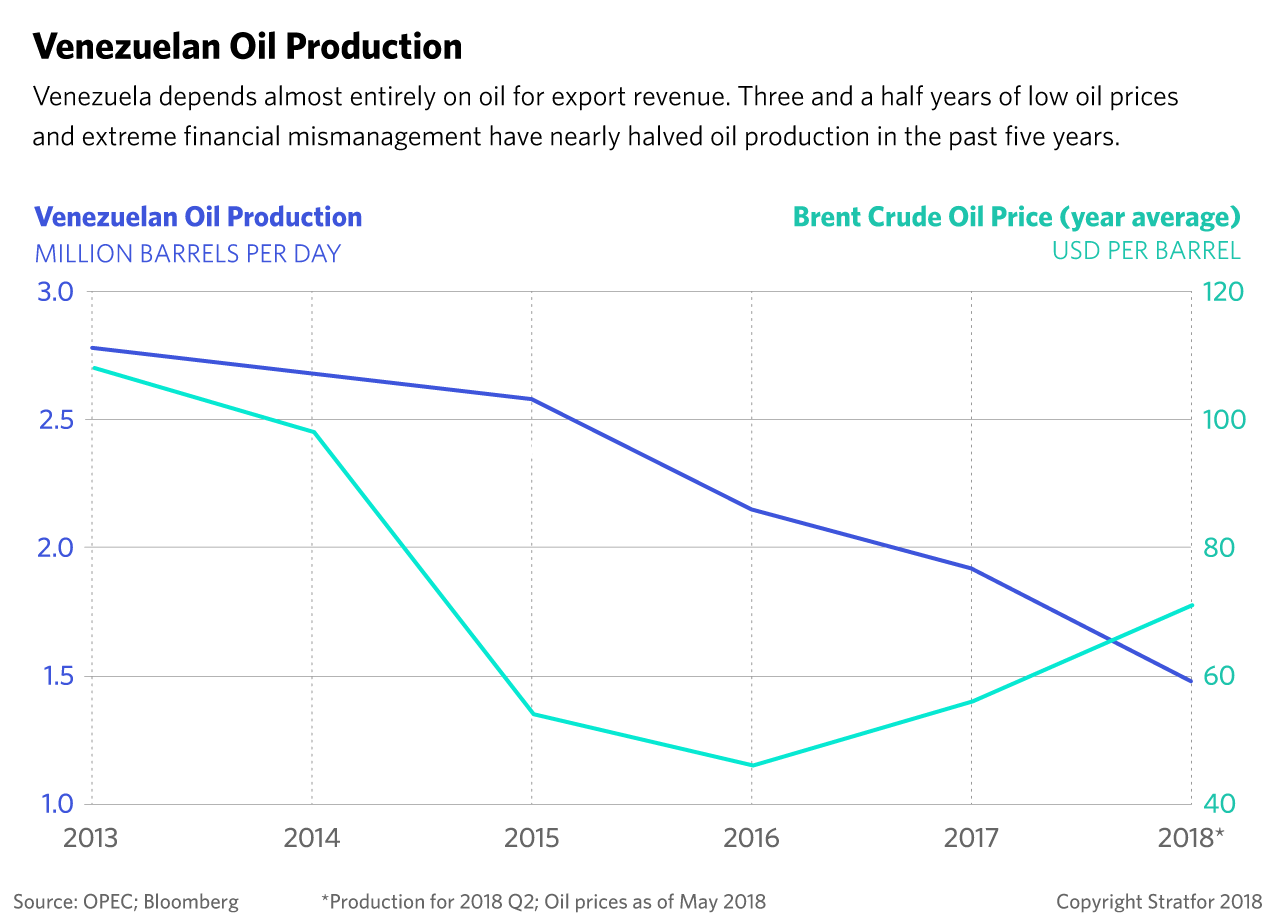
ConocoPhillips does not necessarily intend to keep the refinery and terminals. Instead, the U.S.-based company likely is exerting legal pressure to get compensation from PDVSA sooner rather than later. PDVSA is strapped for cash, and its oil production has declined by nearly 500,000 barrels per day to 1.4 million bpd over the past year. Oil exports, which account for nearly all of the country's export revenue, will continue to drop. As a result, ConocoPhillips intends to be the first in line to get what PDVSA owes it before other creditors and companies seeking compensation from defaulted bonds or payments awarded by arbitration panels pile up.
But ConocoPhillips' aggressive approach may have domestic repercussions in Venezuela. If courts allow ConocoPhillips to take ownership of those Caribbean assets, PDVSA and the politicians who depend on its diminishing revenue to keep Venezuela stable will be in a bind. PDVSA's production already is declining because of labor shortages (caused by a decadelong brain drain and runaway inflation), extreme levels of graft, low foreign investment and a shortage of foreign financing. Losing assets at even one of the three Caribbean facilities would push PDVSA's export numbers even lower.
Such a loss would quickly turn into a major political problem for Venezuela. The government of President Nicolas Maduro is a confederation of officials interested in one thing: remaining in power. So far, the decline has been manageable for them. But a seizure of assets would exacerbate the country's economic crisis. In such a case, the most significant pressure on Caracas would be from its elites, not voters. Venezuelan leaders are not particularly responsive to the impact of the crisis on voters. Elections have been manipulated, and thousands of potential voters leave the country each month as the economic collapse worsens. But the prospect of rising, violent unrest among citizens losing access to food and basic utilities will be a concern. Losing access to oil revenue, both to line their own pockets and to keep political allies happy, will also be a risk some officials consider unacceptable.
If ConocoPhillips successfully seizes Venezuelan oil export assets, confrontations between elites in the country likely will grow. Corruption through fraudulent imports and outright theft have sapped PDVSA of billions of dollars in revenue since the United Socialist Party of Venezuela began ruling. The prospect of governing over an increasingly unstable country with rapidly falling oil production may drive the government to try to purge PDVSA of egregiously corrupt officials. Unless such a purge is carefully coordinated and backed by the threat of incarceration or even violence, it will drive major internal political conflict.
Support may also grow among some ruling party officials for a negotiated settlement with the United States for a transition of power. This approach would allow Venezuelan officials to avoid heavier sanctions that would make the oil sector's recovery more difficult down the line. Some governing party figures may also feel they would benefit from a transition, since cutting a deal with Washington would be preferable to ruling a unstable, dilapidated state. But such talks would be complicated and involve dozens of key Venezuelan officials. And once started, there's no guarantee they would be fruitful.
Caracas faces a difficult path ahead. Instead of attempting politically dangerous anti-corruption purges or a complex negotiation, the government may opt to continue to rule over a declining country in an increasingly authoritarian manner. It's hardly the most favorable option — the crisis will only get worse before it gets better. But it's also the path of least resistance for the Maduro administration, and it may prove preferable to picking a fight with the elites who support his rule.
