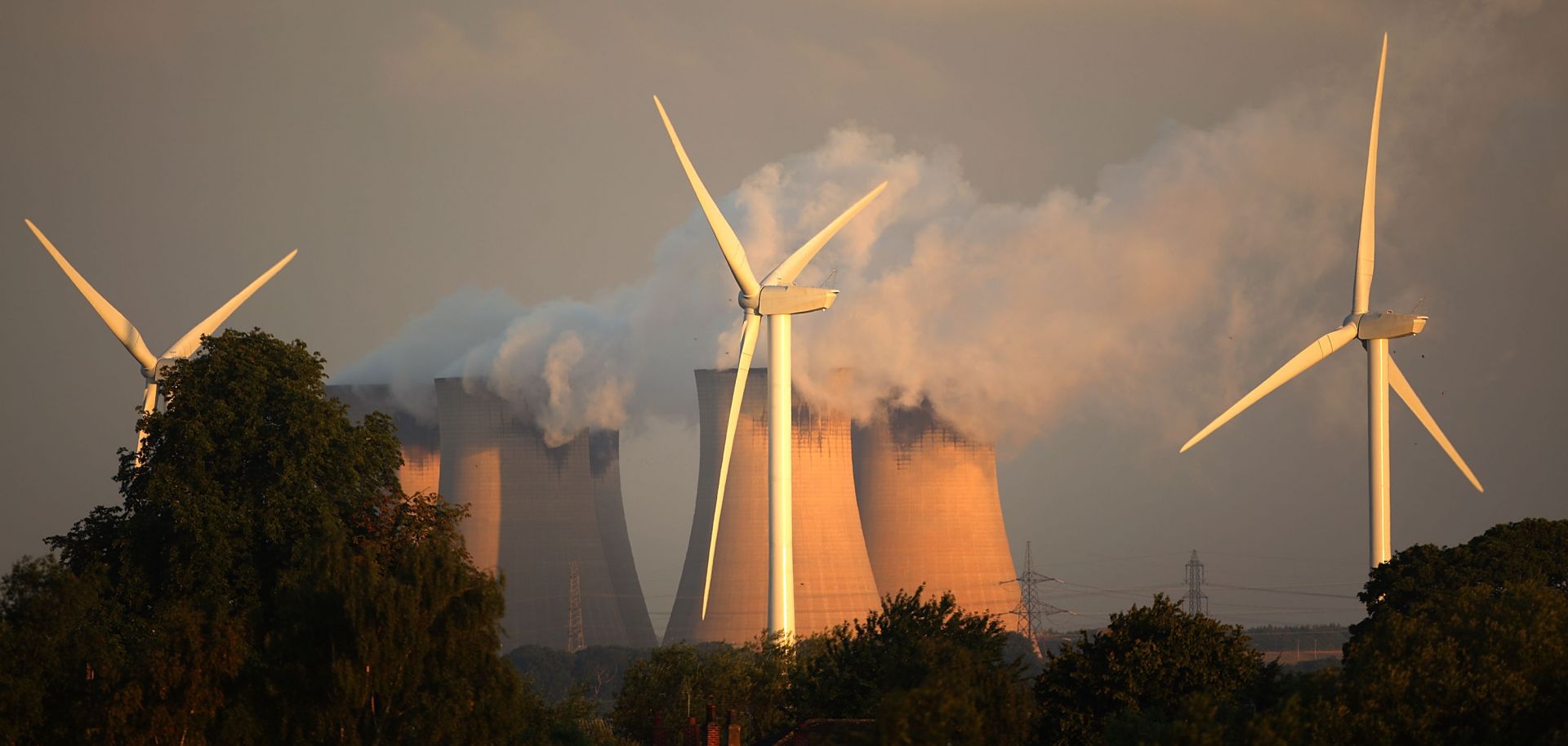
Wind turbines near Selby, England, spin alongside the Drax coal-fired power station.
The global transition away from fossil fuels and toward more sustainable energy sources is well underway. Though the rise of green technologies such as solar panels or electric vehicles may seem to bode ill for the international oil industry, many oil companies are trying to change with the times. Royal Dutch/Shell, for example, spent $217 million in January to buy a 43.8 percent stake in Silicon Ranch, a U.S.-based solar developer. Rather than competing against low-carbon technologies, fossil fuel companies are increasingly working to incorporate them, setting the stage for a new class of hybrid firms to emerge in the global energy industry.
Riding the Wave of Renewable Energy
Historically, the major fossil fuel firms have avoided renewable technology. Part of their wariness stemmed from a distrust of the climate policies driving the innovations. ExxonMobil, for instance, has acknowledged climate change in its corporate strategy only in the last decade or so. Beyond the climate change controversy, many fossil fuel companies were unfamiliar with the business models underlying green technologies and skeptical of the sector's commercial viability. Those firms that embraced renewable energy early on — such as BP, which rebranded from British Petroleum in 2001 in an effort to broaden its horizons — struggled with the transition. Having changed its name and launched the "Beyond Petroleum" marketing campaign, BP, the first major oil firm to acknowledge the risks of climate change back in 1997, invested $8 billion in wind and solar manufacturing. The projects, however, turned out to be unprofitable, and BP shuttered its renewables division in 2013. Similarly, Shell ended an unsuccessful foray into renewables in 2009, though it continued its efforts with biofuels.
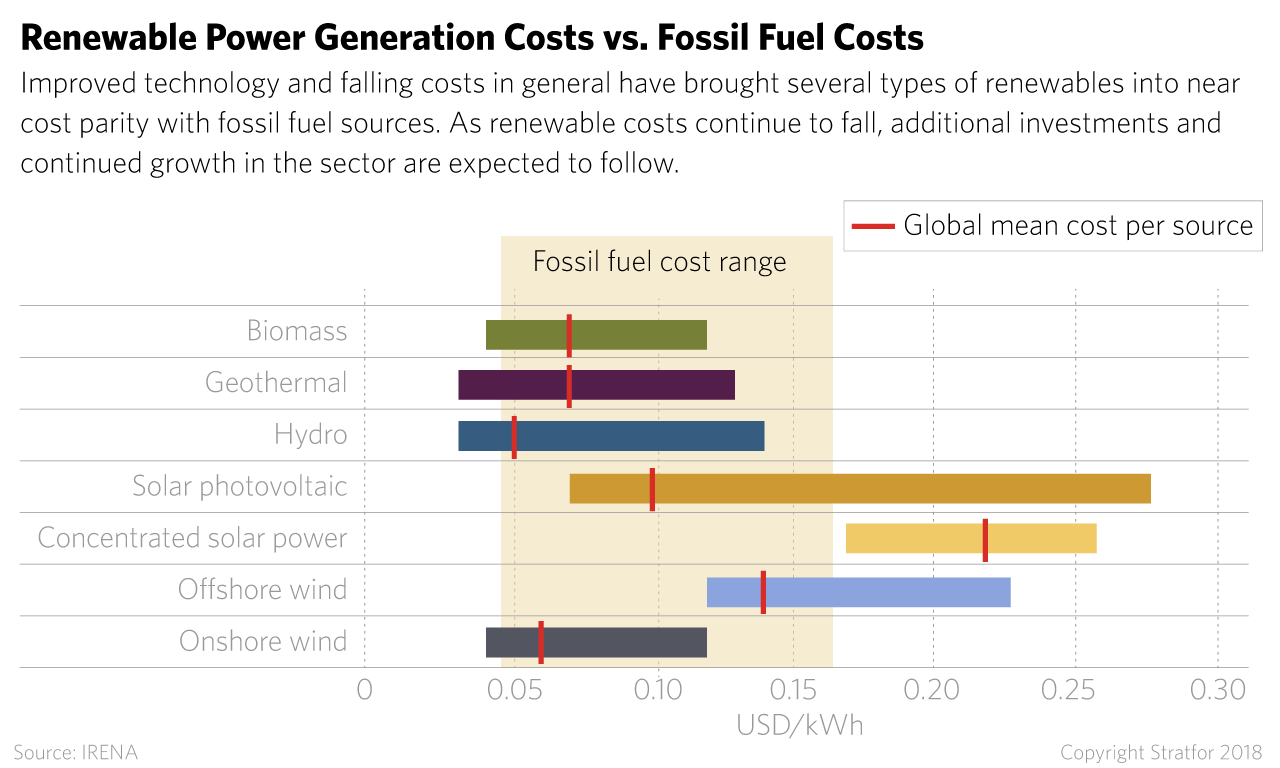
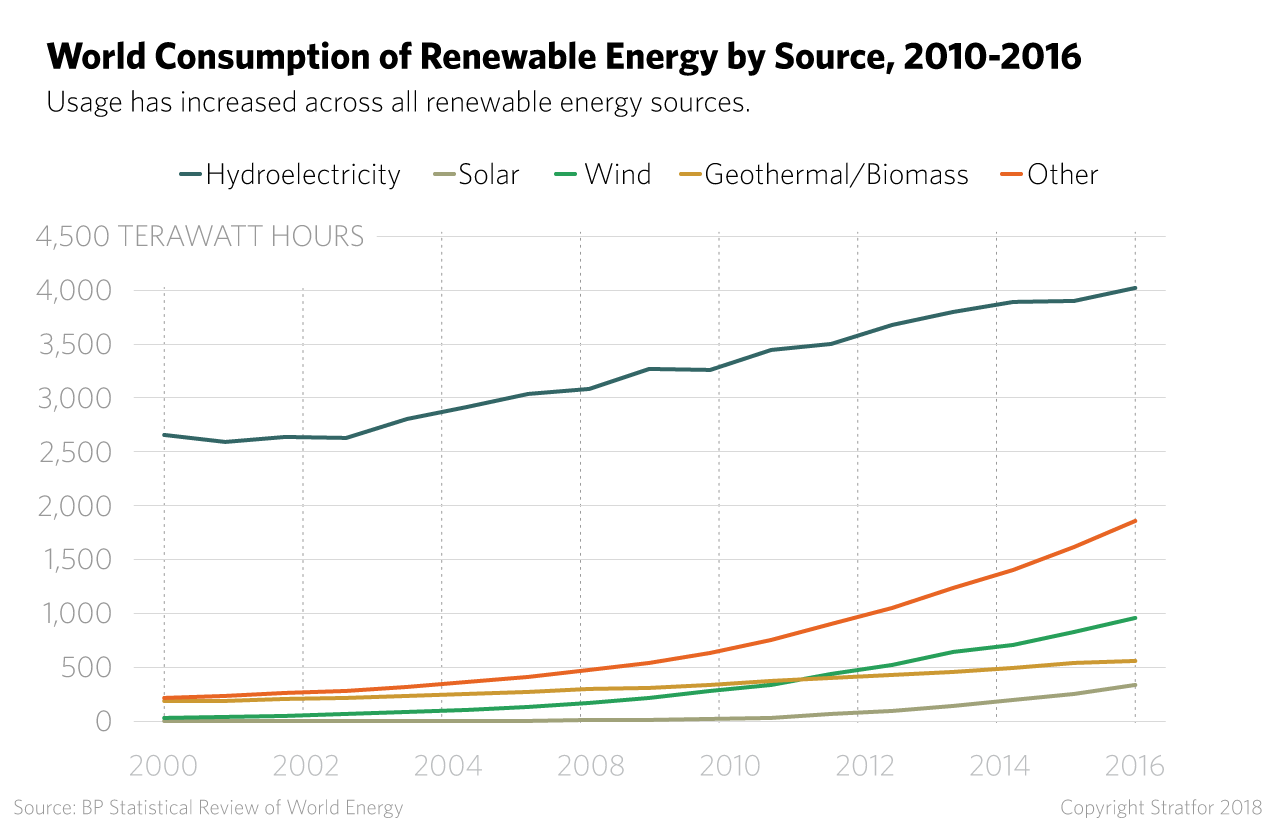
But the rise of green technologies over the past few years has been too dramatic for the world's leading oil companies to ignore. Renewable power sources have made significant strides in the electricity sector, and today the costs of power from solar and wind sources are in many cases lower than the price of constructing new coal plants. Renewable electricity generation, moreover, accounts for a large fraction of electrical output in countries such as Germany, Denmark, the United Kingdom, Spain, Italy and Uruguay, as well as several U.S. states. The market for batteries and energy storage devices is also growing as prices for these items drop and technologies such as electric vehicles and grid-scale storage advance. In light of these developments, the world's fossil fuel giants are turning their attentions, and their investments, toward green technologies.
The Utility Behind Green Technology
Yet relative to utility companies, the world's major oil firms are lagging in the push toward renewable energy. Utility providers have outpaced them since power generation has become the most commercially viable sector for renewable technologies. European electric companies such as Iberdrola and Enel lead the pack and have begun extending their green energy services to Latin America, one of the biggest growing markets for renewable power. The United States, however, isn't far behind. Across the country, an array of states — including Texas, Iowa and North Dakota as well as California and Vermont, the traditional beacons for the U.S. environmental movement — are scaling up renewable energy operations. The U.S. utility Xcel Energy recently scrapped plans for new coal plants in Colorado in favor of building more cost effective renewable power plants. The company, which also shut down two old coal plants and replaced the lost capacity with renewable energy and natural gas, estimates that by 2025, renewable generation will account for more than half of its electricity output.