
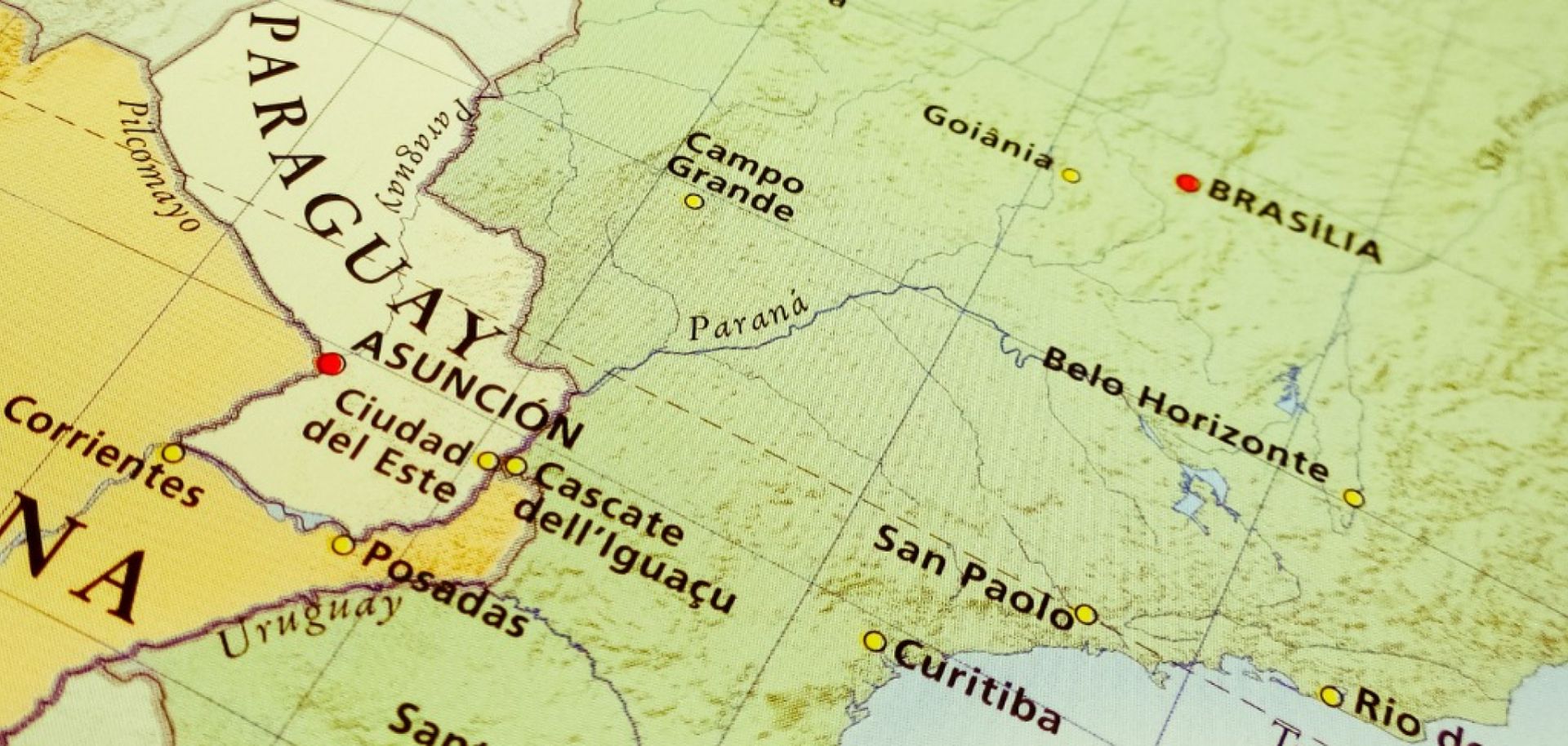
The lower costs of manufacturing in Paraguay have led some Argentinian and Brazilian companies to move operations there.
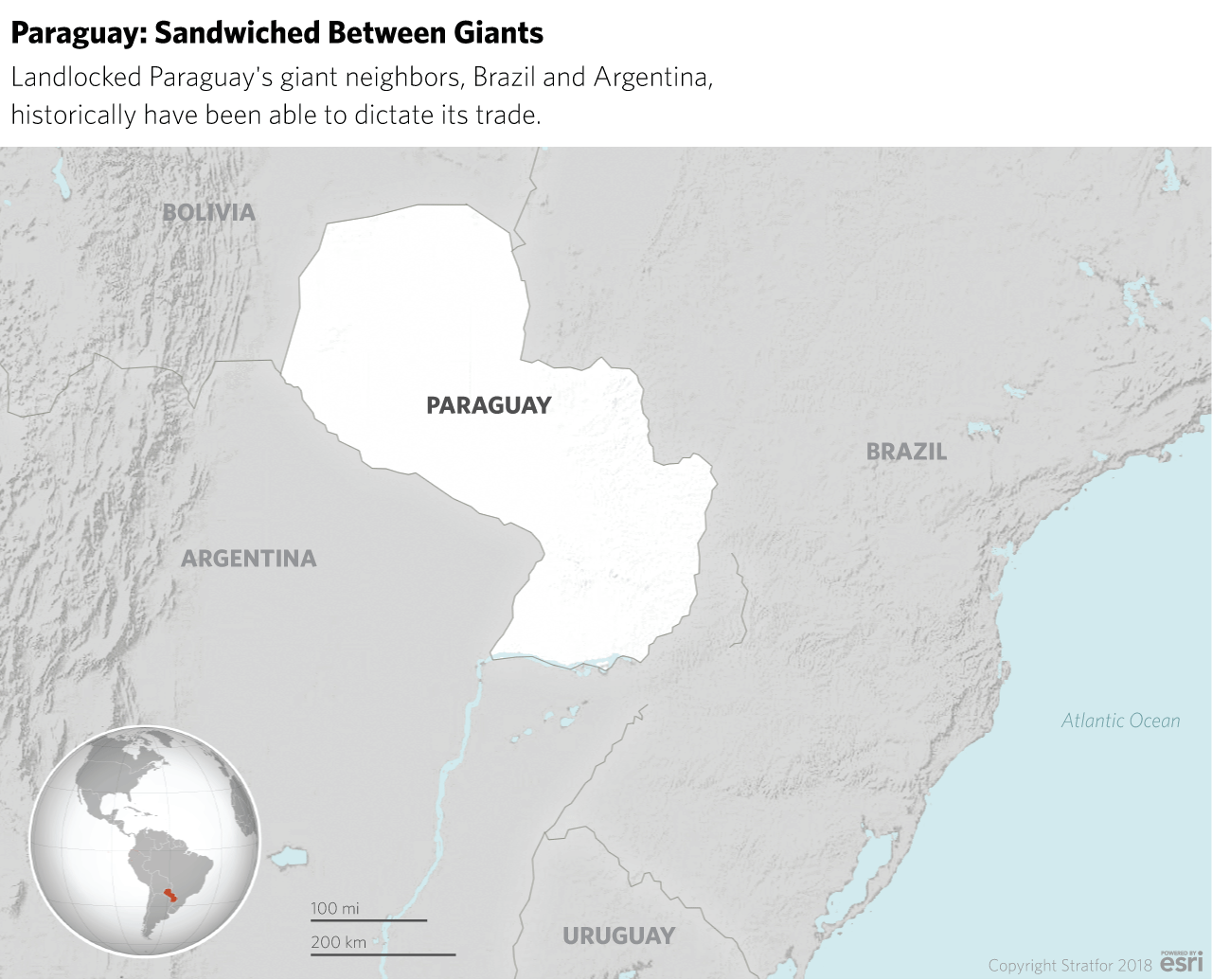
In terms of wars, few conflagrations have had a proportionally more devastating impact on a country as the War of the Triple Alliance in the 19th century, which killed off upward of 90 percent of Paraguay's male population and set the tone for relations between the landlocked nation and its two main foes in the conflict, Brazil and Argentina. The bloodshed is long in the past, but Paraguay remains caught between its larger neighbors. Its position as a buffer state between them means that it remains largely at the mercy of the governments in Brasilia and Buenos Aires on matters of trade. Now, however, it appears as if the government in Asuncion has found a way to make itself an industrial hub of Latin America's southern cone by encouraging companies from north and south to ditch the comforts of home and set up shop in Paraguay.
Despite the resentment some Paraguayans still harbor toward their larger neighbors, over the past four years, the country has become a major destination for Argentinian and particularly Brazilian manufacturers intent on reducing their production costs. Paraguay's corporate tax rate and energy and labor costs are much lower than in either Argentina or Brazil. Additionally, some Paraguayan cities that have welcomed Brazilian- and Argentinian-owned factories are a mere 960 kilometers (600 miles) from Sao Paulo, South America's largest industrial and financial center, relatively close by South American standards.
Paraguay Comes in from the Cold
Accordingly, Cartes' first order of business after taking power was to mend ties with Brasilia and Buenos Aires. Fortunately for Asuncion, Brazil and Argentina rapidly accepted Cartes' victory in the 2013 election, declaring the vote to be free and fair. The two countries also called for Paraguay's reinstatement to Mercosur, and Asuncion duly rejoined the bloc within months of the election. Having secured normalization, Cartes turned his attention to establishing Paraguay as an industrial hub by enticing the Brazilian and Argentinian manufacturers of textiles, toys, plastic products, auto parts and other goods to relocate to the country. The president especially targeted firms that were struggling to compete domestically against Chinese imports. Many of Brazil's textile companies had already ceased operations in the face of overseas competition a decade ago, forcing them to resort to importing Chinese textiles, but the Paraguayan offer appeared attractive to other Brazilian and Argentinian companies that were still fighting to survive.
Bringing in the Brazilians
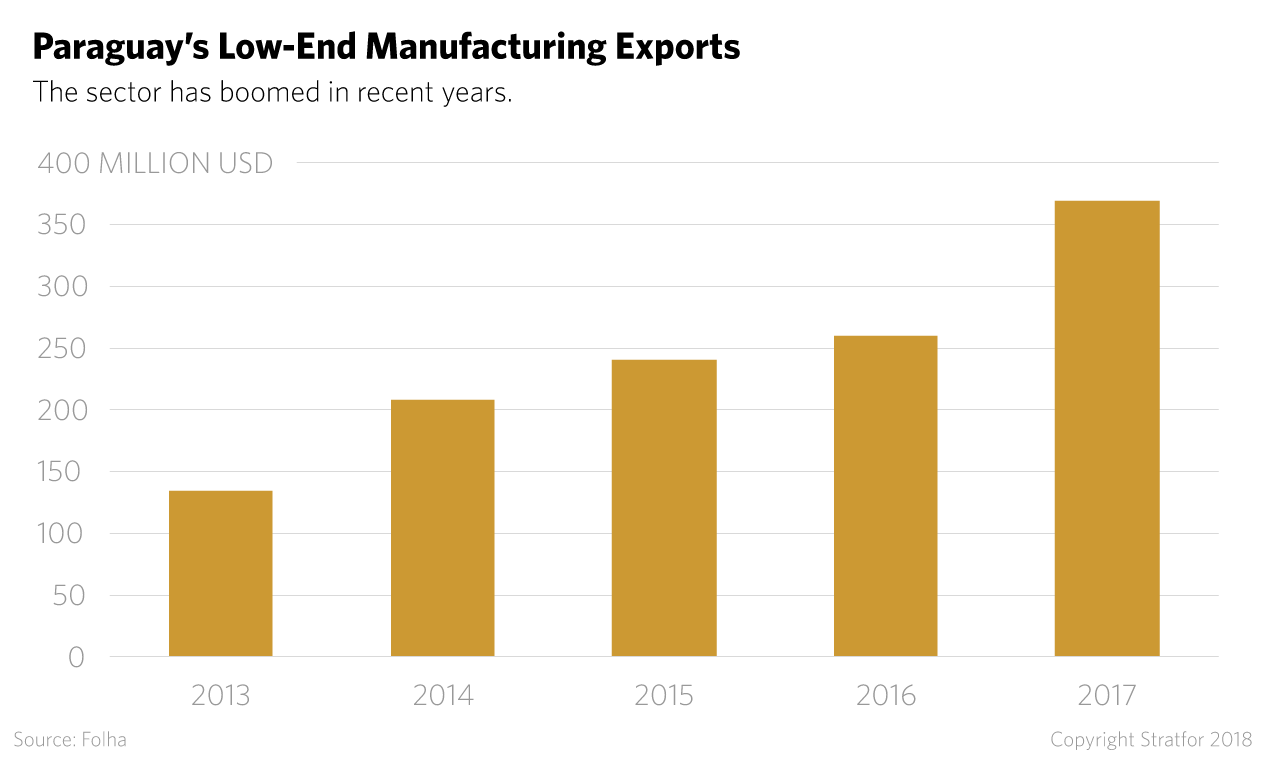
In the past five years, 67 percent of the new factories in Paraguay have been opened by Brazilian companies, while Argentinian firms have opened a further 8 percent. In all, the amount of low-end exports from these companies in the past five years has totaled approximately $380 million, representing a jump of more than 260 percent. While the number remains comparatively small, Asuncion hopes that its attractiveness will persuade the two neighbors to choose Paraguay as a source for some of the $34 billion in goods the countries import from China every year.
Brazil's economic decline over the past three years has led many companies in the country to search for ways to keep their businesses buoyant. According to a report published earlier this month by Brazilian newspaper Estadao, almost 80 Brazilian companies have opened factories in Paraguay in the last three years. And in just the past year alone, over 440 Brazilian companies – a 67 percent increase year on year – have expressed an interest in opening factories in Paraguay, according to the Brazilian Embassy in Asuncion.
Some of these companies are seeking to supplant textile imports from China. The Guararapes group, one of Brazil's largest textile companies, began operations in Paraguay in 2016. This year the company has announced plans to increase its workforce from 400 to 1,500 over the next 18 months. In total, Brazilian manufacturing transplants to Paraguay now employ over 11,000 people.
Beware the Dragon
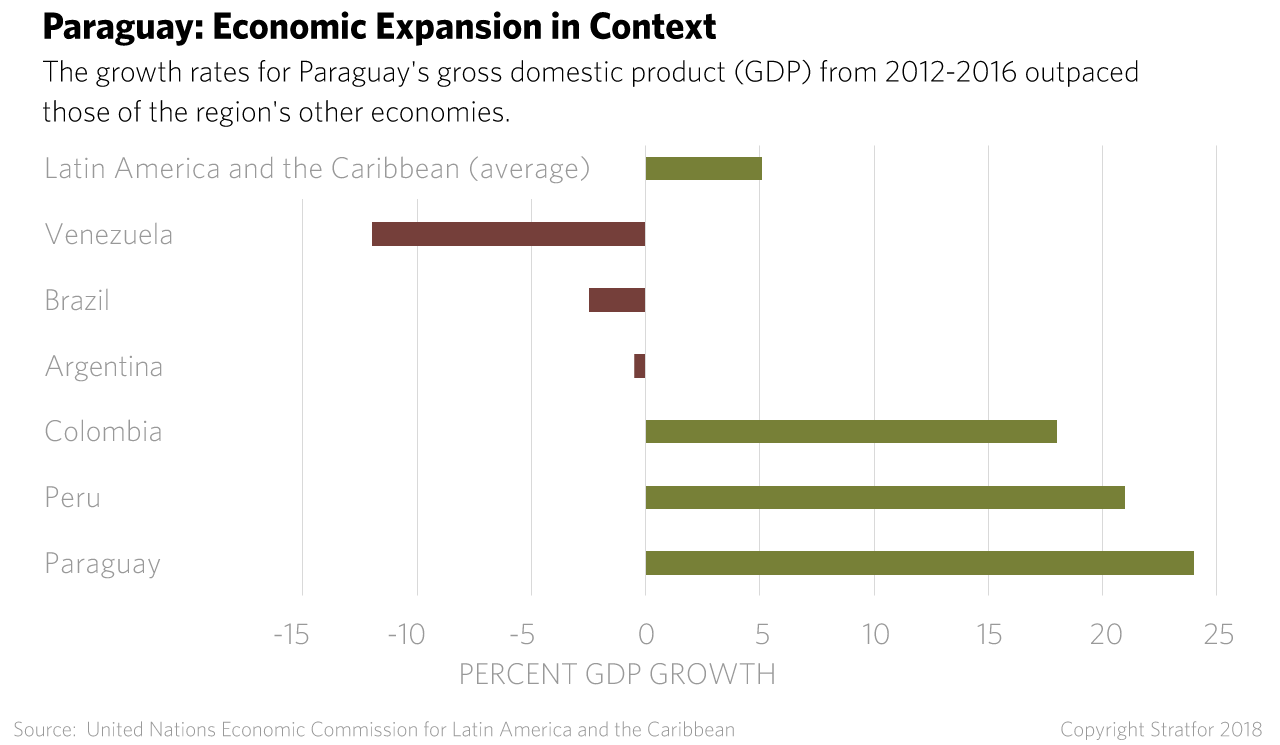
Paraguay's move to dangle its low production costs to attract manufacturing companies from neighboring countries, however, still faces major challenges, including the problem of scale. While Mercosur's manufacturing imports from China totaled close to $40 billion last year alone, Paraguay's total gross domestic product in nominal terms amounted to $28 billion last year. As a result, Asuncion has focused on attracting manufacturers who produce low-end products such as textiles, plastic toys and auto parts.
At the same time, Paraguay could also lose its current advantage as Mercosur members like Argentina and especially Uruguay have expressed greater interest in negotiating a free trade agreement between the bloc and China. Beijing also moved to whet Buenos Aires' appetite for a trade pact earlier in January by lifting all import restrictions on Argentinian beef and lamb. A trade agreement between Mercosur and China would significantly reduce import tariffs on Chinese manufacturing products, which in Brazil total almost 100 percent on some low-end goods. However, there is still a long way to go before Mercosur can finalize free trade negotiations with China, especially as the bloc's largest economy, Brazil, has been hesitant to expose its industries to further Chinese competition.
Ultimately, a Mercosur deal with China would likely end Paraguay's days as an attractive source for low-end wares. But as long as progress on a free trade deal between the South American bloc and Beijing remains slow, Paraguay will continue to carve out a comfortable niche for itself in attracting struggling companies from its more populous neighbors. It falls to Asuncion to seize the day before night inevitably falls.
