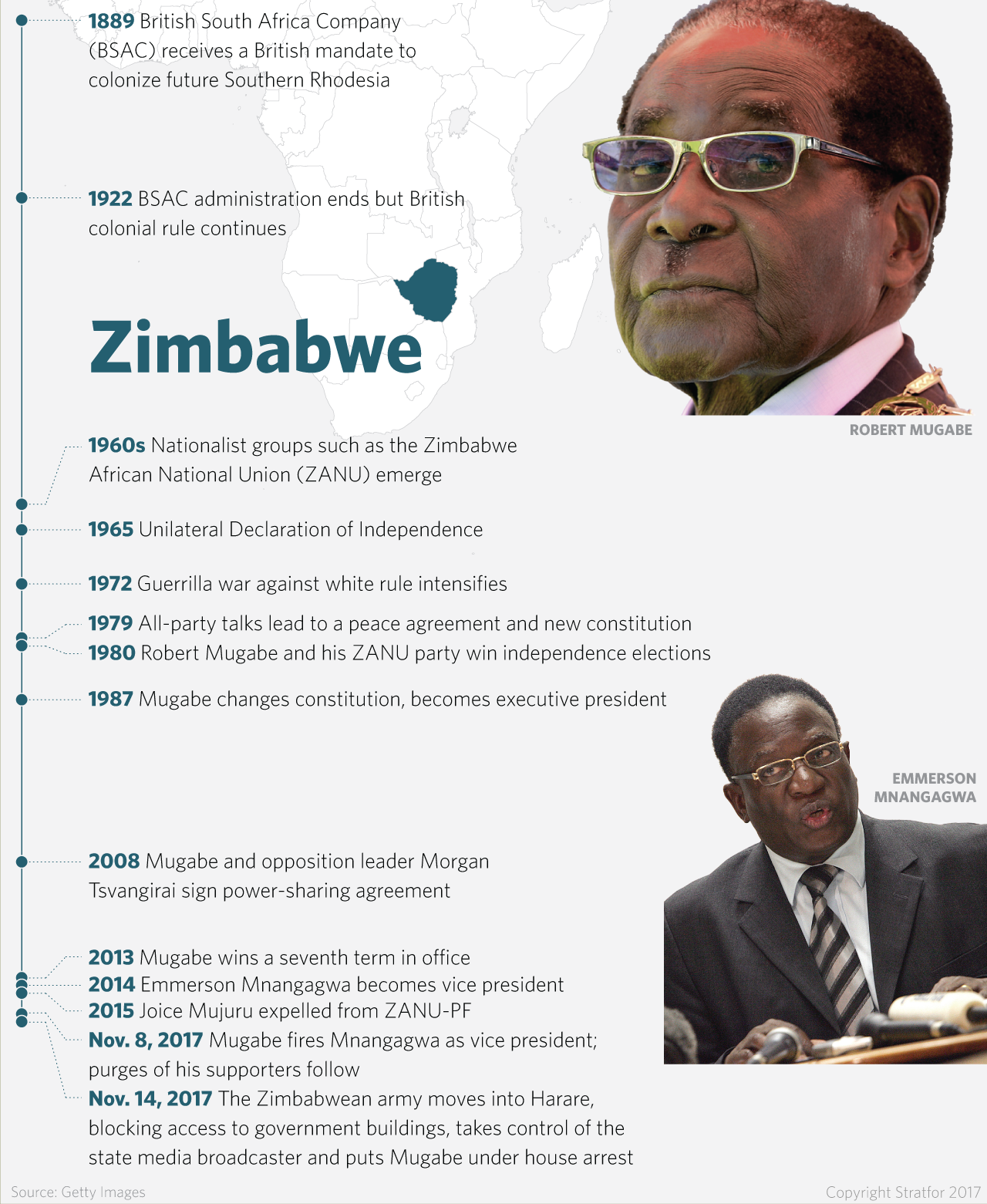
After more than 37 years in power, Zimbabwean President Robert Mugabe is once again fighting to keep his hold on power. The Zimbabwean strongman, who has compared himself to Jesus for the number of political resurrections he has had, is currently being detained in his residence by members of the Zimbabwean military. Meanwhile, the military has reportedly seized control of the country's state broadcaster and is pursuing people it says are criminals in Mugabe's government. Notably, South Africa — the region's military hegemon — so far appears content to send peace brokers to the country and to monitor the situation from afar. South African President Jacob Zuma has said that he talked to Mugabe and that he is "safe."
Mugabe's ouster of Vice President Emmerson Mnangagwa and the purging of his allies was a step too far for certain elite factions of the ruling Zimbabwe African National Union-Patriotic Front party. Mugabe attempted to remove the faction colloquially known as Team Lacoste — loyal to Mnangagwa, who is nicknamed the Crocodile — to make room for Grace Mugabe, his wife, to succeed him. The military, which has denied that a military takeover is underway, may have originally planned to pressure Mugabe to stop his campaign against Mnangagwa's supporters, but it's possible that events have progressed to the point that it is now planning to sideline Mugabe altogether. Alternatively, the military might be content with simply neutralizing Grace Mugabe and her allies and letting Robert Mugabe serve until the presidential election in 2018. But even if he is allowed to stay in power, his age dictates that he will not be in office much longer, meaning the succession problem will not be solved by such a compromise.