
(iStock)
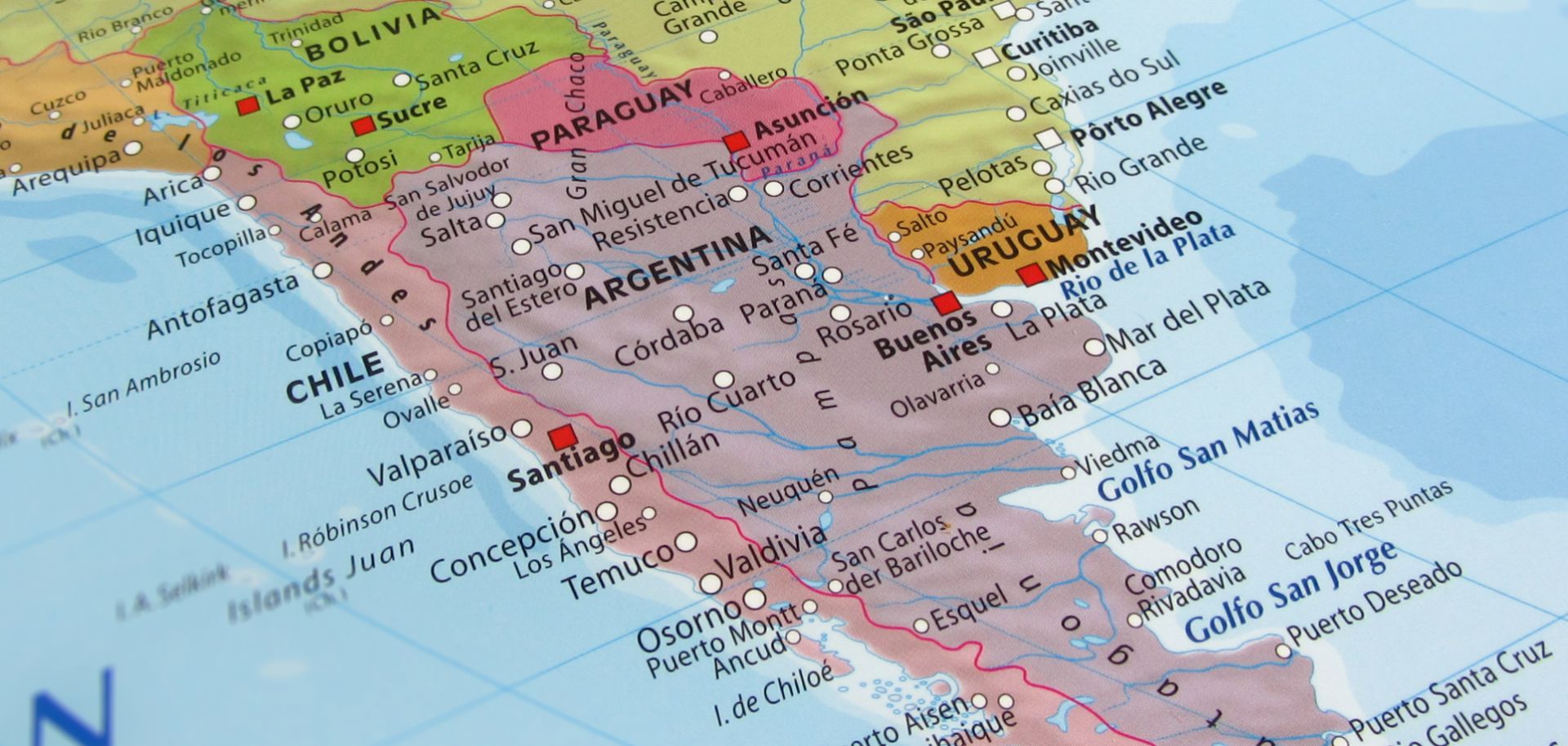
Chile and Argentina are building a tunnel through a dangerous Andean pass to boost bilateral commerce. The project will also connect Chilean ports on the Pacific Ocean with Brazilian ports on the Atlantic.
Argentina and Chile are on the road to greater trade integration. Their relationship has historically been difficult, with more downs than ups, but ties between them have been gradually warming since Argentine President Mauricio Macri came to power in December 2015. Now, the two countries are building a tunnel through a dangerous mountain pass to boost bilateral commerce and to connect Chilean ports on the Pacific Ocean with Brazilian ports on the Atlantic.
War and Territory
Divided by the Andes Mountains and the world's third-longest border, Argentina and Chile are more accustomed to territorial disputes with each other than to economic cooperation. Their most serious row occurred in 1978, when the countries almost went to war over the Beagle Channel, one of three navigable passages between the Atlantic Ocean and the Pacific. Pope John Paul II intervened before an armed conflict erupted, and his mediation led to a peace treaty in 1984. But in the meantime, the Falklands War broke out. Chile raised the alarm in 1982 when Argentina decided to take control of the Falkland Islands in the South Atlantic and go to war with the United Kingdom. Because the Falklands aren't far from the Beagle Channel, Chile saw the movement of Argentine troops into the islands as a threat and helped the British military with intelligence about Argentina's navy. Former British Prime Minister Margaret Thatcher confirmed in 1998 that the United Kingdom intercepted the Argentine navy thanks in part to the intelligence Chile provided. More than 30 years later, many Argentines still resent Chile's actions in the war.
The countries have had their share of disagreements in the 21st century, as well. In 2004, for example, Argentina suspended shipments of natural gas to Chile, allegedly without prior notice, to account for its higher domestic consumption and declining production. Buenos Aires' decision to reduce and eventually halt the exports Santiago depended on only added to the hostility between them.
A New Direction
Macri's victory in the 2015 presidential election set a new tone in Argentina's relationship with Chile. The president has made normalizing relations between the two countries one of his biggest foreign policy priorities. (One of his first foreign visits in office, in fact, was to Argentina's western neighbor.) At the same time, his economic policies have eased the way for more cooperation with Chile. Macri's government has not only pursued closer economic ties with countries outside the Common Market of the South (Mercosur), but it has also lifted the foreign currency controls and import restrictions that impeded trade with Chile during the previous administration. As soon as Macri came to power, Buenos Aires and Santiago started holding talks to lower trade barriers between Mercosur and the Pacific Alliance bloc, of which Chile is a member. Their efforts to coordinate commerce between Latin America's largest trade organizations have paid off: The blocs have worked on reducing trade barriers over the past 18 months and may announce an agreement later this year to cut tariffs and harmonize agricultural standards.
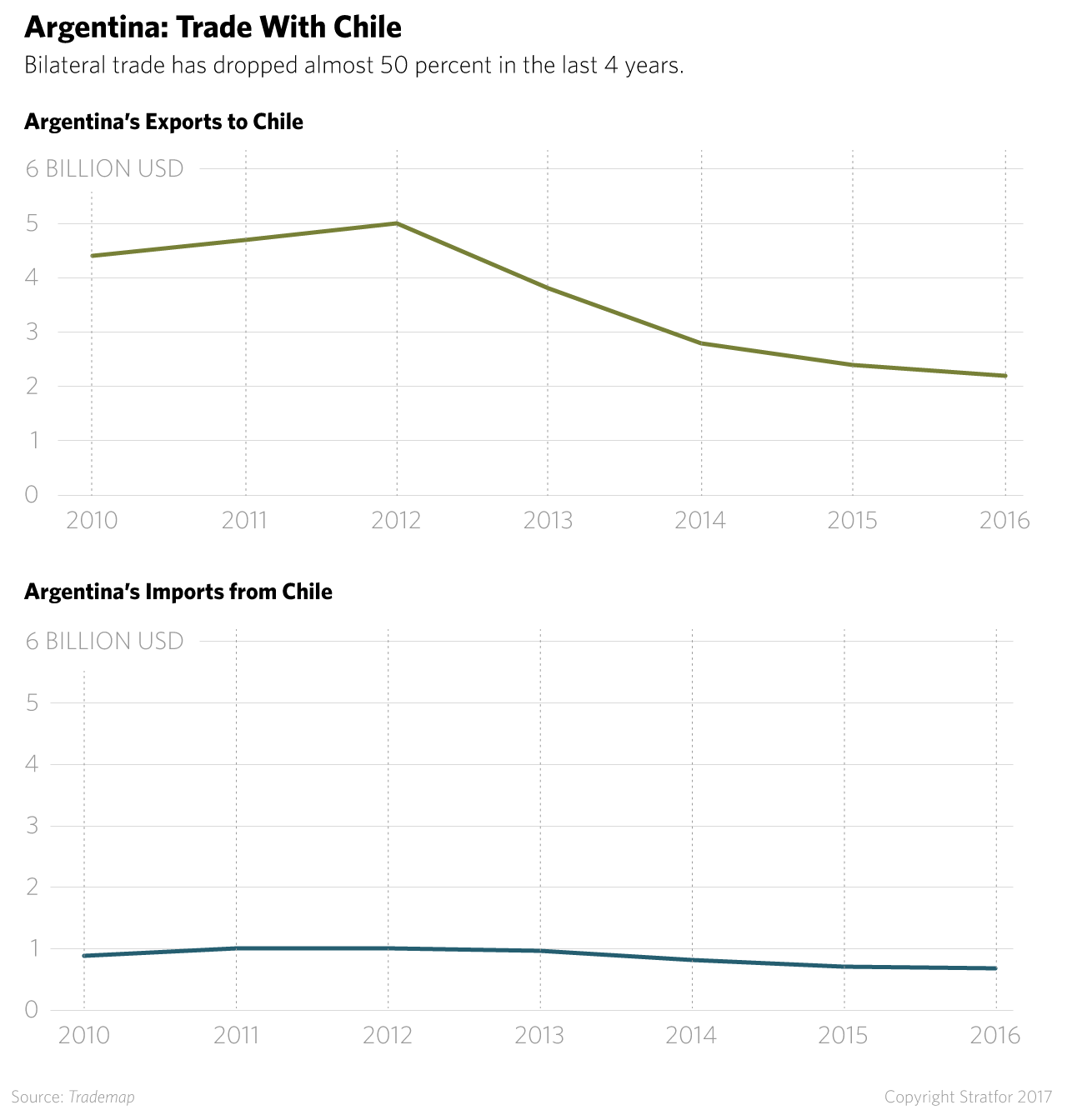
Argentina has also confirmed that it will resume energy exports to Chile in January, when its domestic consumption is lower. In addition, Argentina's energy minister said in September that the government expects natural gas production to increase by 40 percent by 2021-22, a boost that would enable his country to expand its exports to Chile beyond the summer months. And by the end of the year, Santiago and Buenos Aires are expected to officially announce a deal to reduce bilateral trade barriers and facilitate investment. The upcoming presidential election in Chile, slated for Nov. 19, shows little sign of slowing the progress it is making with Argentina. Both leading candidates have expressed their willingness to continue improving ties with the country, and Macri has met with their political allies to discuss relations with Chile.
Argentina's next presidential election in 2019, on the other hand, could jeopardize the budding partnership between the longtime rivals. Macri's cuts to energy and transportation subsidies, along with some of his labor reforms, could become more unpopular if growth doesn't pick up, and voters may decide to bring a populist back to power. In that case, the next administration could reverse Macri's measures to liberalize trade, and with them, his efforts to normalize relations with Chile. The recent electoral victory for Macri's ruling Cambiemos coalition, however, may strengthen his prospects for re-election.
Tackling Geography
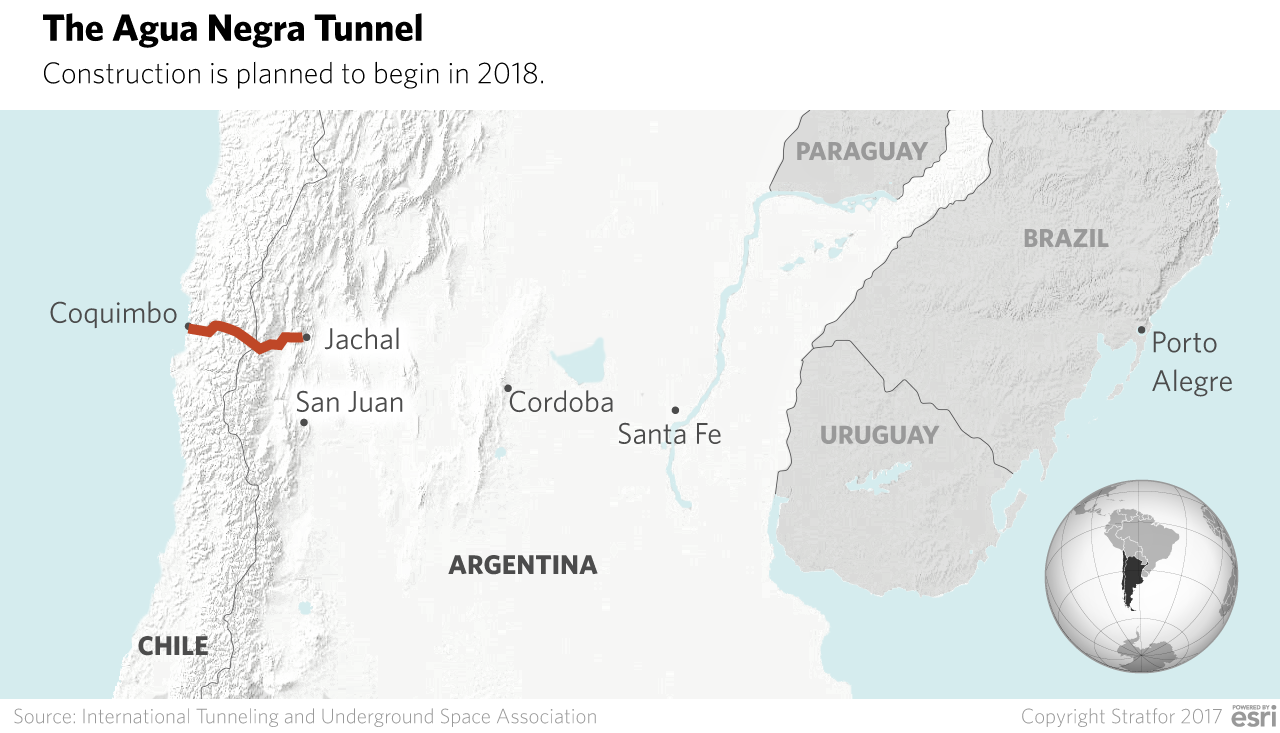
Beyond trade, Argentina and Chile have also made quick progress on infrastructure projects to better connect them. The two countries have been working since last year to expand and modernize a railway connecting the northern Argentine province of Salta with the Chilean port of Antofagasta, and they are also improving four roads between them. More recently, the Inter-American Development Bank announced Oct. 17 that it had approved a $270 million loan to build a 13.9-kilometer (8.6-mile) tunnel through the Andes connecting Argentina and Chile. Construction on the Agua Negra Tunnel, a $1.5 billion project, will begin next year and wrap up around 2025, if it stays on schedule. The project will link the northwest Argentine province of San Juan with the Chilean port of Coquimbo, enabling year-round transit between the two points and reducing the travel distance by 40 kilometers. Furthermore, because the tunnel will be on the road that runs from Coquimbo to Brazilian ports on the Atlantic, it stands to benefit Brazil, too.
Geographic constraints will continue to challenge Argentina and Chile as they strive for deeper trade ties and greater physical integration. The Agua Negra Tunnel will take almost a decade to complete, and even then it will not be enough to solve the logistical problems that the mountainous, 5,150-kilometer border dividing Chile from Argentina poses. Nevertheless, Santiago and Buenos Aires have temporarily laid their political animosities aside, and a greater harmony is likely to prevail, at least for the next two years.
