
Hosting the Olympics only seems to be getting more and more expensive.
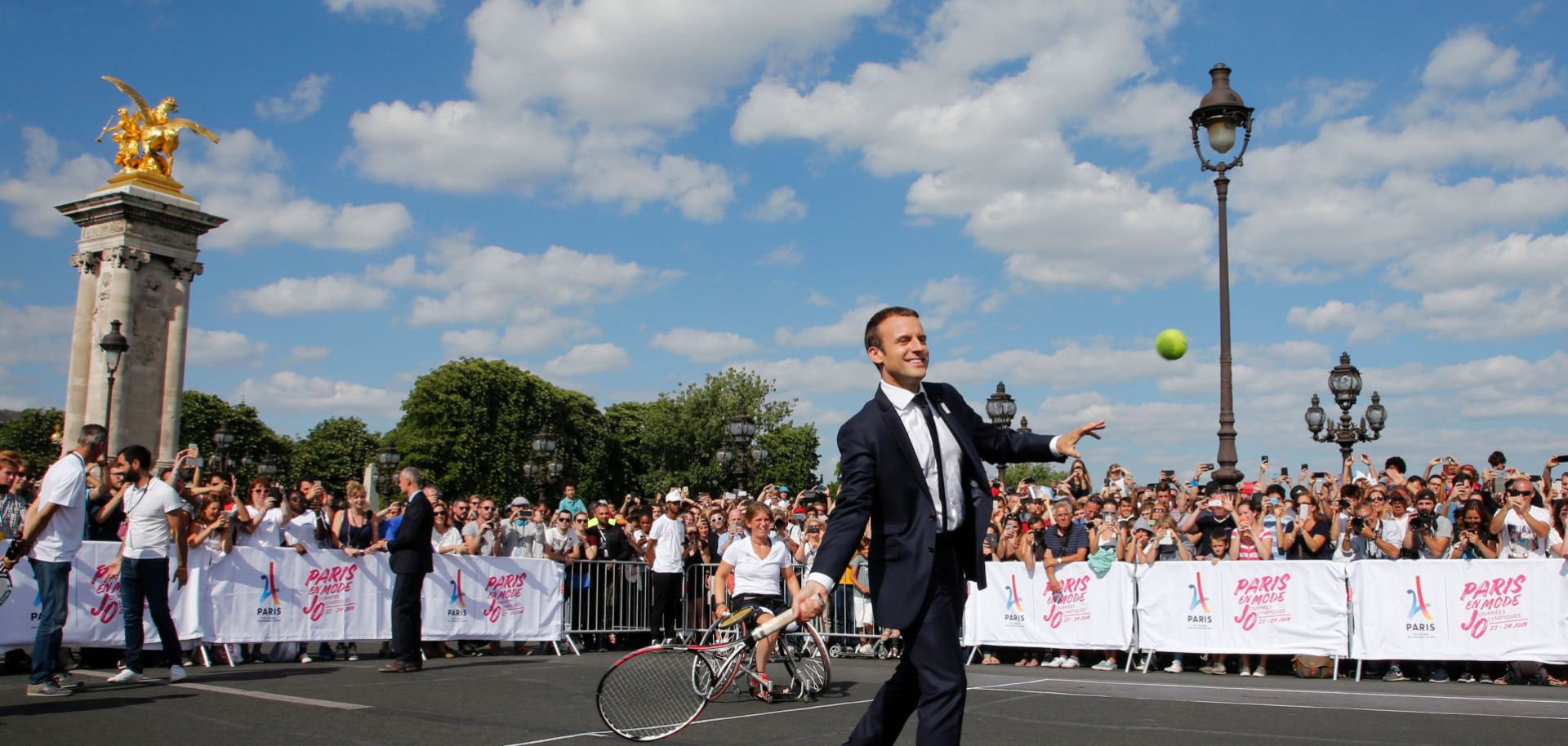
After years of negotiation, the International Olympic Committee (IOC) recently awarded the right to host the 2024 and 2028 Summer Olympics to Paris and Los Angeles, respectively. But in some ways the decision wasn't difficult; the two cities were the only candidates left after other major contenders — namely, Boston, Hamburg, Budapest and Rome — withdrew their bids from consideration. This lonely competition speaks to the fact that, from a purely financial perspective, mega sporting events rarely work out well for the metropolises that host them.
Draining City Coffers Dry
According to a 2016 report from Oxford University, the costs of holding the Olympics exceeded budgetary estimates by an astonishing average of 156 percent between 1960 and 2016. And the games only seem to be getting more and more expensive. As the event's price has risen, cities across the democratic West have become much less interested in paying it. By all appearances, the combination of engaged voters and a free press makes for a challenging environment in trying to build support for a bid.
As a result, authorities in charge of global sports organizations have increasingly looked elsewhere for willing locales. The bidding for the right to host the 2022 Winter Olympics is a case in point: Beijing (China) and Almaty (Kazakhstan) — hardly bastions of human rights — were the only two cities to enter the competition. These results, coupled with the fact that the World Cup will be held in Qatar only a few short months later, inspired journalist Adam Chandler to jokingly dub 2022 "The Year of the Authoritarian Host Country."
In fairness, there is a case to be made that putting on an event like the Olympics can encourage the host to pay greater respect to international norms. Prior to the 2008 Games in Beijing, China reversed its policy on Darfur, pressuring the Sudanese government to accept the presence of U.N. peacekeepers. And 72 years prior to that, there is evidence that the 1936 Olympic Games in Berlin induced even the Nazis to moderate their behavior (albeit temporarily) in a nod to the internationalist principles of the contest.
Moreover, the IOC has weighed in more heavily on humanitarian issues. In a landmark decision just last year, the organization added a provision to its host city contract requiring those holding the events to,
"… protect and respect human rights and ensure any violation of human rights is remedied in a manner consistent with international agreements, laws and regulations applicable in the Host Country and in a manner consistent with all internationally-recognized human rights standards and principles, including the United Nations Guiding Principles on Business and Human Rights, applicable in the Host Country."
The move should certainly be applauded. But given the current bidding climate for major sports events, it's hard not to wonder whether the committee will actually be able to enforce its new rule.
Treating the Problem at Its Source
Of course, even the most repressive governments pay attention to the games' costs. The debt Russia racked up during the 2014 Winter Olympics in Sochi, for instance, risked upsetting an important faction within President Vladimir Putin's ruling coalition. But the fewer the countries willing to bid, the less bargaining power the IOC and other international sports organizations have, particularly when only a single contender comes forward.
Such was the case when Los Angeles won the 1984 Summer Olympics by default after the Iranian Revolution ended Tehran's candidacy. Led by innovative businessman Peter Ueberroth and Los Angeles Mayor Tom Bradley, municipal officials in charge of the games were able to secure a number of unprecedented concessions from the IOC. In fact, that year's competition remains the only instance in over 120 years of the Olympics' modern history in which the IOC agreed to waive its usual requirement that host cities bear the burden of any cost overruns.
Given the situation they are confronting today, IOC officials may need to revisit the idea of an expense waiver while lowering their expectations of potential hosts. Over the past few decades, cities have spent enormous amounts of money on new stadiums and other construction projects. Though these undertakings are often justified as long-term investments in urban development, the fact is that these massive expenditures are the biggest factor driving up the costs of Olympic events.
The 1984 Summer Games may once more provide a model for its future successors. During the early stages of the bidding process, California officials made it clear that the use of public funding for the event would be prohibited. Forced to be meticulous in budgetary matters from the outset, event organizers made two important decisions. The first, with only two exceptions, was to use facilities that already existed. The second was to embark on an innovative campaign designed to aggressively pursue private sources of financing. In marked contrast to today's approach, in which the IOC plays the central role, Ueberroth and his partners led the negotiations on television broadcasting rights for the event. By doing so, they were able to secure two-thirds of the resulting revenue stream — an achievement that, combined with other creative efforts, yielded a net revenue of $225 million for the 1984 Olympics.
With any luck, perhaps Los Angeles will surprise the world again in 2028.
