
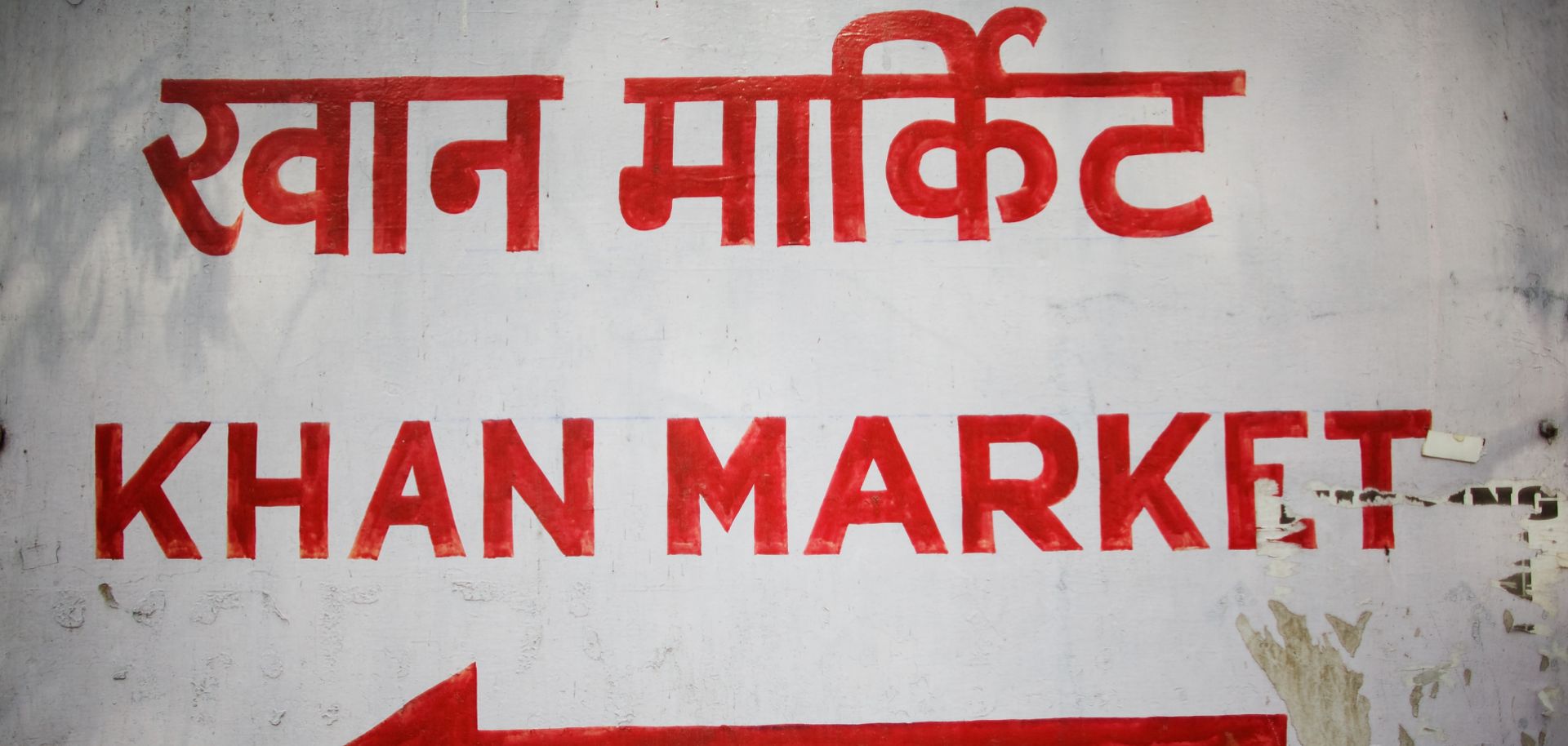
When India gained its independence in 1947, few subjects exposed the young country's fault lines as clearly as language did. The northern parts of India tried to impose Hindi, one of dozens of languages spoken in the country, on the linguistically diverse south, triggering unrest and extended periods of violence that eventually caused the central government in New Delhi to backtrack. But over the past six months, signs have emerged that the government is making another attempt to expand the use of Hindi. And resistance is building anew in the south.
A Matter of Geography
To understand India's linguistic divisions, one must start with its geography. The country's borders encompass a diverse terrain. The broad, fertile plains surrounding the Ganges River dominate northern India. The Ganges not only has enabled Indian farmers to feed multitudes, but it also has proved a unifying force over time by facilitating communication across a vast region and encouraging the use of a common language (albeit one with numerous dialects), Hindi. Other parts of India, including the rugged southern Deccan peninsula, are home to a wide array of regional languages thanks to the diverging rivers and geographic barriers that impeded communication between local populations. Throughout history, Indian empires have tended to emerge in the north and extend their rule south, though the challenging terrain of the lower subcontinent kept them from unifying the peninsula for long. Various indigenous civilizations in south India, meanwhile, carved out strong identities; the Chola dynasty, for example, projected its power as far as Southeast Asia from its base in modern-day Tamil Nadu.
In the 19th century, the United Kingdom gradually subordinated the whole subcontinent to its rule. British culture overrode India's cultural divisions, if only temporarily, and English became its language of official communication. But once the British withdrew after World War II, a debate over language consumed the newly independent country. Nationalists, often from the north, insisted that India needed a single official language and that it had to be indigenous — that is, not English. Hindi was the only obvious choice. Southerners, particularly those in and around Tamil Nadu (then Madras state), strongly resisted the plan, which they saw as a new form of imperialism.
Their outcry prompted the central government to put off naming Hindi the national language in 1950 and instead to declare it an official language, alongside English. The aim at the time was to phase out English after 15 years. As the date for the transition approached, however, protests broke out, mainly in Tamil Nadu. The demonstrations lasted several months and led to several hundred deaths. To quell the unrest, Prime Minister Lal Bahadur Shastri made assurances, later put into law, that Hindi would not supersede the country's other languages.
Revisiting a Divisive Subject
But 50 years later, the subject is back under discussion, largely thanks to the ruling Bharatiya Janata Party (BJP). The BJP represents a Hindu nationalist movement that proposes to unite India around a single identity — that of northern India's Hindi-speaking Hindus, who form the closest thing to a majority in the diverse country. As the party has grown more confident of its political strength, the central government has launched renewed efforts to promote Hindi.
The day after Prime Minister Narendra Modi entered office in 2014, for instance, his government announced that all official social media posts should be written in Hindi, sparking backlash from the south. Modi's administration later clarified that the policy would apply only in Hindi-speaking states, but the episode proved the harbinger of a wider movement. A series of electoral victories this year, including in the key heartland state of Uttar Pradesh, emboldened the ruling party to revisit its Hindi initiative. In late March, President Pranab Mukherjee approved various parliamentary recommendations about the use of Hindi that were first submitted in 2011. The suggestions included proposals that government ministers give speeches in Hindi with English translations, rather than the other way around, and that Air India use the language for its tickets and in-flight magazines. The Indian minister of information and broadcasting further inflamed the situation by claiming that Hindi was India's "national language" and that the country couldn't "move ahead without it."
A Common Complaint
In response to these incidents, popular uproar has been brewing in southern India. A politician from Tamil Nadu posted pictures to his Facebook page in April showing state road signs that had been changed from English to Hindi and denounced the alteration as "bringing Hindi hegemony through the backdoor." The use of Hindi on Bangalore Metro signs in neighboring Karnataka state led to widespread protests in June. The signs, which were also printed in English and Karnataka's official language, Kannada, had been in place for six years. Nevertheless, the outrage — and the demonstrations — they inspired soon spread to Maharashtra state.
As tensions over language have mounted, one of the groups involved in the recent metro protests, the Karnataka Rakshana Vedike, has formed an anti-Hindi front. The organization has invited regional parties from Tamil Nadu, Kerala, Maharashtra and other non-Hindi-speaking states to Bangalore on July 15 to discuss ways to thwart the central government's attempts to impose Hindi on the south. (The invitation also refers to government initiatives such as the Goods and Services Tax, suggesting that the group's grievances with New Delhi go beyond the language issue.) Considering that the states are usually locked in tense struggles with one another on matters such as water rights, it will be a notable achievement if they manage to form a united front against the government's Hindi campaign.
Until now, the Hindu nationalist movement has focused on religion. Episodes of violence against religious minorities have become more frequent across India, and issues such as the slaughter of cows and the consumption of alcohol have dominated the national news. But Hindus make up 80 percent of India's population and are widely and more or less evenly dispersed throughout the country. Language is a trickier subject, since it depends so much on geography. If the BJP wants to gain traction with southern voters, it will need to tread lightly around India's linguistic diversity and may have to rethink its efforts to spread Hindi across the country. Otherwise, it could wind up meeting resistance from more local groups like the Karnataka Rakshana Vedike. And as history has shown, even localized opposition can be a powerful force to contend with.
