
Political power in Honduras may shift into the hands of the left before the year is out, a development the United States would not be eager to see. As part of one of the primary pathways for South American cocaine being smuggled to the United States, Honduras has long been an important partner in Washington's counternarcotics efforts. But if leftist candidate Xiomara Castro manages to unseat incumbent President Juan Orlando Hernandez in the country's Nov. 26 election, the White House may suddenly find a far less willing counterpart in the new administration in Tegucigalpa.
Castro — the wife of former President Manuel Zelaya, who was ousted in a 2009 coup — has squared off against Hernandez before. In 2013, the latter won his office handily by a margin of eight percent of the vote. Nevertheless, this year's presidential race is hardly in the bag for the Honduran leader. The country's political playing field has gotten more crowded since Zelaya's overthrow. In 2011, a faction of the Liberal Party broke off to form the Liberty and Refoundation Party (Libre), the populist organization that Castro will represent in the upcoming campaign season. The rise of a third major party has made the contest for the electorate's vote all the more competitive.
Given the three-way split, it's unlikely that any party will be able to carve out a clear majority in congress in the legislative elections set for the same day. Even so, Libre may be in a slightly better position than its rivals. It recently formed an alliance with the smaller Anti-Corruption Party, which holds 13 of the legislature's 128 seats; the partnership could help Libre pick up extra votes this year, though it still won't yield a congressional majority.
A Reluctant Partner
For the United States, the possibility of a change of government in Tegucigalpa bears watching because of Honduras' geography. The country's large, sparsely populated eastern half juts out into the Caribbean, forming the ideal land bridge for drug traffickers transporting their goods from Colombia and Venezuela to the United States. Cartels often offload their cocaine shipments in the rural areas of eastern Honduras, moving them overland through Guatemala and Mexico to U.S. consumers. The United States has sought to counter these smuggling rings by maintaining a close working relationship with the Honduran government. U.S. authorities routinely collaborate with their Honduran counterparts to intercept and detain drug traffickers, operations that often rely on intelligence sharing or the assistance of local security forces.
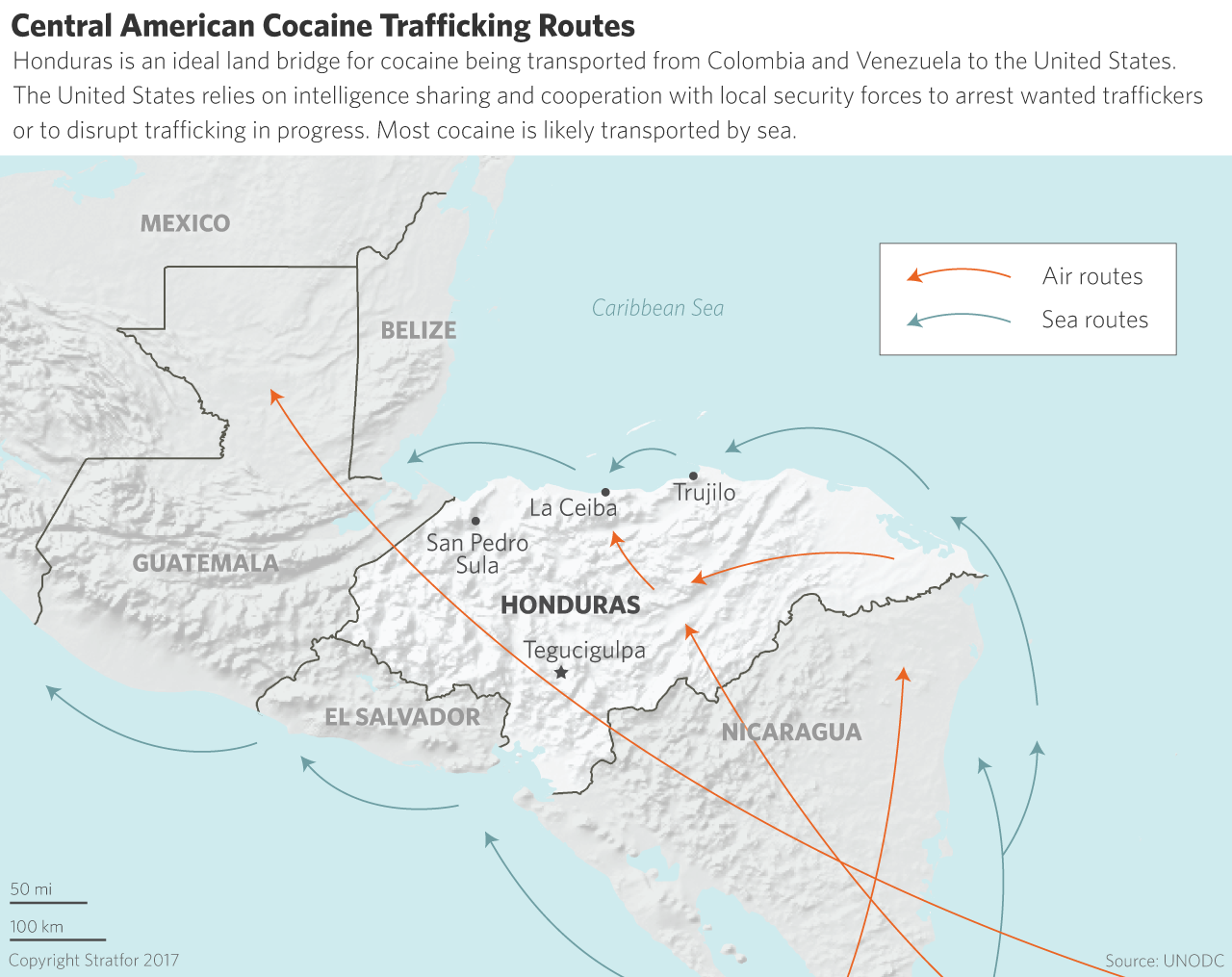
Of course, their relationship hasn't always been smooth. Widespread corruption among Honduran politicians and authorities has hampered cooperation between the two countries for years. A shake-up in Honduran governance would only add to Washington's uncertainty about the future of its ties with Tegucigalpa, especially because of the populist and leftist bent a Castro administration would likely have. Though it's not yet clear what policies the Libre candidate intends to pursue if she gains office, the ideological leanings of her and her party suggest that scaling back joint security programs with the United States may be one of them.
Abandoning ties with Washington would be easier said than done, though. The United States has many tools at its disposal, including the withdrawal of foreign aid and the cancellation of Honduran leaders' U.S. visas, to shape Tegucigalpa's actions. Should Castro win the November race, Washington will no doubt spend the first few weeks of her administration trying to determine whether those tools' use will be necessary to ensure Honduras' continued support in counternarcotics.
A Source of Instability
Castro's domestic policies could jeopardize Washington's security interests as much as her inherent opposition to the United States would. The populist figure has vowed to fund more social spending programs and establish a constituent assembly tasked with rewriting parts of the Honduran constitution. Should she try to make good on these promises, they would not sit well with the country's entrenched economic and political elite. After all, Honduras is an extremely poor nation; it budgeted about $5.5 billion for government spending this year. Castro's attempts to buy favor among her followers would require draining more money from the private sector — the second-largest source of tax revenue in the nation — through tax hikes on businesses.
At best, the ensuing standoff between the new administration and its political opponents would lead to gridlock as Honduran lawmakers and courts refuse to approve Castro's initiatives. At worst, the alignment of the Nationalist and Liberal parties against Libre could spill into the streets as supporters of each camp demonstrate for their conflicting interests. Even if the protests remain peaceful, the beleaguered Castro government may be too distracted by infighting at home to be of much use to its partner abroad in stemming the northward flow of cocaine.
It's always possible that, faced with stiff resistance from its rivals, Libre would back down from some of its more controversial proposals to preserve its newfound position in power. The party doubtless remembers that the reason for Zelaya's ouster in 2009 was his attempt to push through a referendum on his re-election against the congress and courts' wishes — a fact that hasn't escaped his wife. If elected, Castro may therefore tread more lightly to avoid turning the other branches of government against her, leading to policies not unlike those of the man she intends to challenge for the presidency.
