
For the second time in a week, anti-ship cruise missiles (likely the Chinese designed C-802 or an Iranian equivalent) targeted U.S. Navy vessels from Houthi-controlled territory in Yemen. On Oct. 12, the USS Mason fired defensive salvos in response to two missiles that failed to strike it. The same vessel was targeted Oct. 9 and reportedly fired three missiles in defense of itself and of the USS Ponce, which it was escorting. After the Oct. 9 attack, Houthis denied that they had targeted the vessels, but U.S. officials say the evidence implicates the group. Both times, the USS Mason was cruising on the Red Sea along a critical international shipping route just north of the Bab el-Mandeb strait.
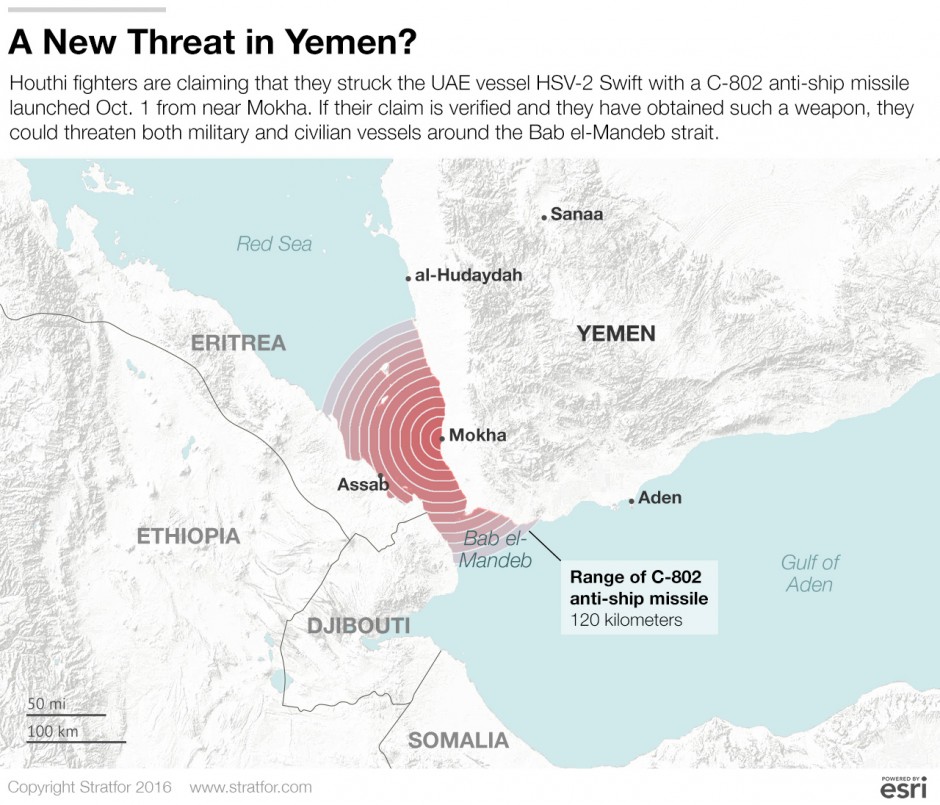
Though it is almost unprecedented that U.S. warships would be shot at by anti-ship cruise missiles launched from onshore batteries (the only other known instance was when the USS Missouri battleship was targeted during the Gulf War), the Houthis hardly pose a threat to the United States. It would be difficult for them to break through the U.S. Navy's multiple defenses with their relatively unsophisticated targeting systems and equipment. Still, such brazen attacks make a U.S. military response almost inevitable, dragging the country deeper into the conflict in Yemen that it has been working to distance itself from. In fact, although the Pentagon was hesitant to confirm details about the first missile strikes this week, a U.S. Navy official warned that "anyone who fires against U.S. Navy ships operating in international waters does so at their own peril."
When it comes to Yemen, the United States is in a tough spot politically. It supports the Saudi-led coalition fighting Houthi rebels and forces loyal to former Yemeni President Ali Abdullah Saleh but has recently distanced itself from the coalition because of intense international scrutiny on its tactics and high civilian casualties. Though Washington conducts drone attacks and special operations forces strikes in southern Yemen against al Qaeda targets, it has restricted its support for the Saudi-led coalition since the war began in 2015 to an advisory role with logistical assistance. The latest naval attack could change that dynamic; it clearly necessitates a U.S. response, but if the United States strikes Houthi targets, it will be interpreted by many Yemenis as a sign of full U.S. alignment with Saudi Arabia. And inconveniently for Washington, the dilemma comes at a time of increased scrutiny in Congress on the level of U.S. cooperation with Saudi Arabia in Yemen.
