
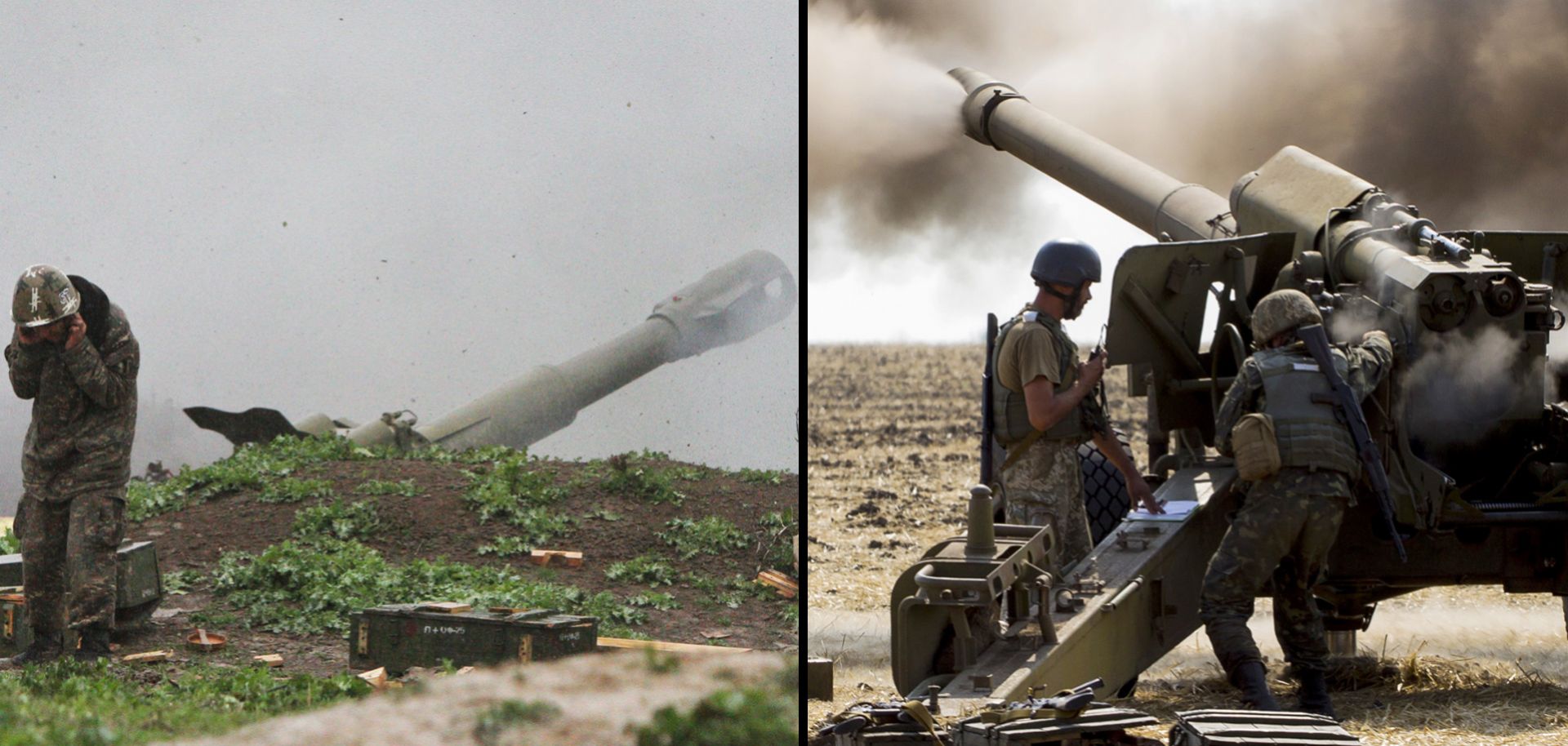
Similar to the conflict in Ukraine, a flurry of diplomatic initiatives to end hostilities in Nagorno-Karabakh will be complicated by the Russia-West standoff for the former Soviet periphery.
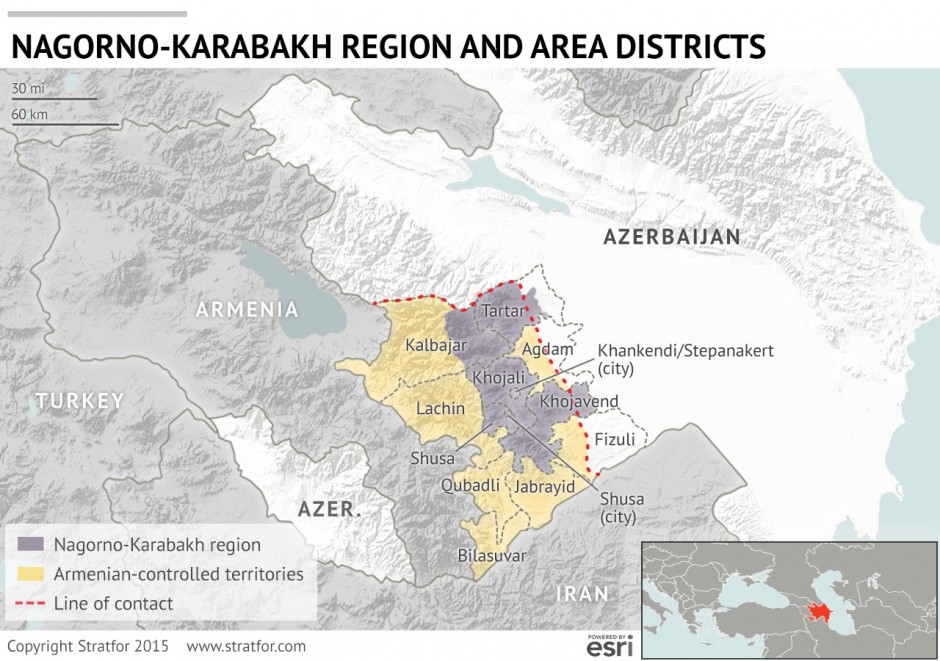
Diplomatic negotiations aimed at settling the Nagorno-Karabakh conflict continue at a feverish pace but without much hope for progress. At a highly touted May 16 meeting in Vienna, Austria, mediated by the Organization for Security and Co-operation in Europe and representatives from Russia, the United States and France, the presidents of Armenia and Azerbaijan reaffirmed their countries' commitment to observing a cease-fire in the disputed region and reaching a peaceful settlement. On May 17 and May 18, however, reports of fresh cease-fire violations and casualties on both sides continued to roll in. The disconnect between operations in Nagorno-Karabakh and what was said at the meeting — the first since April's major escalation in hostilities — reveals the constraints preventing a lasting resolution to the conflict. Nagorno-Karabakh's troubles also bear similarities to a conflict in another part of the former Soviet space: eastern Ukraine.
The Ukrainian and Nagorno-Karabakh conflicts both can trace their roots to the decline and collapse of the Soviet Union. The dispute in Nagorno-Karabakh emerged when reformist policies launched by Soviet leader Mikhail Gorbachev in the late 1980s gave people the rights to assemble and voice their views in ways that were previously denied to them. Armenians wanted to incorporate Nagorno-Karabakh, then administered by the Soviet republic of Azerbaijan but populated by a large ethnic Armenian majority, into the Armenian republic. The government in Baku rejected the calls, and without clear guidance or intervention from Moscow, the issue led to a military clash. Armenia ultimately wrested control of Nagorno-Karabakh and surrounding regions from Azerbaijan. Still, despite a cease-fire agreement signed in 1994, border skirmishes continue.
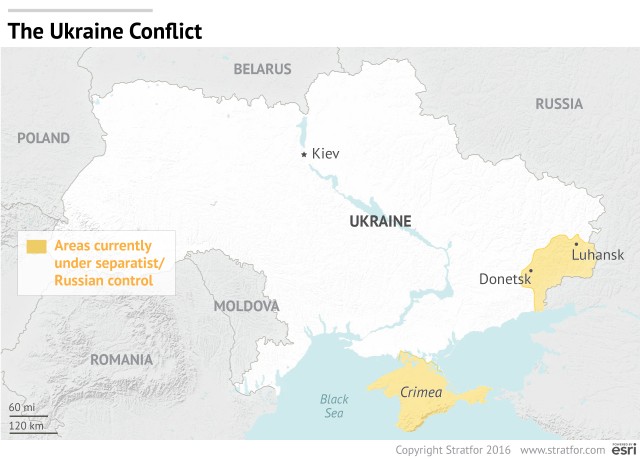
In Ukraine, military aggression took a bit longer to manifest. Following the Soviet collapse, an independent Ukraine oscillated between Russia and the West. The divisions between the country's pro-Russia east and pro-Europe west came to a head in the Euromaidan uprising of 2014, which led to the ouster of pro-Russia President Viktor Yanukovich, who was replaced by a firmly pro-West government in Kiev. Russia subsequently annexed Crimea, and separatists in the eastern Donbas regions rebelled, instigating a full-blown conflict.
In addition to sharing similar origins, the Ukrainian and Nagorno-Karabakh conflicts have produced intense mediation processes involving Russia and the West. Because both conflicts take place in contested zones — Eastern Europe in the case of Ukraine, and the Caucasus in the case of Nagorno-Karabakh — both Russia and the West have stakes in shaping the outcomes to suit their interests. The West is divided in its outlook, however, with some countries, such as the United States and Poland, more hawkish toward Russia than others, such as Germany and France. Nevertheless, Moscow and the West stand on broadly opposing sides, complicating proceedings immensely.
That is why a broader resolution to either conflict has proved so elusive. Local divisions and aggression are in play, but so is the larger competition between powerful players that have influence over the warring parties. Diplomatic negotiations do not necessarily ensure a resolution of these conflicts. It is even in the interest of certain countries, particularly Russia, to appear as committed to a resolution as possible — even acting as a grand mediator among all sides — while actually ensuring that both remain "manageable" crises.
There is always potential for compromise and progress among the various parties in the conflicts, but advances on political issues must coincide with the implementation of basic security components. At this point, a sustained observance of cease-fires, agreed upon many times both by Armenian and Azerbaijani leaders in Nagorno-Karabakh and by Ukrainian security forces and separatists in eastern Ukraine, has not happened. Until it does, the conflicts will endure, no matter how many meetings or diplomatic summits reaffirm lofty commitments.
