
The consumption tax issue speaks to the core of the Abe administration's current dilemma: how to stimulate economic growth while containing mushrooming public debt and a sizable budget deficit. For Japan, which seeks a greater economic and security role in the Asia-Pacific region, appearing able to manage its own finances is important. But Japan's debt is currently about 245 percent of its gross domestic product, and its budget deficit is expected to reach $89.7 billion by the end of this year. Moreover, Japanese exports and consumption have declined over the past six months, causing the economy to contract by 1.4 percent in the fourth quarter of 2015 alone.
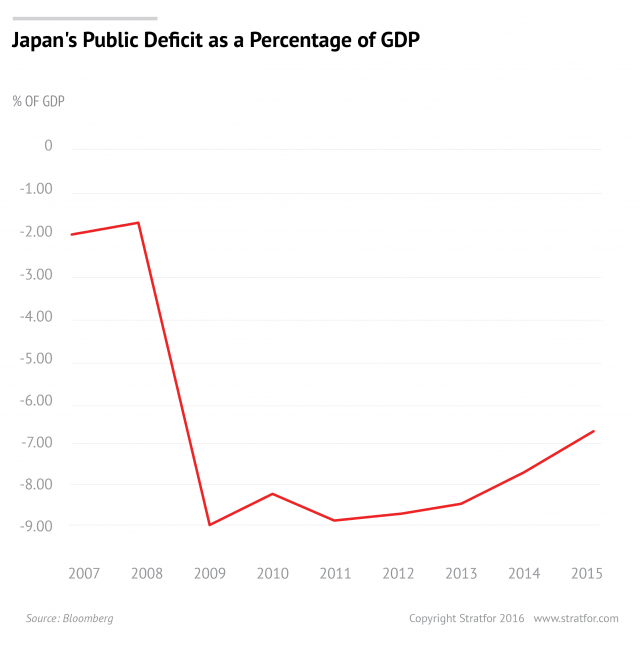
Some relief could come from increasing consumption tax rates from 8 to 10 percent, which would replenish government funds and reduce its debt burden. Doing so when economic growth is already sluggish, however, could sink the economy into recession — just as Abe's previous tax hike helped to do.
This concern has taken on new weight in the wake of deadly earthquakes that struck Japan's southern island of Kyushu on April 14 and April 16. The quakes disrupted the operations of major manufacturers on the island, raising worries that a tax hike on top of the tremors would further reduce consumer and business confidence. Meanwhile, the Japanese people, as well as the ruling coalition and opposition parties, are becoming increasingly distrustful of Abe's economic policies. According to a recent survey, 65 percent of the population supports postponing the tax hike. About 58 percent of respondents identified themselves as supporters of the ruling party. Other recent surveys reflect increasing disenchantment with the "Abenomics" program, with 50.9 percent of respondents labeling it "not promising" as opposed to only 37.5 percent who chose "promising."
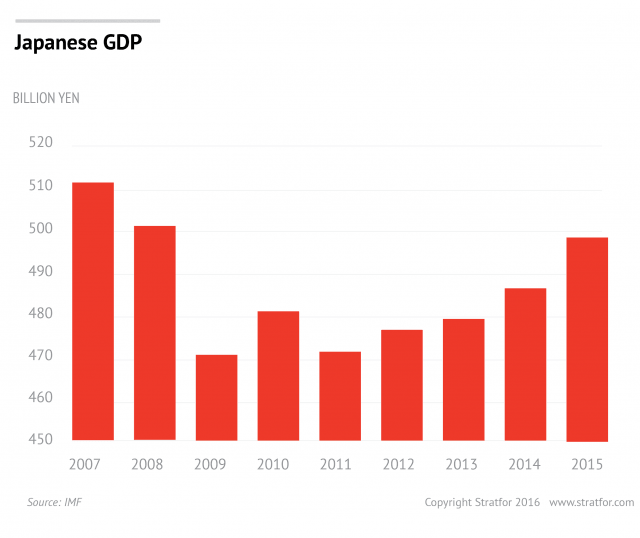
Abe's Cabinet has already delayed implementation of the tax hike once — it was supposed to take effect in October 2015 — in the face of weak economic performance. The prime minister has made it clear that he will consider pushing off the tax hike again only in the event of a major crisis along the lines of the 2008 financial crash or the 2011 tsunami, both of which inflicted substantial damage on the Japanese economy. According to Reuters, economists predict the fallout of the latest earthquakes will push Japanese industrial production down by as much as 1 percent. Though high, this is far less than the drop seen after the 2011 disaster. Meanwhile, Japan's tourism sector, which has recently emerged as a badly needed driver of consumption, may also take a hit, especially as the yen strengthens. Combined with the economy's weak performance in the last quarter and little hope for improvement in the next quarter, these developments could further undermine Abe's efforts to use expansionary monetary policy, fiscal stimulus and structural reforms to spur growth and avert recession.
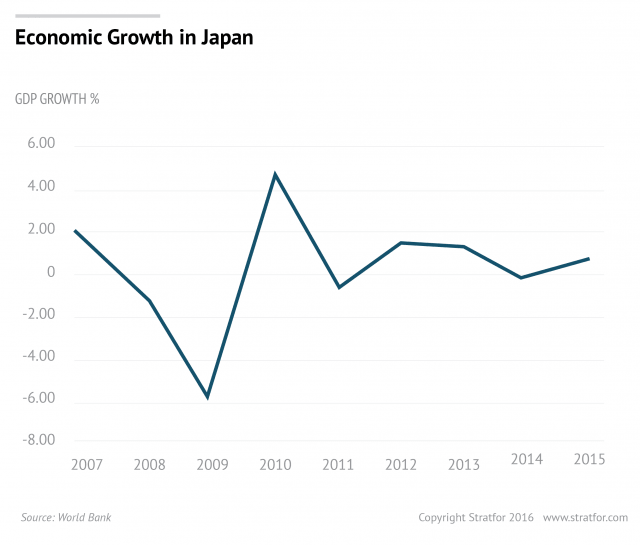
Depending on how the economy fares in the current quarter, Abe could use assessments of the earthquakes' damage to justify stalling his planned tax hike. Authorities are expected to release quake damage estimates and deliver the country's first-quarter economic data in May, when Japan will also be hosting the G-7 summit to discuss global and regional challenges in economics and security. The less-than-impressive growth of the world's third-largest economy will undoubtedly be on the agenda.
So far, weak consumption, stagnating wages, currency appreciation and economic contraction have highlighted the prime minister's failure to resuscitate the economy — bad news for Abe and his party as parliamentary elections draw closer. As Japanese voters prepare to head to the polls this summer, the prime minister will likely heed their demands to delay higher taxes as he tries — unsuccessfully — to combat the dire perception and reality of the country's negative economic outlook.
